


October 28, 2026 The Chatbot That Cannot See: What a New Study on ChatGPT and Broken Wrists Teaches Dental Imaging
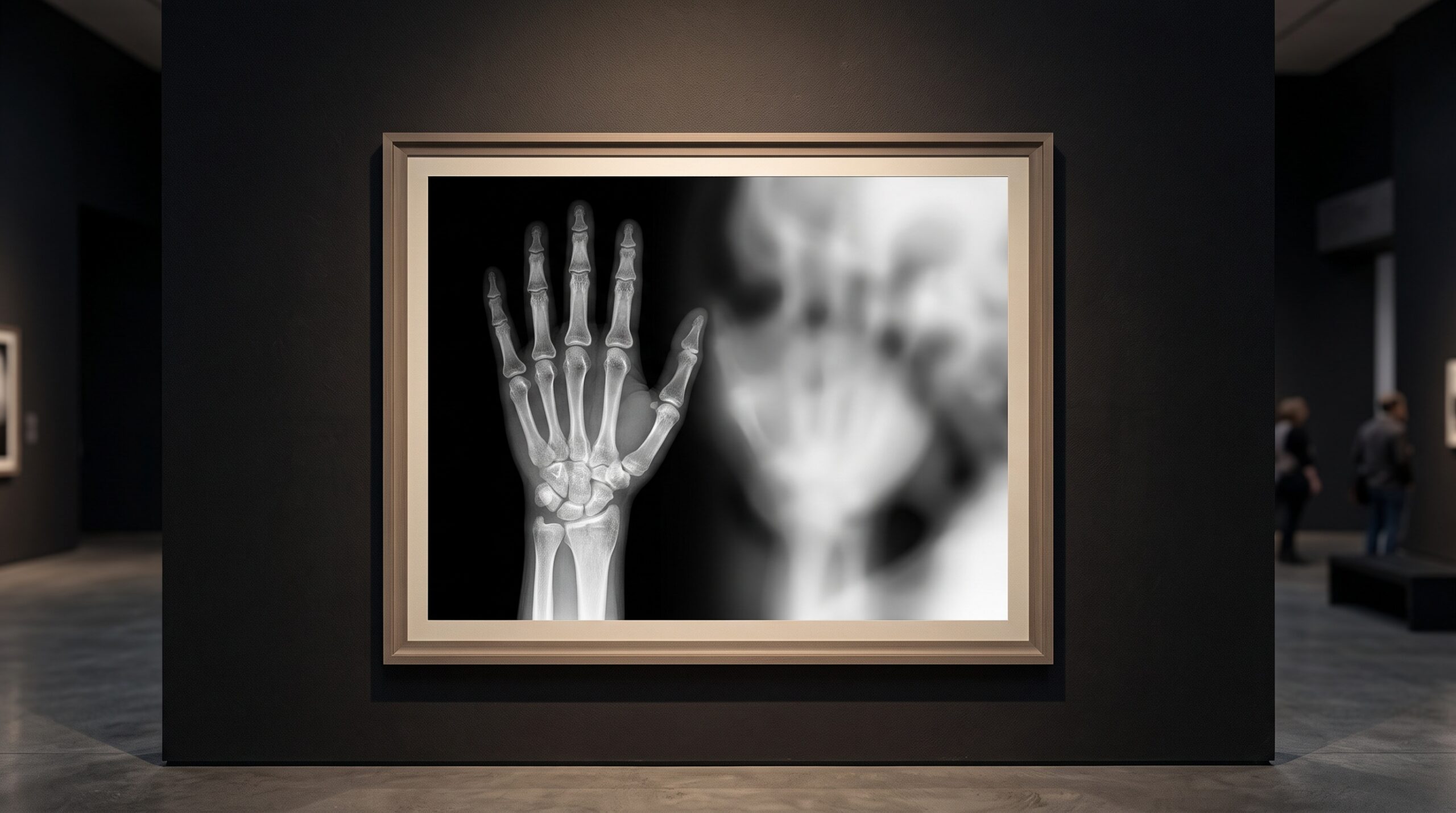
A study published in late October in Emergency Radiology, and reported by the imaging trade press, delivered a finding that ought to be pinned to the wall of every practice flirting with artificial intelligence. Given plain radiographs of the wrist and a single yes-or-no prompt — is there a fracture here or not — the latest general-purpose version of ChatGPT missed roughly half of confirmed distal radius fractures. The distal radius is one of the most common breaks in medicine and often one of the most radiographically obvious. A chatbot that can draft a sonnet about a broken wrist could not reliably see the break.
For a gallery devoted to reading the dental image as a craft, this is not a story about one company’s model. It is a story about the difference between describing a picture and reading one, and that difference sits at the center of everything imaging is for.
What the Study Actually Found
The design was deliberately simple. Researchers fed the model wrist radiographs and asked it to classify each as fractured or not. On the distal radius, where the fracture lines are frequently plain to a first-year resident, the false-negative rate was high enough that the model overlooked about one broken wrist in two. Related work on other anatomy — pediatric growth-plate injuries, shoulder and hip films — has traced the same uneven, often disappointing performance when a general-purpose model is handed a radiograph cold. The point is not that the machine is stupid. It is that a model built to be fluent across every subject is not, by that fact, a reliable instrument for the single narrow task of finding a fracture in an X-ray.
Talking About an Image Is Not Reading One
A large language model with vision is, at its heart, a system for producing plausible language. When it is shown an image, it does not measure, segment, or threshold the way a purpose-built detector does; it converts the picture into an internal representation and then generates the words most likely to follow. That machinery is extraordinary at conversation and genuinely useful at describing the gist of a scene. It is poorly suited to the task a radiograph demands, which is not eloquence but calibrated vigilance: noticing the one faint cortical step-off against a confident prior that most wrists are intact. A fluent answer and a correct answer are different outputs, and the generalist model is optimized for the former. This is precisely why the serious work of machine reading of dental radiographs has never been built on a chatbot.
Why Dental Imaging Already Knew This
The AI that actually earns its place in dental imaging looks nothing like a general assistant. It is narrow by design — trained on large archives of labeled radiographs to answer one bounded question, whether that is detecting interproximal caries, flagging periapical radiolucency, or tracing anatomical landmarks. It is validated against ground truth, its sensitivity and specificity are measured rather than assumed, and the strongest tools carry regulatory clearance for the specific indication they claim. That discipline is not bureaucratic ceremony; it is the whole difference between a detector and a conversationalist. It also depends utterly on the quality of what it was taught from, which is why the field has invested so heavily in carefully annotated image datasets and in the quantitative, measurable reading of the image that radiomics represents. A generalist model asked to free-associate about an X-ray has skipped every one of those steps.
The Patient With a Phone
There is a practical edge to this that reaches past the clinic. Patients now photograph their own radiographs and upload them to a chatbot for a “second opinion,” and the machine answers in the same warm, assured prose it uses for everything. The wrist study is a warning about exactly this. A confident paragraph declaring a film clear is far more dangerous than an honest “I cannot tell,” because false reassurance is acted upon. The risk compounds when the image itself is of uncertain origin or quality — a photograph of a screen, cropped and compressed — a problem the field already takes seriously in its work on the authenticity and provenance of radiographic images. A chatbot cannot verify what it was shown, and it will not tell you that it is guessing.
Reading as a Discipline
Underneath the technology sits a truth the gallery returns to often: reading a radiograph is a learned craft, not a glance. The practiced eye works the full tonal range of the image deliberately, adjusting window and level to coax a faint lesion out of the gray, cross-checking geometry, comparing against priors, and carrying the accountability of a signature. A validated narrow tool can genuinely augment that reader, offering a tireless second pass that flags what fatigue might miss. A generalist chatbot offers something else entirely — the appearance of a reading without the substance of one — and in diagnostic imaging the appearance is the trap.
Future Developments
None of this means the door is closed. Multimodal models are improving quickly, and it is entirely plausible that a future system, trained and validated specifically for radiographic interpretation and held to the same evidentiary standard as today’s purpose-built tools, will read a film well. The path there is not a larger, chattier generalist; it is narrowing, grounding, measuring, and clearing a model for a defined task — the unglamorous discipline dental imaging has practiced all along. Until a tool has walked that path and shown its numbers, the honest posture is the one the wrist study recommends: let the chatbot help you think and write, and let a validated instrument and a trained clinician read the image. The gallery has always insisted that an image deserves to be read, not merely described. A machine that blurs the two is a reminder of why that insistence matters.
Sources & further reading:
No Comments