


February 17, 2026 Mastering Dental Photography: Advanced Lighting Techniques and Color Management for Professional Results
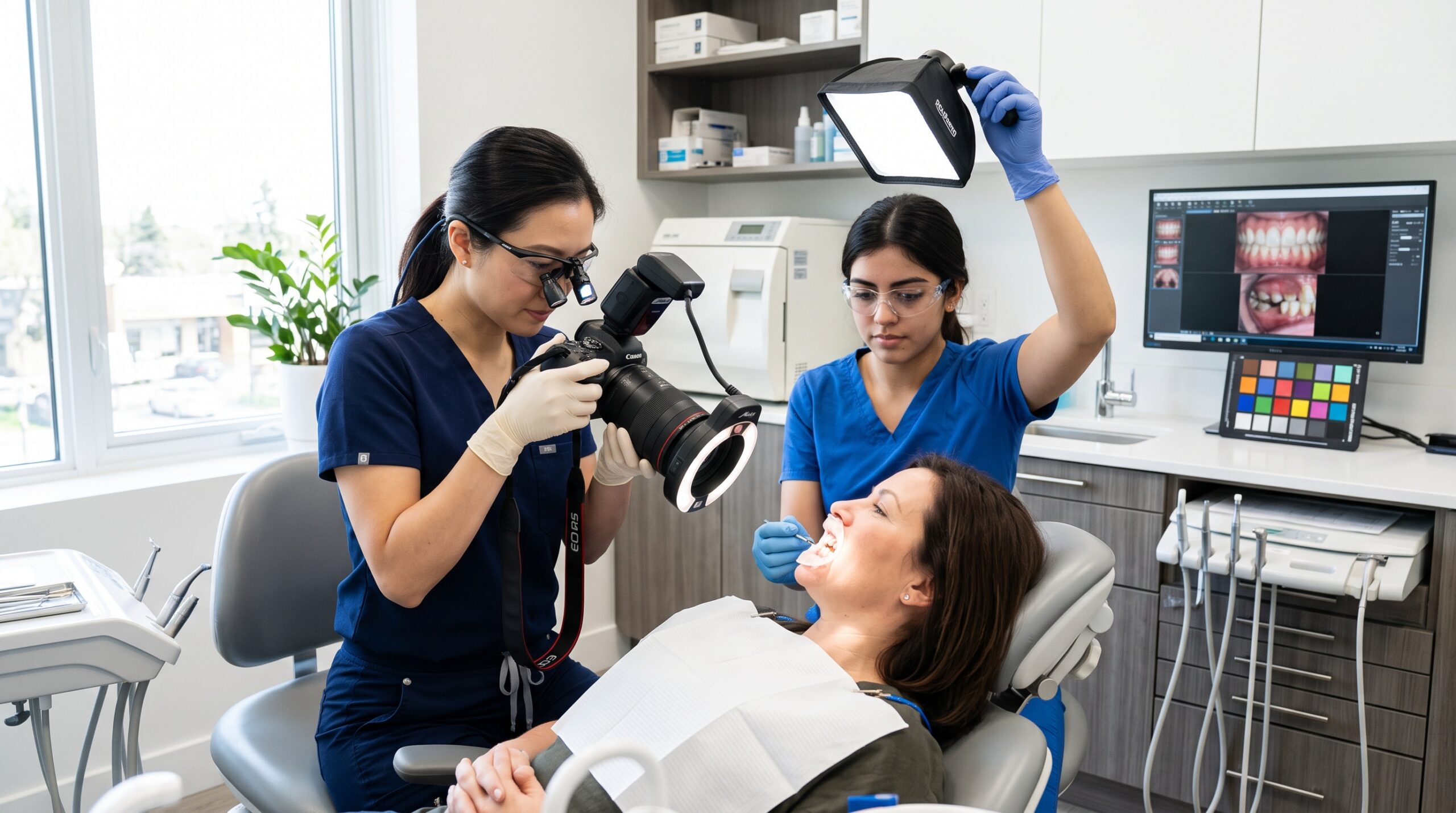
Professional dental photography has become an essential component of modern dental practice, serving critical roles in documentation, treatment planning, patient communication, and legal protection. However, achieving consistently high-quality dental photographs requires mastery of advanced lighting techniques and color management principles that go far beyond basic camera operation.
Understanding the Fundamentals of Dental Photography Lighting
The foundation of exceptional dental photography lies in understanding and controlling light. Unlike general photography, dental photography requires precise illumination of small, highly reflective surfaces within a challenging environment. The oral cavity presents unique lighting challenges including deep shadows, varying surface textures, and highly reflective materials such as enamel and metallic restorations.
Natural lighting conditions are inadequate for diagnostic dental photography due to inconsistent color temperature, insufficient intensity, and poor directionality. Professional dental photography demands controlled artificial lighting systems that provide consistent, reproducible results regardless of ambient conditions or time of day.
Advanced Flash Systems and Ring Light Technology
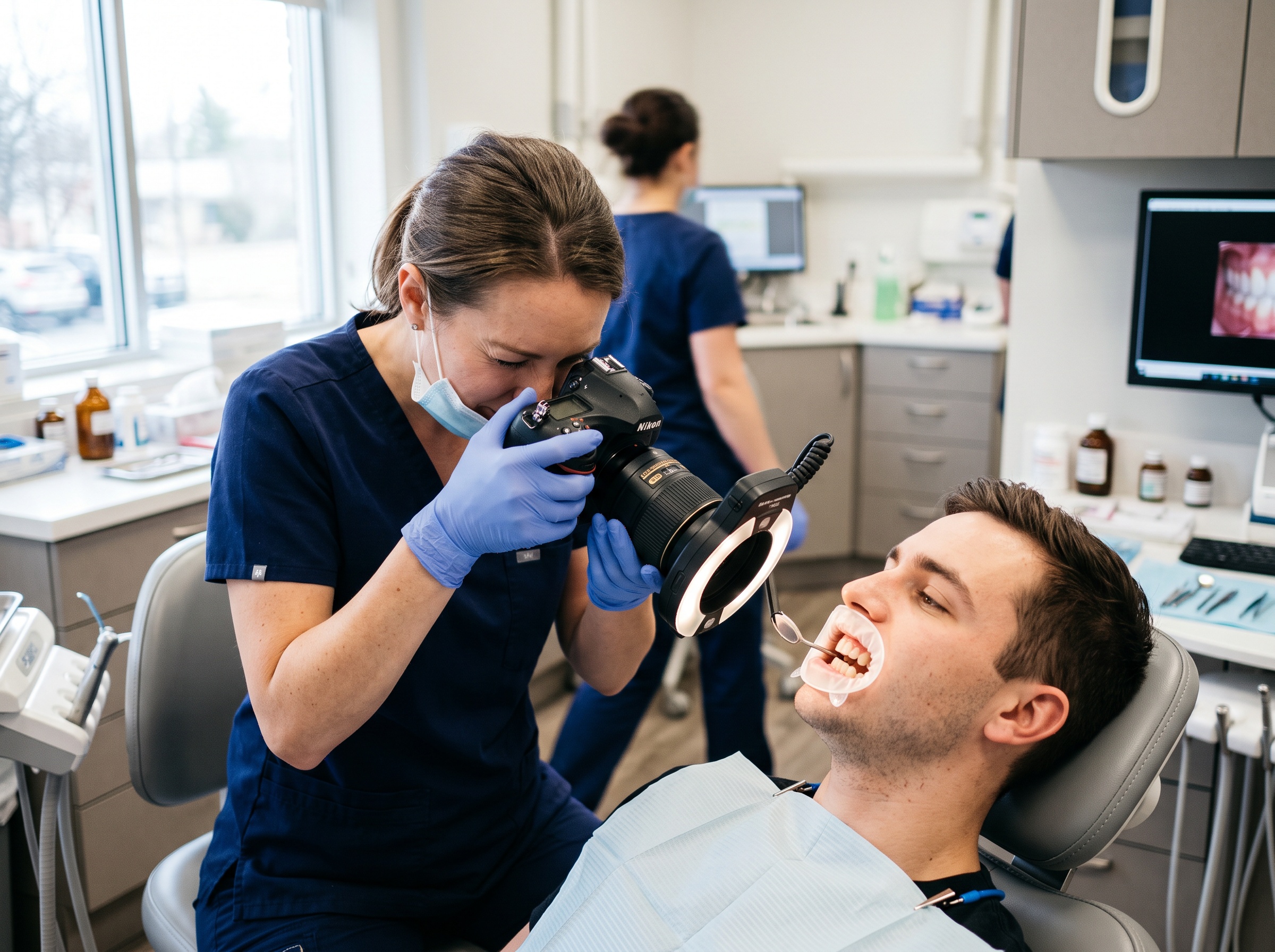
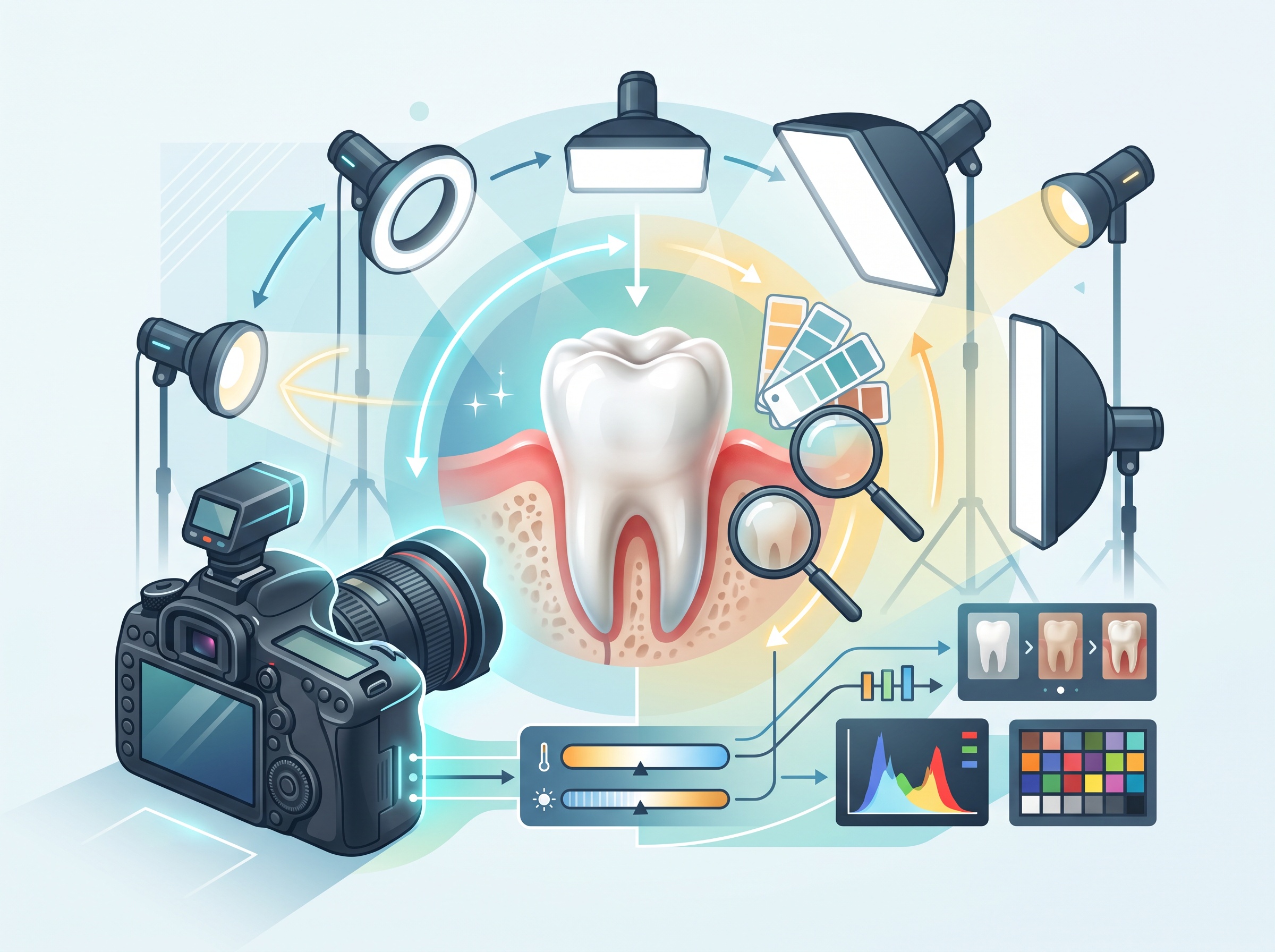
Modern dental photography relies primarily on specialized flash systems designed specifically for close-up intraoral work. Ring flashes provide circumferential illumination that minimizes shadows while delivering sufficient light output for proper exposure at high magnifications. The circular configuration of ring flashes ensures even illumination across the subject plane, reducing the harsh shadows that can obscure important diagnostic details.
Contemporary ring flash systems incorporate multiple zones of LED lights that can be controlled independently, allowing practitioners to adjust lighting ratios and create dimensional modeling in their photographs. Some systems offer variable color temperature adjustment, enabling precise color balance regardless of ambient lighting conditions.
Twin flash systems represent another advanced lighting option, utilizing two separate flash units positioned at optimal angles to provide controlled directional lighting. This configuration offers greater flexibility in lighting ratio adjustment and can create more natural-looking dimensionality compared to ring flash systems. The ability to adjust the power ratio between flash units allows for fine-tuning of contrast and shadow detail.
Color Management and White Balance Optimization
Color accuracy is paramount in dental photography, where subtle shade variations can significantly impact treatment outcomes. Proper color management begins with understanding color temperature and its impact on digital image capture. Dental photography typically requires daylight-balanced lighting (5500K-6500K) to ensure accurate color reproduction of tooth structure and restorative materials.
White balance calibration must be performed under the actual lighting conditions used for photography. Generic white balance presets are inadequate for the precision required in dental documentation. Custom white balance using a neutral reference target ensures that colors are captured accurately and consistently across all photographic sessions.
Color management extends beyond capture to include monitor calibration and output considerations. Professional dental photography workflows require calibrated monitors that display colors accurately, enabling proper evaluation of images during post-processing and presentation to patients or colleagues.
Controlled Lighting Environments and Studio Setup
Creating a controlled lighting environment is essential for consistent dental photography results. Ambient lighting should be minimized or eliminated entirely during photography to prevent color casts and exposure inconsistencies. Many practices implement dedicated photography areas with controlled lighting to ensure optimal conditions.
Background lighting control is equally important. Dark, non-reflective backgrounds help isolate the subject and eliminate distracting elements from the composition. Some practitioners use specialized dental photography backgrounds that provide optimal contrast while maintaining color neutrality.
Advanced Exposure Techniques and Metering
Proper exposure in dental photography requires understanding the unique reflectance characteristics of oral structures. Tooth enamel and metallic restorations can cause significant overexposure if not properly metered, while deep interdental areas and the posterior oral cavity may underexpose due to limited light penetration.
Modern digital cameras offer sophisticated metering modes that can be optimized for dental photography. Spot metering allows precise exposure measurement of specific areas within the composition, while matrix metering systems can provide more balanced exposures across varied subject matter.
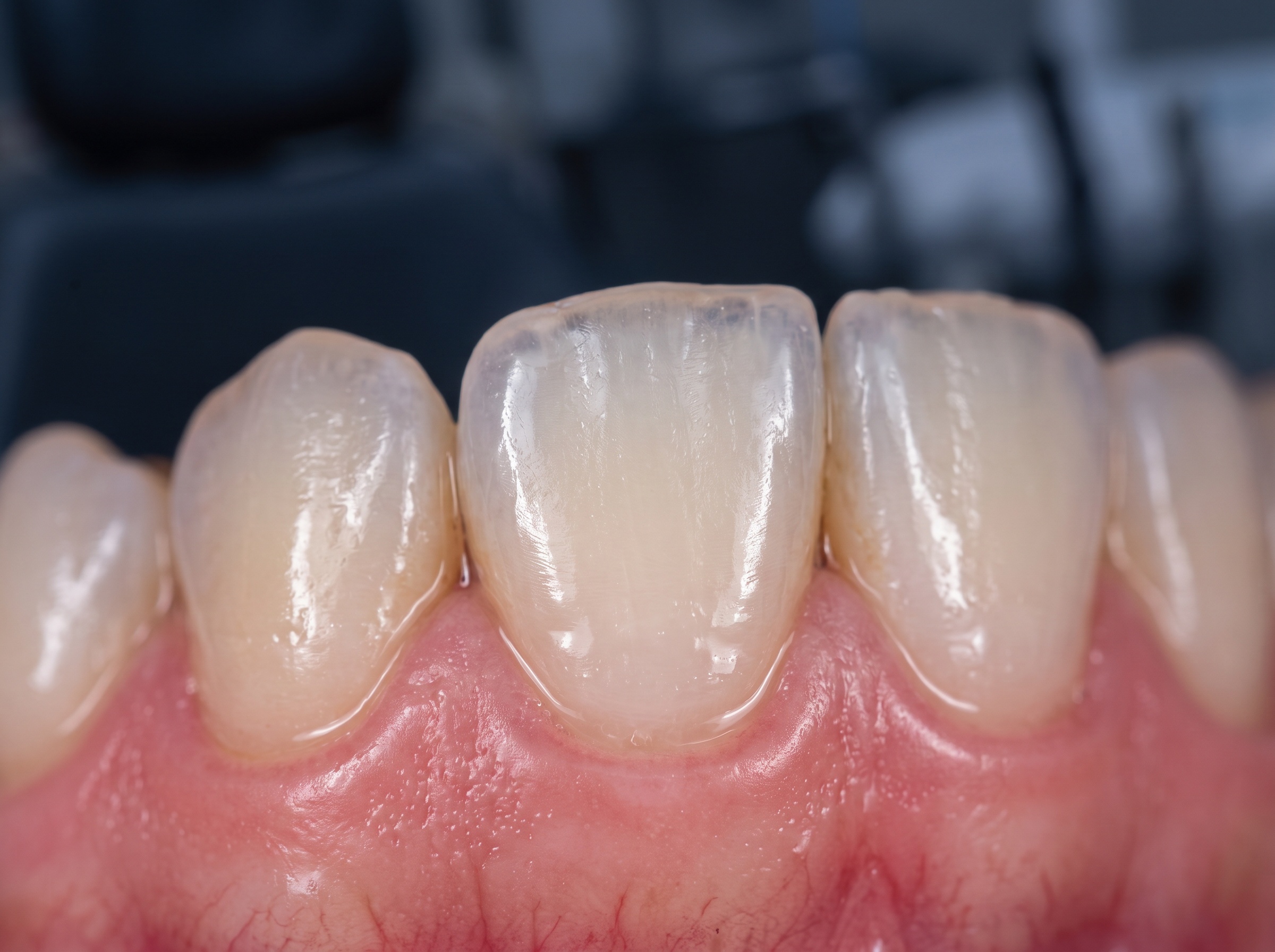
Exposure compensation techniques become critical when photographing subjects with extreme contrast ratios. The ability to capture detail in both highlight and shadow areas often requires careful exposure adjustment and may benefit from high dynamic range (HDR) techniques or exposure blending in post-processing.
Polarization and Reflection Control
Managing reflections from wet oral tissues and restorative materials represents one of the most challenging aspects of dental photography. Polarizing filters can significantly reduce unwanted reflections while maintaining diagnostic detail. Cross-polarization techniques, using polarizing filters on both the light source and camera lens, can virtually eliminate surface reflections.
However, polarization must be used judiciously in dental photography, as complete reflection elimination can remove important visual cues about surface texture and morphology. Understanding when and how to apply polarization techniques requires experience and clinical judgment.
Macro Photography Considerations and Depth of Field
Dental photography often requires extreme close-up magnifications that present unique technical challenges. Depth of field becomes extremely shallow at high magnifications, requiring precise focusing and often smaller apertures to achieve adequate front-to-back sharpness.
Focus stacking techniques can be employed to extend apparent depth of field by combining multiple images taken at different focus points. This advanced technique requires specialized software but can produce images with unprecedented sharpness throughout the subject plane.
Post-Processing and Color Correction
Professional dental photography workflows incorporate post-processing techniques that enhance image quality while maintaining diagnostic accuracy. Color correction may be necessary to compensate for variations in lighting conditions or camera sensor characteristics.
However, post-processing in dental photography must be approached conservatively. Over-processing can alter the appearance of pathology or restorative work, potentially compromising the diagnostic value of the images. Documentation photography should accurately represent the clinical situation without artistic interpretation.
Quality Control and Standardization
Implementing quality control measures ensures consistent results across all photographic sessions. Standardized protocols should define lighting setup, camera settings, positioning, and composition for different types of dental photography. Regular calibration of equipment and periodic review of technique help maintain high standards.
Documentation of photographic protocols enables consistent results when multiple operators are involved in image capture. Training programs should emphasize both technical proficiency and clinical relevance to ensure that photography supports rather than impedes clinical workflow.
Integration with Digital Workflows
Modern dental photography must integrate seamlessly with digital practice management systems. Images should be captured in formats that support long-term archival while providing adequate resolution for clinical and legal documentation needs.
Workflow efficiency requires streamlined processes for image capture, processing, and storage. Many practices implement templated naming conventions and automated backup systems to ensure that photographic documentation is properly organized and protected.
Equipment Selection and Investment Considerations
Professional dental photography systems represent a significant investment that should be carefully evaluated based on practice needs and clinical applications. Entry-level systems may be adequate for basic documentation, while advanced applications such as cosmetic case presentation or publication-quality images may require more sophisticated equipment.
The longevity and reliability of photographic equipment should be considered alongside initial cost. Professional-grade systems typically offer better durability, more consistent performance, and superior technical support compared to consumer alternatives.
Training and Skill Development
Mastering dental photography requires ongoing education and practice. Technical proficiency with camera operation is just the beginning; understanding the clinical applications and diagnostic significance of different photographic techniques is equally important.
Many manufacturers and professional organizations offer training programs specifically designed for dental photography. These educational opportunities provide hands-on experience with equipment and techniques while emphasizing clinical relevance and practical applications.
Legal and Ethical Considerations
Dental photography involves patient privacy and consent issues that must be carefully managed. Proper documentation of patient consent for photography is essential, particularly when images may be used for educational or publication purposes.
Image security and storage protocols must comply with healthcare privacy regulations while ensuring long-term accessibility for clinical and legal purposes. Regular backup procedures and secure storage systems protect both patient information and practice assets.
Conclusion
Advanced dental photography represents a sophisticated blend of technical expertise and clinical knowledge that significantly enhances modern dental practice. Mastery of lighting techniques, color management, and equipment operation enables practitioners to create diagnostic-quality images that support clinical decision-making, enhance patient communication, and provide comprehensive documentation of treatment outcomes.
The investment in professional dental photography skills and equipment pays dividends through improved patient communication, enhanced treatment acceptance, and superior clinical documentation. As digital technology continues to evolve, practitioners who master these fundamental principles will be well-positioned to leverage emerging capabilities and maintain their competitive advantage in modern dental practice.
Sorry, the comment form is closed at this time.