


February 14, 2026 3D Printing and Digital Imaging: Transforming Dental Workflows
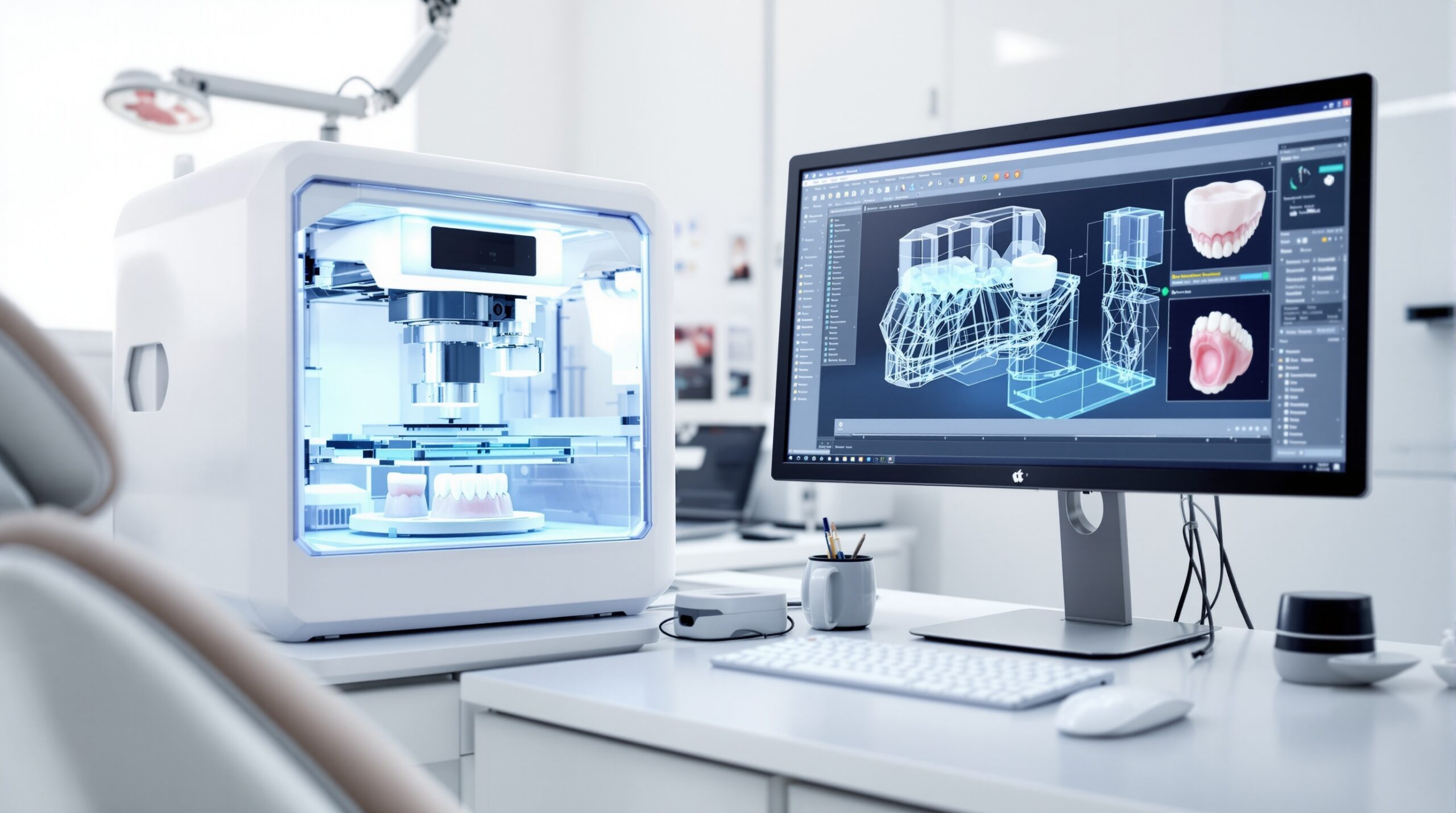
The convergence of digital imaging and 3D printing is reshaping how dental professionals diagnose, plan, and execute treatment. What once required weeks of laboratory turnaround and multiple patient visits can now be accomplished in hours, with precision that was unimaginable just a decade ago. Understanding how these technologies work together is key to building a modern, efficient dental practice.
The Digital Imaging Foundation
Every 3D printing workflow in dentistry begins with digital data capture. Three primary imaging technologies feed into the digital workflow:
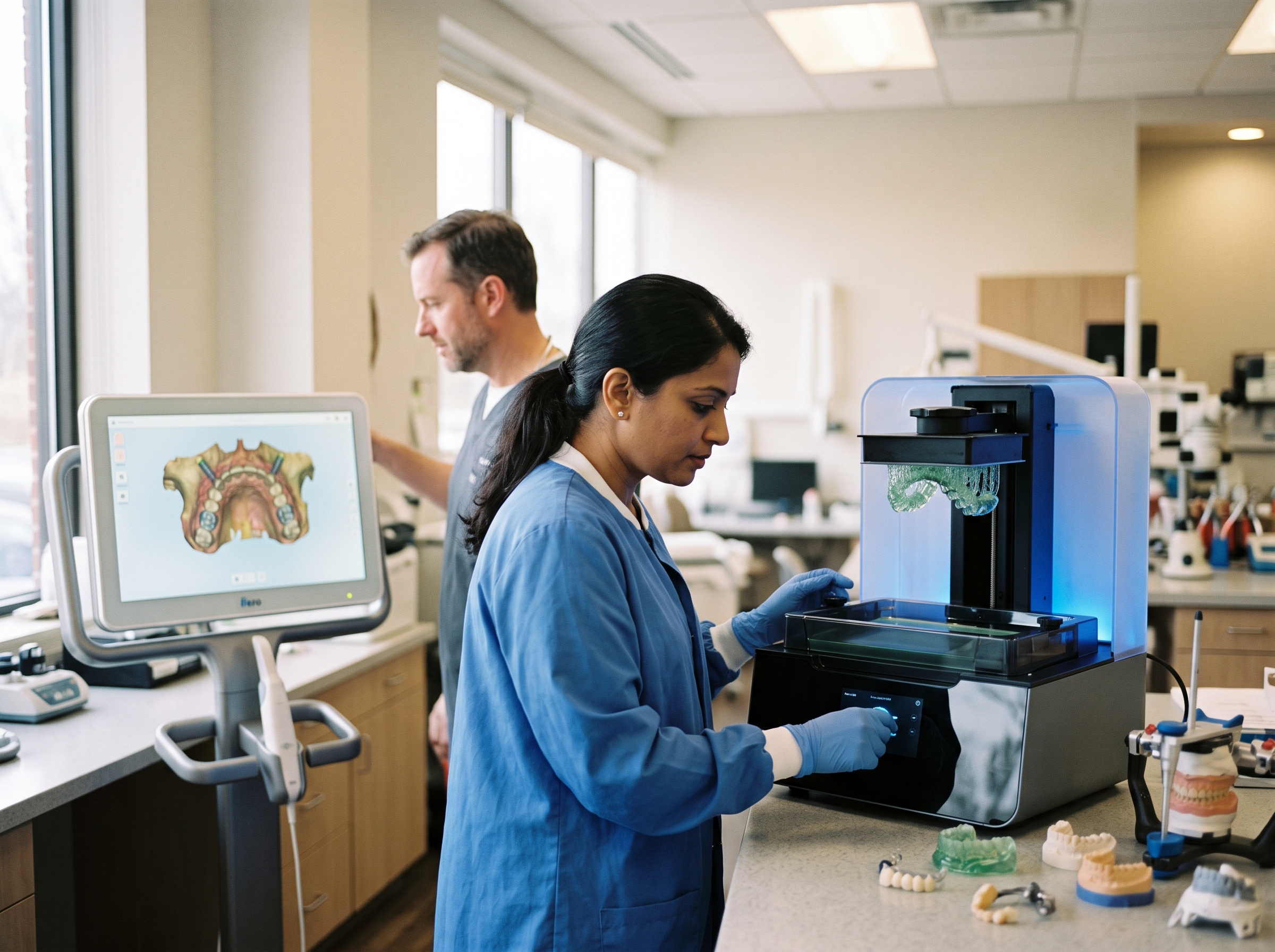
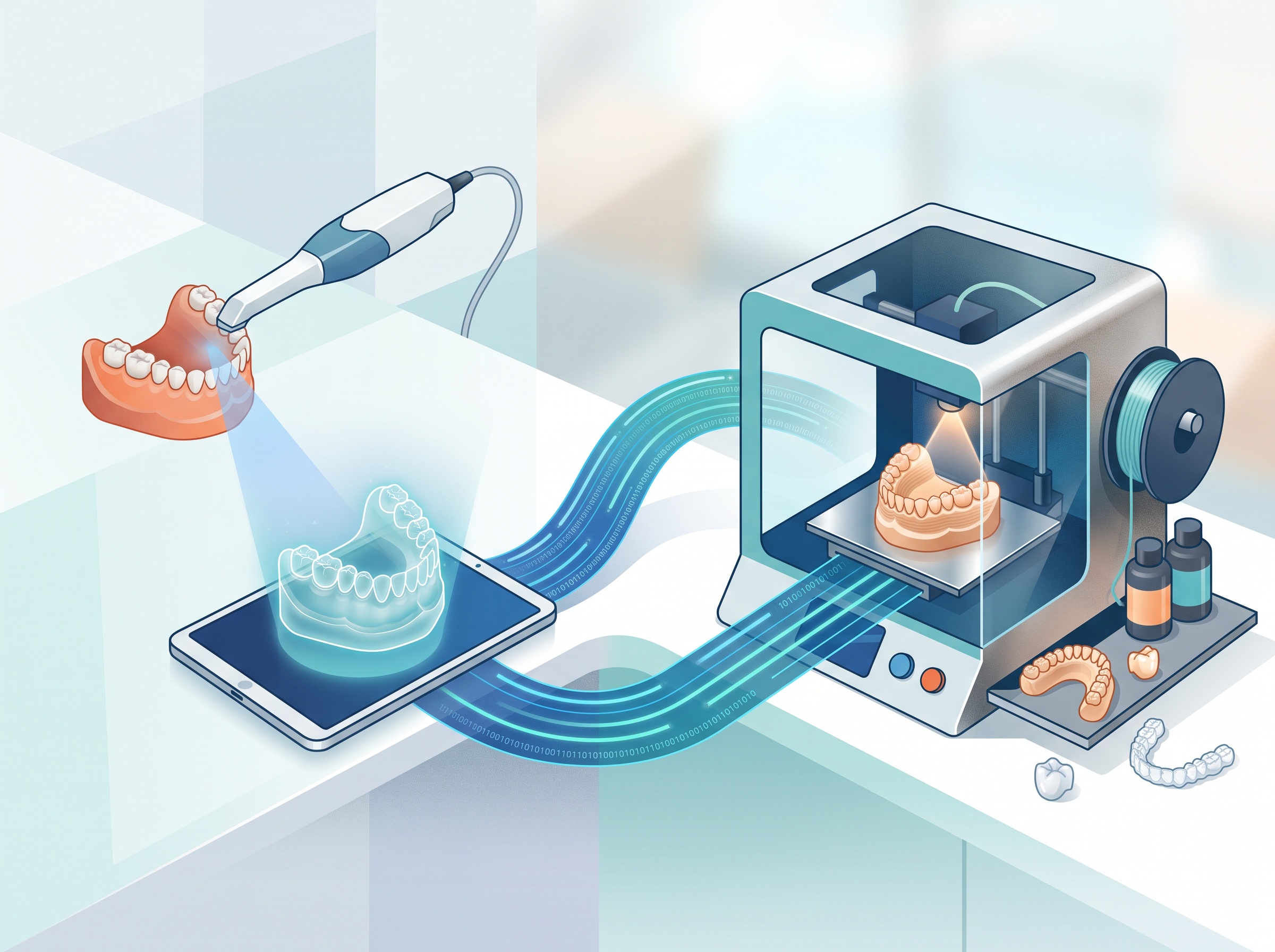
Intraoral Scanners: These handheld devices capture highly accurate digital impressions of teeth and soft tissue using structured light or laser triangulation. Modern intraoral scanners achieve accuracy within 20-50 micrometers — comparable to or better than traditional polyvinyl siloxane impressions. The resulting STL or PLY files serve as the foundation for designing restorations, aligners, and surgical guides.
CBCT Imaging: Cone Beam Computed Tomography provides the three-dimensional skeletal and hard tissue data essential for implant planning, surgical guide design, and orthodontic treatment planning. CBCT DICOM data can be converted to STL format for integration with CAD software and 3D printing workflows.
Facial Scanning: Desktop and handheld facial scanners capture the external soft tissue profile, enabling smile design and prosthetic planning that considers the patient’s overall facial aesthetics. When combined with intraoral scan data and CBCT imaging, facial scans enable truly comprehensive digital treatment planning.
CAD Software: The Bridge Between Imaging and Printing
Computer-Aided Design (CAD) software transforms raw scan data into printable designs. Several dental-specific CAD platforms dominate the market, each offering specialized modules for different applications:
Restoration Design: Crowns, bridges, inlays, onlays, and veneers can be designed with precise marginal adaptation and occlusal anatomy. AI-powered features in modern CAD software can auto-generate anatomically correct designs that require minimal manual adjustment.
Surgical Guide Design: Implant positions planned in CBCT software are transferred to guide design modules, where the software automatically generates a guide with appropriate sleeve positions, tissue support surfaces, and fixation pin locations.
Orthodontic Appliance Design: Clear aligner staging, retainer design, and indirect bonding tray creation are increasingly handled through digital workflows. The software calculates tooth movement sequences and generates the necessary series of models for aligner fabrication.
Denture and Partial Framework Design: Complete dentures, removable partial denture frameworks, and even custom implant bars can be designed digitally and printed or milled with remarkable accuracy.
3D Printing Technologies for Dental Applications
Not all 3D printers are created equal. Different printing technologies serve different dental applications:
Stereolithography (SLA) and Digital Light Processing (DLP)
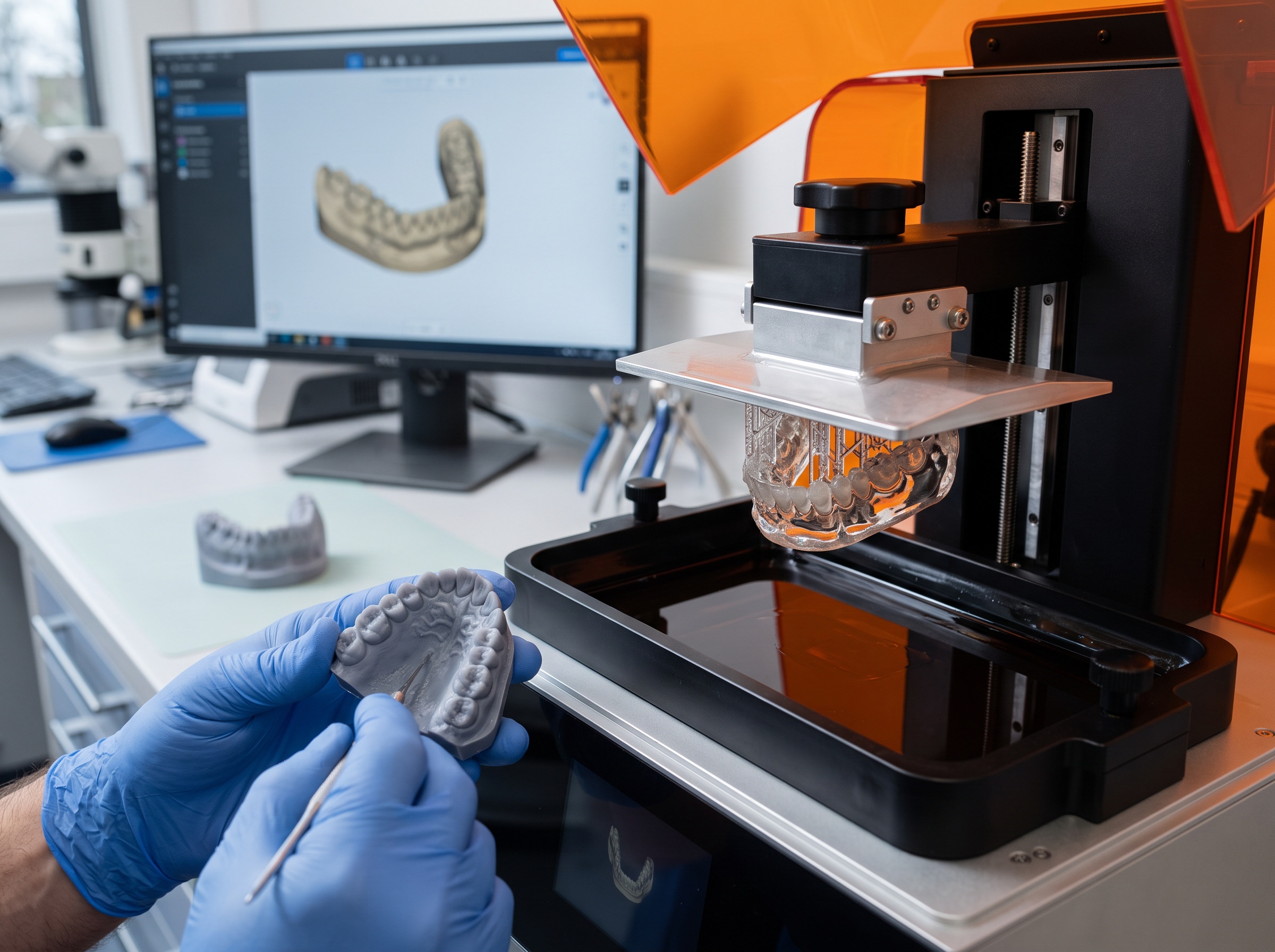
These resin-based technologies dominate dental 3D printing. SLA uses a laser to cure photopolymer resin layer by layer, while DLP uses a projected light source to cure entire layers simultaneously. Both achieve exceptional detail resolution (25-50 micrometer layer thickness) and smooth surface finishes. Applications include surgical guides, temporary crowns, denture bases, orthodontic models, and custom impression trays.
Liquid Crystal Display (LCD) Printing
LCD printers represent a more affordable entry point into resin-based dental printing. While earlier LCD printers suffered from lower resolution compared to SLA/DLP, current high-resolution LCD printers with monochrome screens deliver quality approaching DLP at a fraction of the cost. They are particularly well-suited for model printing and orthodontic applications.
Material Jetting
Material jetting technology deposits droplets of photopolymer that are immediately UV-cured. This technology excels at producing multi-material models — for example, a surgical guide with both rigid and flexible components, or a dental model with removable dies. The higher cost of material jetting systems limits their use to larger laboratories and academic institutions.
Key Applications in Daily Practice
Same-Day Surgical Guides
Perhaps the most impactful application of chairside 3D printing is the production of implant surgical guides. With a CBCT scan, digital implant planning, and an in-office 3D printer, a clinician can design and print a surgical guide in approximately 2-3 hours. This eliminates the need to send cases to external laboratories and enables same-day guided implant surgery in appropriate cases.
Orthodontic Models and Aligners
3D printing has made in-house clear aligner production feasible for dental practices. After intraoral scanning and digital treatment planning, the printer produces a series of progressive models over which clear aligner material is thermoformed. While the economics and quality control of in-house aligner production continue to evolve, many practices find it cost-effective for simple to moderate cases.
Temporary Restorations
Printed temporary crowns and bridges offer superior fit compared to traditional bis-acryl temporaries. Using the pre-operative scan or a digital wax-up, temporaries can be designed and printed before the preparation appointment, ensuring accurate anatomy and occlusion from the moment they are seated.
Diagnostic Wax-Ups and Try-Ins
Digital smile design concepts can be translated into printed try-in models that patients can physically evaluate. This tangible preview of treatment outcomes dramatically improves case acceptance, particularly for complex cosmetic and full-arch rehabilitation cases.
Material Considerations
The range of dental-specific 3D printing resins has expanded dramatically. Key categories include:
- Model resins: High accuracy and dimensional stability for diagnostic and working models
- Surgical guide resins: Biocompatible, autoclavable materials cleared for intraoral use
- Temporary restoration resins: Tooth-colored, biocompatible materials rated for up to 12 months of intraoral use
- Denture base and tooth resins: FDA-cleared materials for long-term prosthetic use
- Castable resins: Burn-out cleanly for traditional lost-wax casting of metal frameworks
- Splint resins: Clear, flexible materials for nightguards and occlusal splints
Always verify that printing materials carry appropriate regulatory clearances (FDA 510(k) or CE marking) for their intended intraoral application. Using non-cleared materials for patient-contact applications creates significant liability risk.
Building Your Digital Workflow
Implementing a 3D printing workflow requires thoughtful planning:
Start with a clear use case. Rather than trying to print everything at once, identify the application that will deliver the greatest return for your practice. Surgical guides and orthodontic models are common starting points due to their relatively simple workflows and clear economic benefits.
Invest in training. The learning curve for CAD software and print management is real. Budget time and resources for staff training, and expect a 2-3 month ramp-up period before workflows become efficient.
Plan for post-processing. 3D printed dental appliances require washing, post-curing, and finishing. Dedicate a clean workspace with appropriate ventilation, washing stations, and a UV curing unit. Post-processing quality directly impacts the accuracy and biocompatibility of the final product.
Establish quality control protocols. Regularly verify printer calibration, monitor resin expiration dates, and implement dimensional accuracy checks using test prints with known measurements.
Looking Ahead
The pace of innovation in dental 3D printing shows no signs of slowing. Permanent ceramic and composite restorations produced entirely by 3D printing are entering the market. Bioprinting research is exploring the fabrication of scaffolds for tissue regeneration. And AI-driven automation is steadily reducing the design expertise required to produce high-quality dental appliances.
For dental practices, the message is clear: digital imaging and 3D printing are no longer emerging technologies — they are established pillars of modern dentistry. The practices that master these workflows today will be best positioned to deliver efficient, precise, and patient-centered care for years to come.
Sorry, the comment form is closed at this time.