


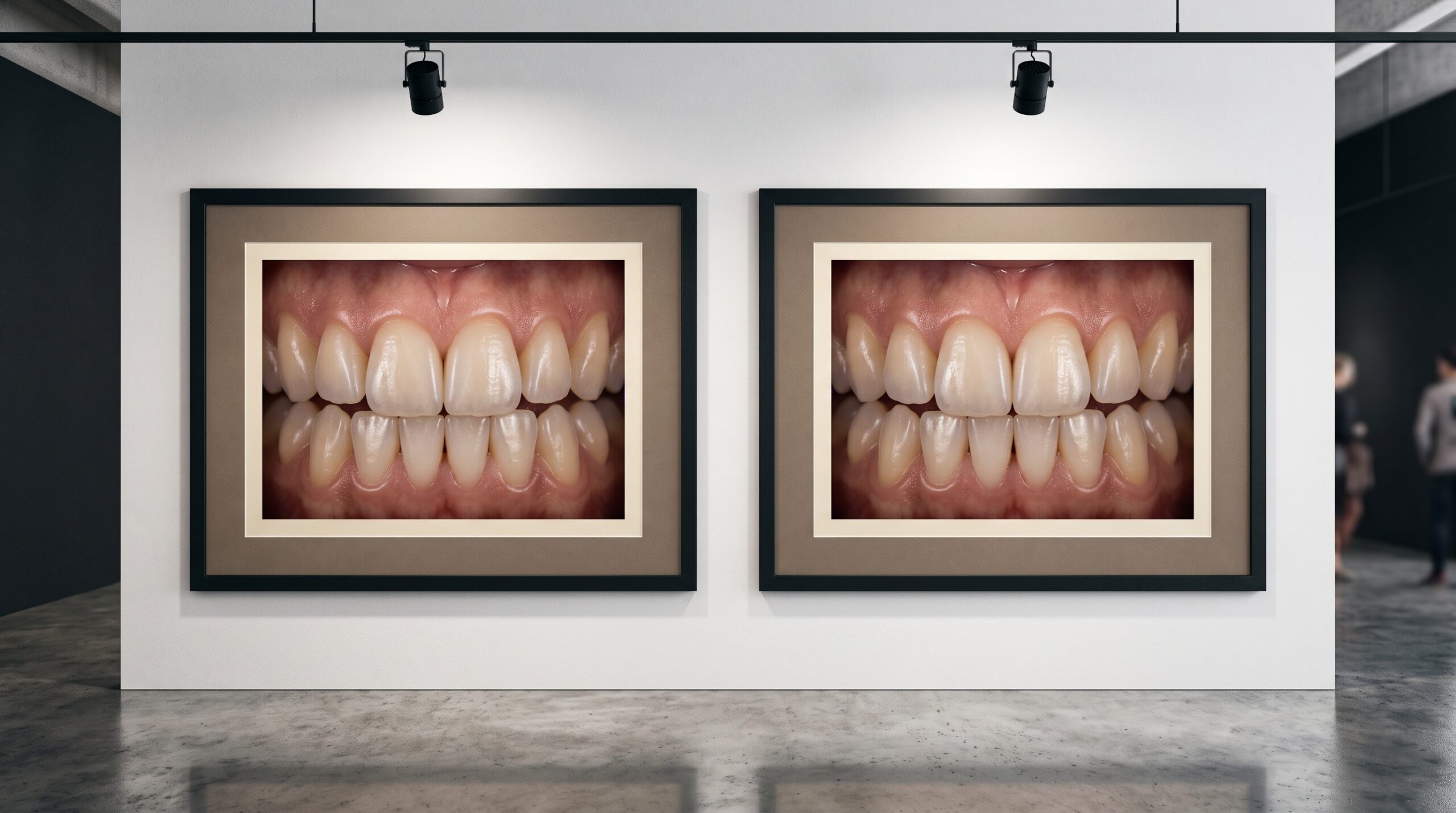
August 1, 2026 True to the Millimeter: Can a Smartphone Frame the Esthetic Zone as Faithfully as a DSLR?
In dental photography, a picture is never only a picture. It is a measurement, a document, a promise that the smile on the screen is the smile in the chair. For decades that promise was kept by a familiar instrument: the digital single-lens reflex camera, a macro lens, and a ring flash, held at a disciplined working distance. It became the gold standard not because it was fashionable but because it was faithful. Now a generation of clinicians reaches, almost reflexively, for the phone in their pocket. A new in vitro study set out to ask the only question that matters when the image will guide treatment: does the phone tell the truth about the geometry of the smile?
Why the DSLR Became the Reference Standard
The reverence for the DSLR is earned, not sentimental. A dedicated macro lens paired with a ring or twin flash gives the operator control over the three variables that decide whether an intraoral photograph is diagnostic or merely decorative: magnification, focal length, and light. A fixed reproduction ratio means a central incisor rendered today can be compared, one to one, with the same tooth photographed a year from now. A longer effective focal length flattens the near-far falloff that makes teeth at the front of the arch loom larger than the teeth behind them. Ring lighting wraps the anterior segment in even, shadowless illumination that keeps shade and translucency honest. Reviews comparing the two device classes have consistently favoured the DSLR on resolution, magnification, and colour accuracy, which is precisely why it remains the benchmark against which everything else is quietly graded.
What the Newest Study Actually Measured
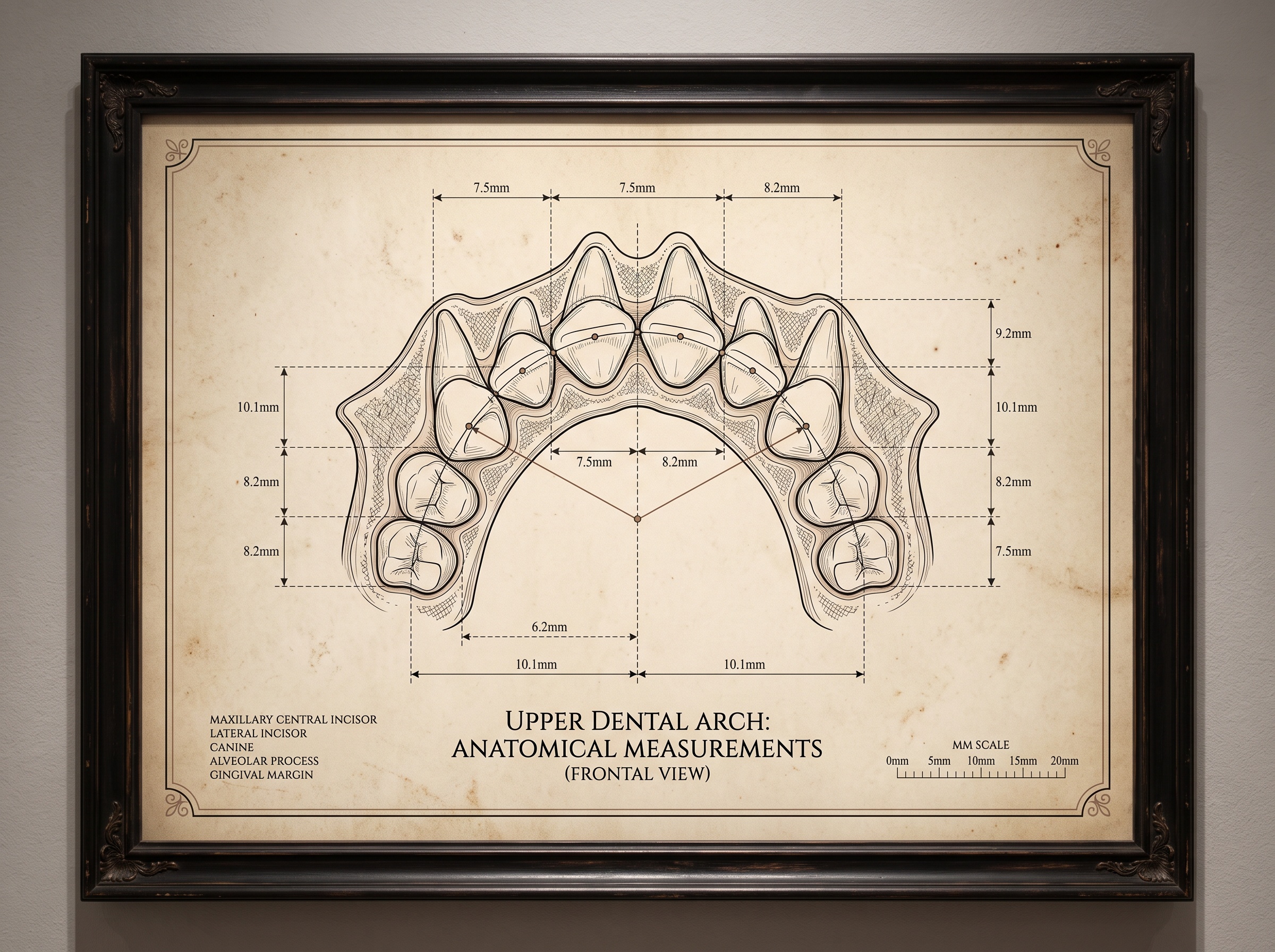
Rather than ask whether a photograph looked good, the recent work took the more demanding path of asking whether it measured true. Researchers photographed the anterior maxillary region of a dental model under tightly controlled conditions, comparing two flagship phones, the iPhone 15 Pro Max and the Samsung Galaxy S23 Ultra, against a DSLR. Every device was mounted on a custom stand and stabiliser so that distance and angle to the model stayed constant. Standardised frontal and occlusal frames were captured, then calibrated software was used to take point-to-point linear measurements between defined dental landmarks. Each measurement was repeated three times and averaged, and the differences between devices were tested statistically with Friedman’s test and a Bonferroni correction. This is not the loose language of “good enough”; it is the vocabulary of dimensional fidelity, the same discipline a conservator would bring to authenticating a drawing.
The Verdict, and the Asterisk
The result will unsettle a few purists. For the Samsung Galaxy S23 Ultra, the linear measurements showed no statistically significant difference from the DSLR. For the anterior esthetic zone, under these conditions, the phone rendered the geometry of the smile with an accuracy indistinguishable from the reference instrument. The iPhone 15 Pro Max fared very slightly less well, with minor inconsistencies against the DSLR, but nothing that resembled the wide gap tradition might predict. The asterisk is important and the authors are candid about it: every image was captured on a stabilisation rig, not in the freehand reality of the operatory. Remove the stand, reintroduce the small tremors of a hand and the guesswork of working distance, and the external validity of the finding narrows. The study measured what the sensor and lens are capable of, not what the average clinician achieves at speed between patients.
Where Geometry Bends
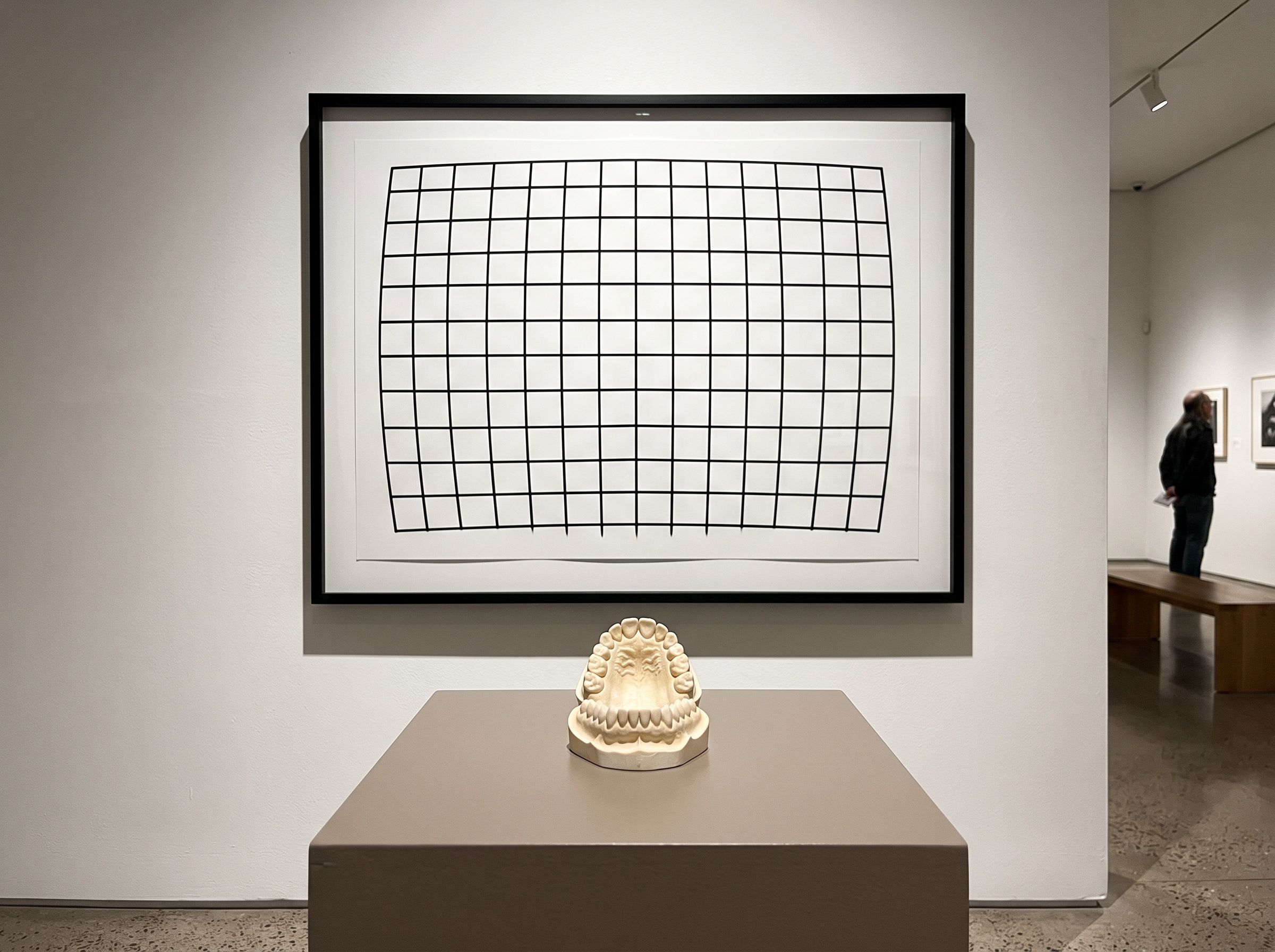
To understand why stabilisation matters so much, it helps to see where a photograph goes wrong. Distortion in the esthetic zone is rarely a failure of pixels; it is a failure of position. Shorten the working distance and the perspective exaggerates, pushing the central incisors forward and letting the arch fall away too steeply toward the canines. Rely on a wide native phone lens and barrel distortion curves the edges of the frame, subtly widening the smile. The DSLR earns its trust partly through hardware and partly through ritual: a fixed lens, a rehearsed distance, a repeatable magnification. A phone can approach the same fidelity, but only when the operator imposes the same discipline the tripod imposed in the study. Fidelity, in other words, is as much a behaviour as it is a specification.
Color, Shade, and the Part the Sensor Cannot Fake
Dimensional accuracy is one axis of truth; colour is another, and here the phone still walks on less certain ground. Smartphone imaging pipelines are built to please the eye, not to preserve the record. Computational processing lifts shadows, warms skin tones, sharpens edges, and applies scene-dependent white balance, all of it excellent for a portrait and quietly corrosive for a shade photograph. A tooth’s value, chroma, and translucency can drift between two frames taken seconds apart. The DSLR with ring flash, shooting in a raw format with a fixed custom white balance and a grey reference in the frame, hands the ceramist a stable, calibrated document. Until a phone can be locked into that same neutral, unflattering honesty, the shade-matching image remains the one photograph where the older instrument keeps a clear advantage.
When the Phone Is Enough, and When It Is Not
The honest reading of the evidence is neither triumphalist nor dismissive. For dimensional documentation of the anterior esthetic zone, communication with laboratories about form and arrangement, treatment-progress records, and patient education, a current flagship phone, held at a consistent distance with steady technique, is now demonstrably capable of faithful geometry. For colour-critical shade selection, for the standardised full series that must be comparable across years, and for medico-legal records where reproducibility is the whole point, the calibrated DSLR workflow still deserves its place on the bench. The instrument should follow the intent of the image. The craft lies in knowing which truth a given photograph is being asked to carry.
Future Developments
The trajectory is unmistakable, and it bends toward the pocket. As computational photography matures, the next advances will not be about more megapixels but about calibration: raw or near-raw capture on phones, dental-specific colour profiles, on-device distance and angle guidance that recreates the tripod’s discipline in software, and clip-on optics and diffusers that tame the native lens. Machine-learning correction may one day undo focal-length distortion and normalise shade automatically, closing the last honest gaps this study exposed. When that happens, the debate will quietly dissolve, and the question will no longer be which device tells the truth but whether the clinician has the discipline to let it. The image, as always in this gallery, is only as faithful as the hand and eye that compose it, and the finest imaging is the kind that disappears, leaving nothing between the viewer and the smile itself.
Sources & further reading:
- Smartphones vs DSLR Cameras in Dental Photography: An In Vitro Assessment of Linear Dimensional Shift in the Esthetic Zone (medRxiv preprint)
- Dental photography using digital single-lens reflex cameras vs smartphones (ScienceDirect)
Sorry, the comment form is closed at this time.