


October 2, 2026 The Feed as Gallery: The Aesthetics, Ethics, and Consent of Dental Photography on Social Media
For most of its history, clinical dental photography had an audience of perhaps three: the dentist who took it, a specialist across town, and the laboratory technician matching a shade. The image lived in a chart, spoke a private language of angles and retractors, and asked nothing of beauty beyond accuracy. That world has quietly ended. Today the same camera that documents a fractured cusp also feeds a public gallery scrolled by thousands, where a patient’s smile is content, the practice is a brand, and every post is judged first by the eye and only later by the record. The clinical image has acquired an audience — and with it, a set of questions the chart never had to answer.
The Feed Is a Gallery, and Galleries Have Rules
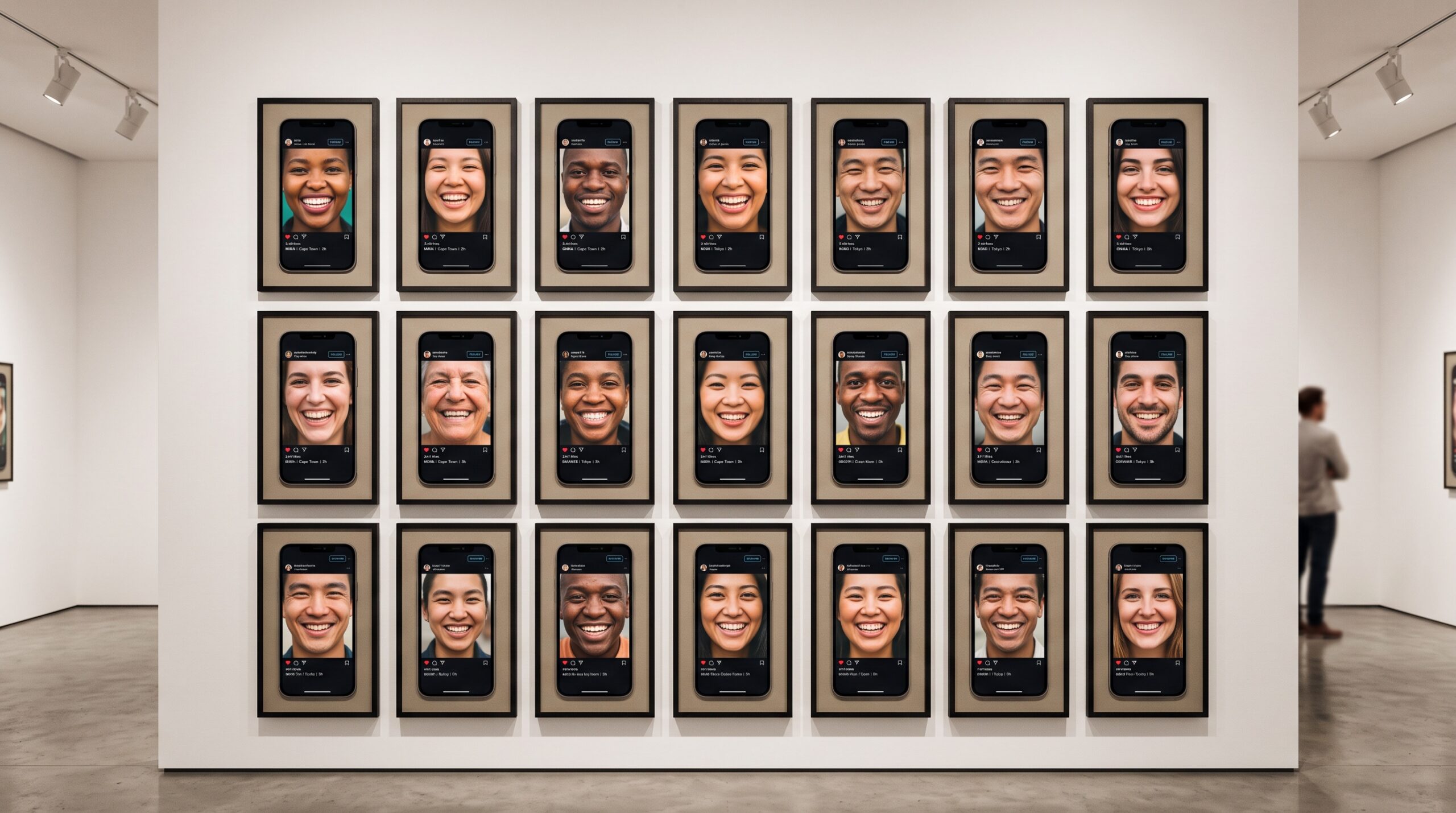
It helps to take the metaphor seriously. A social feed is a public exhibition: curated, lit, sequenced, and seen by strangers who will form opinions about the clinician from the images alone. Like any gallery, it flatters the work that is composed with care and punishes the careless. A grid of mismatched exposures, blown highlights, and crooked horizons reads as a lack of attention to detail — a damning impression for a profession built on precision. The good news is that the discipline required is the same discipline that makes a diagnostic photograph trustworthy: consistent lighting, a controlled background, a steady angle, honest color. The practice that photographs well for the chart almost always photographs well for the feed. The difference is not technique. It is that the gallery is now open to the public, and the public is watching.
The Honest Before-and-After
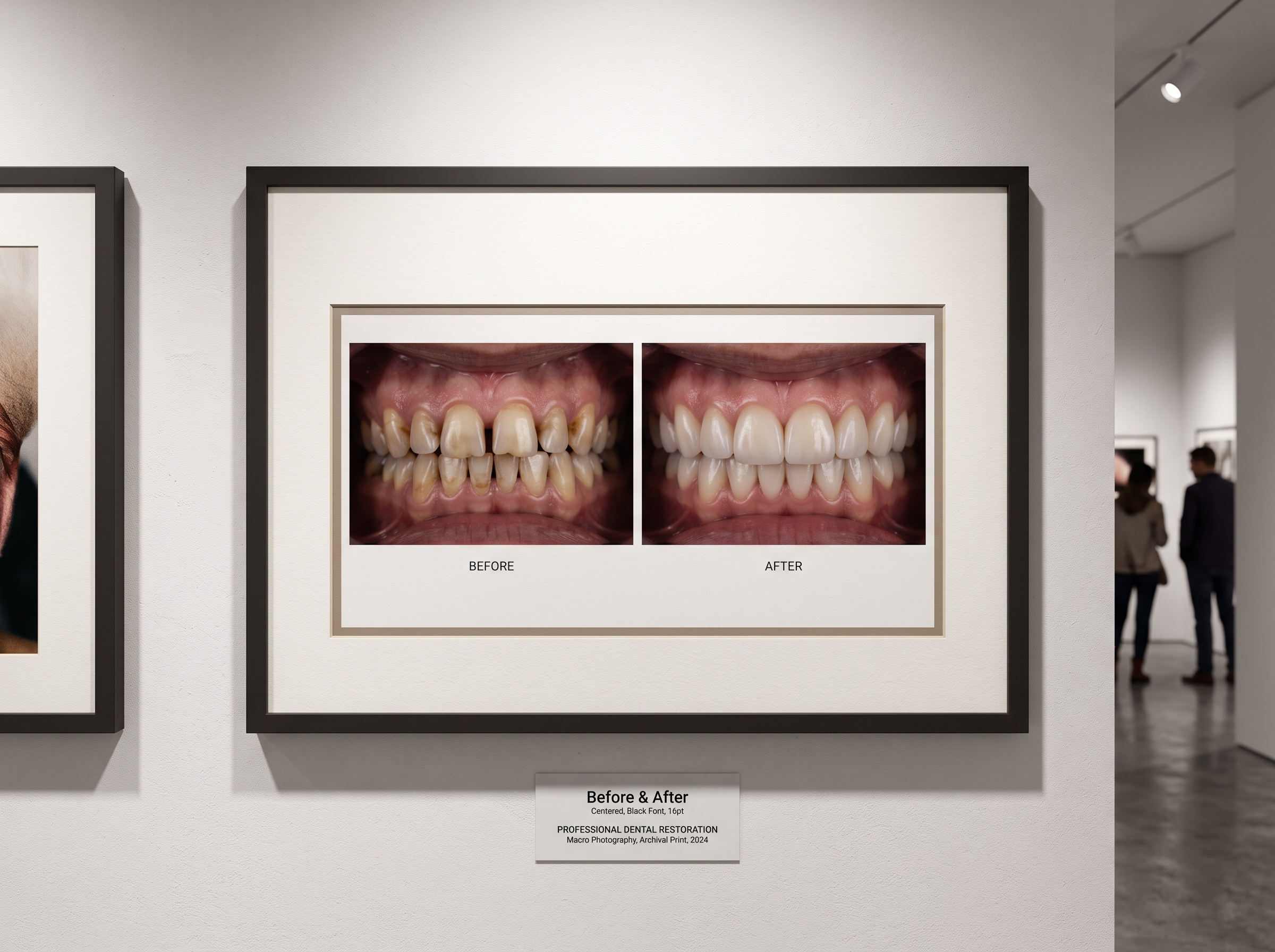
No genre travels further on social media than the before-and-after, and none is more easily corrupted. The ethical before-and-after obeys a single rule: only the dentistry may change. Lighting, angle, focal length, exposure, and background must be held constant between the two frames, so that the improvement the viewer sees is the improvement that actually occurred. The dishonest version is seductive precisely because it is so easy — shoot the “before” in dim, unflattering light with a tired, dehydrated patient, then shoot the “after” under bright, warm, carefully diffused flash with freshly glossed lips. Nothing has been faked, exactly, yet the comparison is a lie of staging. A viewer cannot separate the contribution of the clinician from the contribution of the lighting rig, and the image sells a result the dentistry alone did not deliver.
Consent Is the Frame
A clinical image made for a patient’s record carries one kind of permission; an image broadcast to the world requires another entirely. General treatment consent does not cover publication, and a face — or even a distinctive smile — is identifying information. The ethical standard is specific, informed, written consent for public use: the patient should know which images, on which platforms, for what purpose, and that once posted the image is effectively impossible to fully retract. Consent given for an Instagram post is not consent for a billboard, and consent can be withdrawn. Treating the signature as a one-time formality, buried in intake paperwork, is how practices end up in the uncomfortable position of having published a patient who never truly agreed. Consent is not an obstacle to the image. It is the frame that gives the practice the right to hang it at all.

The Retouching Line
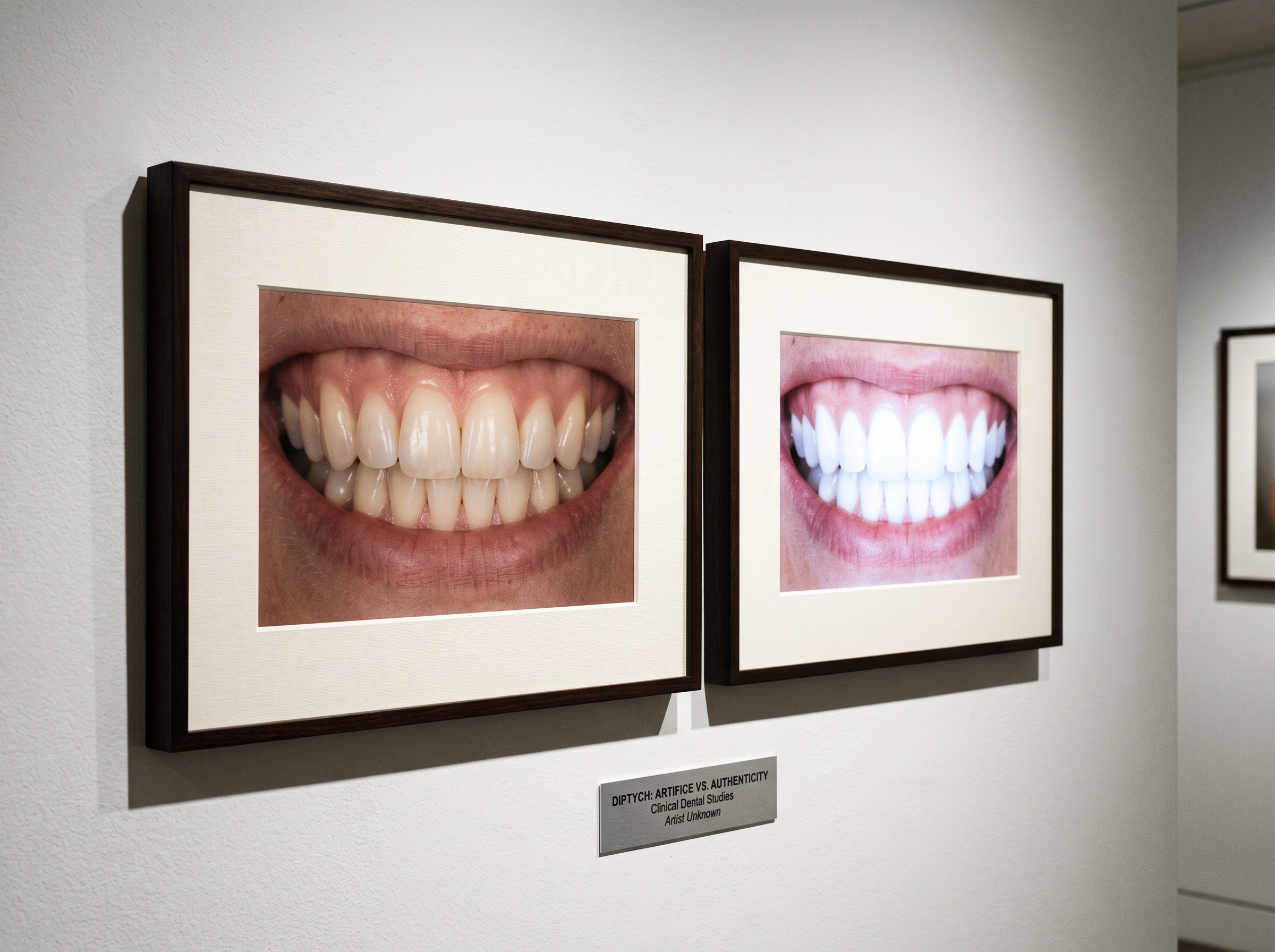
Every phone now ships with beauty filters that smooth skin, brighten teeth, and subtly reshape faces in real time, and the temptation to let them run is enormous. Here the clinical photographer must draw a line the influencer never has to. Adjusting exposure, white balance, and cropping to render the scene faithfully is legitimate — it recovers what the eye saw in the room. Whitening teeth in software, erasing a stain, straightening an edge, or saturating the gingiva into an impossible pink crosses into misrepresentation of a clinical outcome. The harm is not merely abstract. A feed full of digitally perfected smiles quietly resets what patients believe is achievable, breeds disappointment with honest results, and erodes the trust the profession depends on. The most sophisticated accounts are now the ones that look real: visible texture, natural translucency, the small asymmetries that mark a living mouth rather than a rendered one.
What the Image Carries When It Leaves
A photograph posted online is not a copy that stays home while the original travels; it is the original, released. It can be screenshotted, re-shared, scraped into a dataset, and cached on servers long after the post is deleted. This permanence changes the calculus of every upload. It argues for a deliberate pause before posting — a habit of asking not only “is this a good image?” but “am I content for this to exist publicly forever, attached to this person, outside my control?” The same caution extends to the background of the frame, where a visible chart, a monitor, or a second patient can leak information no one consented to share. The discipline is to treat the moment of posting as irreversible, because it very nearly is.
Future Developments
The pressures here will intensify before they ease. Generative tools can already fabricate a flawless “after” from a single “before,” and platforms increasingly apply beautification automatically, often without the poster’s full awareness — which means the honest clinician may soon have to work to switch enhancement off rather than resist turning it on. In response, expect a countercurrent: disclosure norms, verified-authenticity labels, and professional-body guidance that treats a clinical image shared in public as a form of advertising subject to the same standards of truthfulness as any other claim. The lasting principle is older than any platform. A clinical photograph is a document before it is decoration, and its first loyalty is to the truth of the tissue it records. The feed may be a gallery, but the images hung there still carry a patient’s face and a clinician’s word — and both deserve to be shown honestly, with permission, and with the restraint that marks the difference between presenting work and selling an illusion.
Sorry, the comment form is closed at this time.