


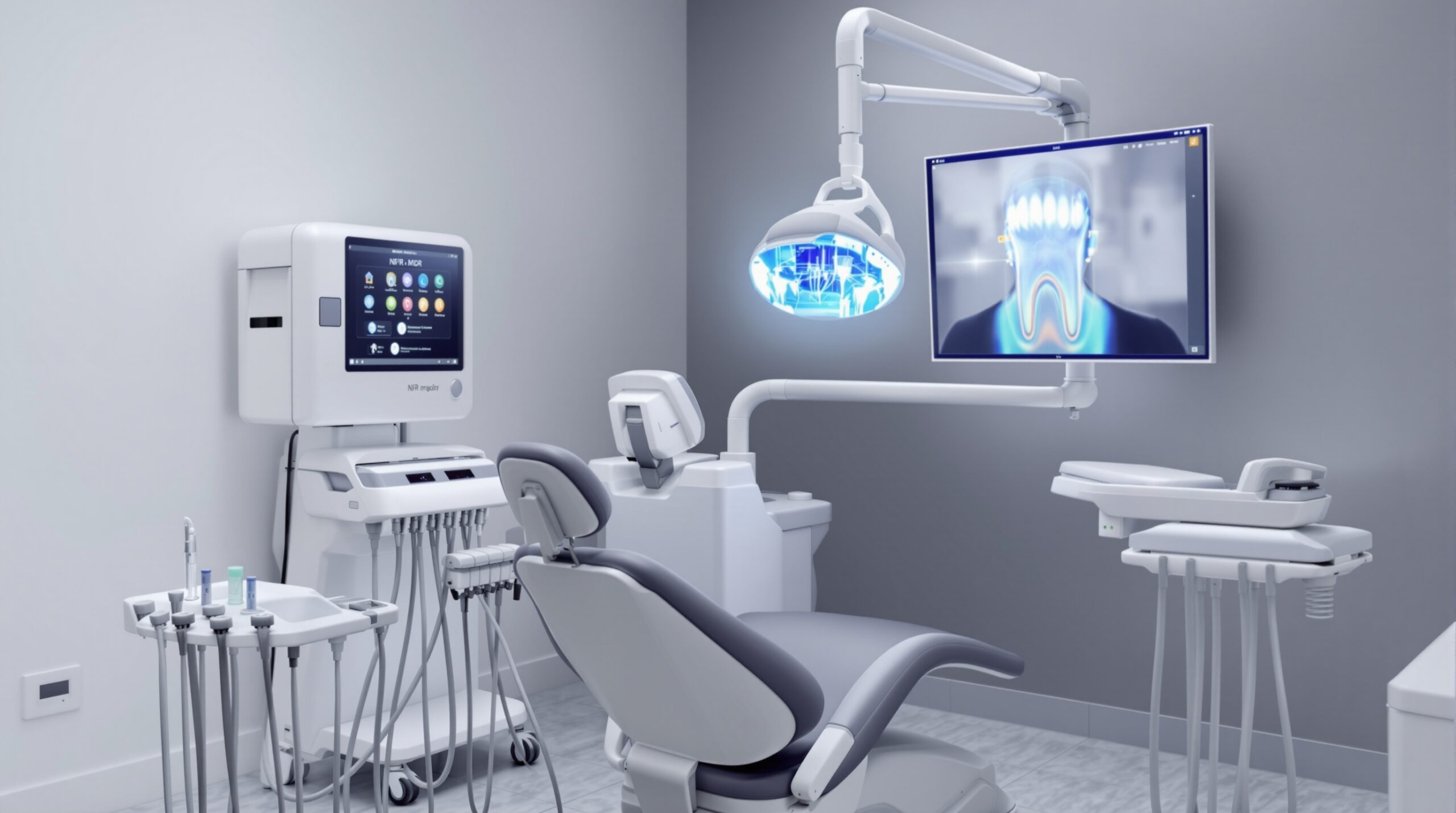
29 Mar Near-Infrared Transillumination (NIRT): Advanced Dental Imaging for Early Caries Detection
Near-infrared transillumination (NIRT) represents a revolutionary advancement in dental imaging technology, offering practitioners a radiation-free method for detecting early-stage dental caries and internal tooth pathology. This innovative diagnostic tool utilizes wavelengths in the 780nm range to penetrate dental tissues and reveal hidden defects that traditional radiography might miss.
How NIRT Technology Works
NIRT systems employ near-infrared light sources that transilluminate teeth from the periodontal tissues, while specialized cameras capture high-resolution images from the occlusal surface. The technology leverages the optical properties of healthy versus compromised dental tissues, as carious lesions scatter light differently than sound enamel and dentin structures.

The 780nm wavelength is particularly effective because it can penetrate several millimeters into tooth structure while maintaining sufficient resolution to detect approximal caries as small as 0.3mm. This makes NIRT especially valuable for identifying interproximal lesions that are challenging to detect through visual examination alone.
Clinical Applications and Benefits
NIRT technology offers numerous advantages over traditional diagnostic methods:
- Radiation-free imaging – Completely eliminates patient exposure to ionizing radiation
- Early detection capability – Identifies caries in enamel before cavitation occurs
- Real-time visualization – Provides immediate results during patient examination
- Enhanced patient communication – Clear visual evidence helps explain treatment recommendations
- Quantitative analysis – Enables monitoring of lesion progression over time
Integration into Modern Practice
Contemporary dental practices are increasingly incorporating NIRT systems into their diagnostic workflows. The technology complements rather than replaces traditional radiography, providing additional diagnostic information that enhances clinical decision-making.
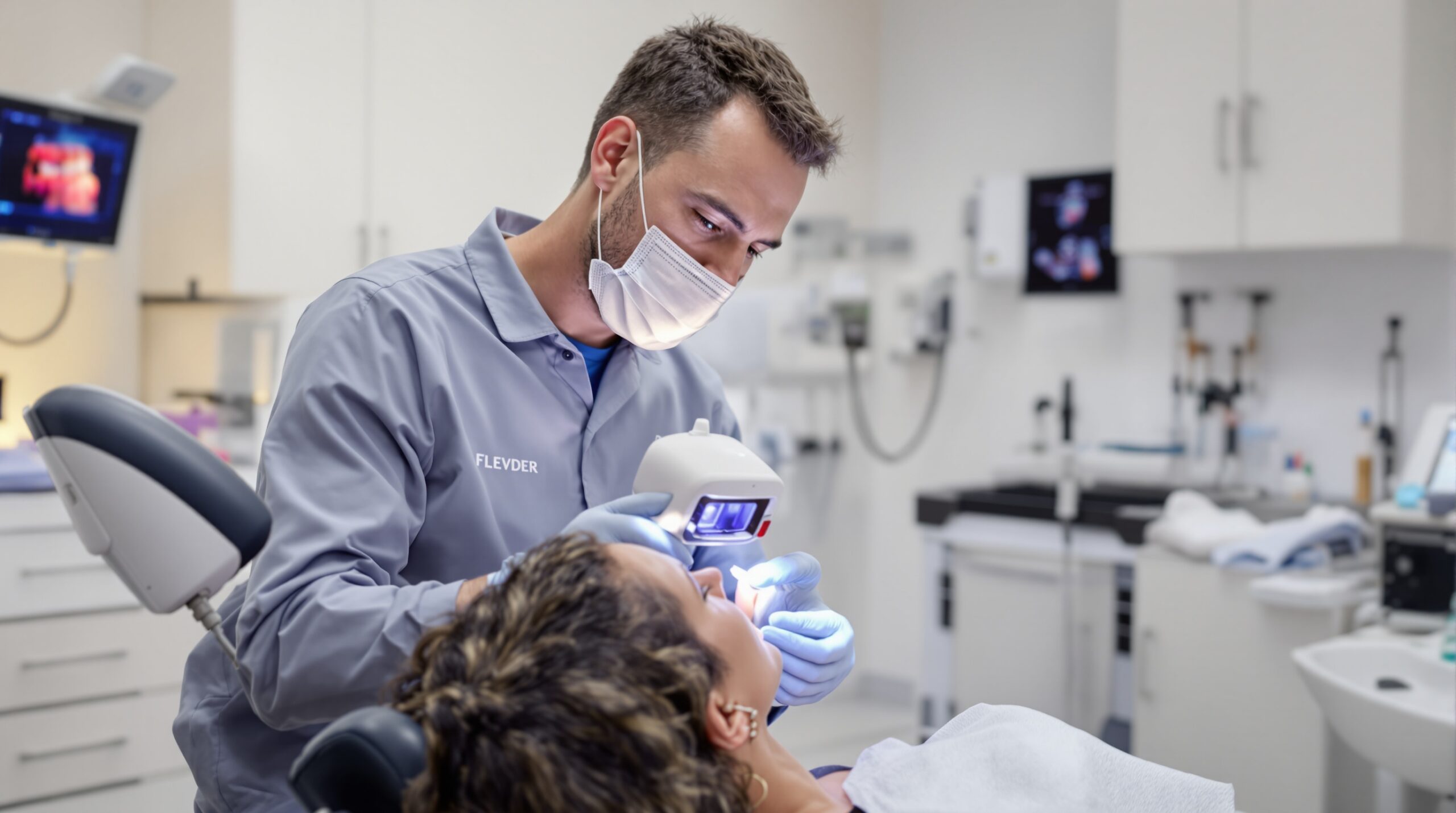
NIRT is particularly valuable for pediatric patients, pregnant women, and individuals requiring frequent monitoring, where radiation exposure reduction is a priority. The technology also excels in detecting secondary caries around existing restorations and identifying crack propagation in restored teeth.
Technical Specifications and Equipment
Modern NIRT systems typically feature:
- High-definition InGaAs SWIR cameras for optimal image capture
- Broadband near-infrared light sources with precise wavelength control
- Crossed linear polarizers to reduce surface reflections
- Advanced image processing algorithms for enhanced contrast
- Integration capabilities with practice management software
Clinical Evidence and Research
Extensive research demonstrates NIRTs effectiveness in dental diagnostics. Studies show sensitivity rates exceeding 0.85 for approximal caries detection, with specificity values above 0.90. The technologys ability to detect early enamel demineralization makes it particularly valuable for preventive dentistry programs.
Future Developments
Ongoing research focuses on expanding NIRTs applications, including:
- Enhanced AI-powered image analysis for automated lesion detection
- Integration with other imaging modalities for comprehensive diagnostics
- Development of portable NIRT systems for mobile dental applications
- Improved quantification algorithms for precise lesion measurement
Implementation Considerations
Successful NIRT integration requires proper staff training and standardized protocols. Practitioners should understand the technologys limitations, including reduced effectiveness in heavily restored teeth and the need for proper lighting conditions during image acquisition.
Near-infrared transillumination technology represents a significant advancement in dental imaging capabilities, offering radiation-free, real-time diagnostic information that enhances patient care while supporting evidence-based treatment planning. As this technology continues to evolve, it will play an increasingly important role in modern dental practice.
No Comments