


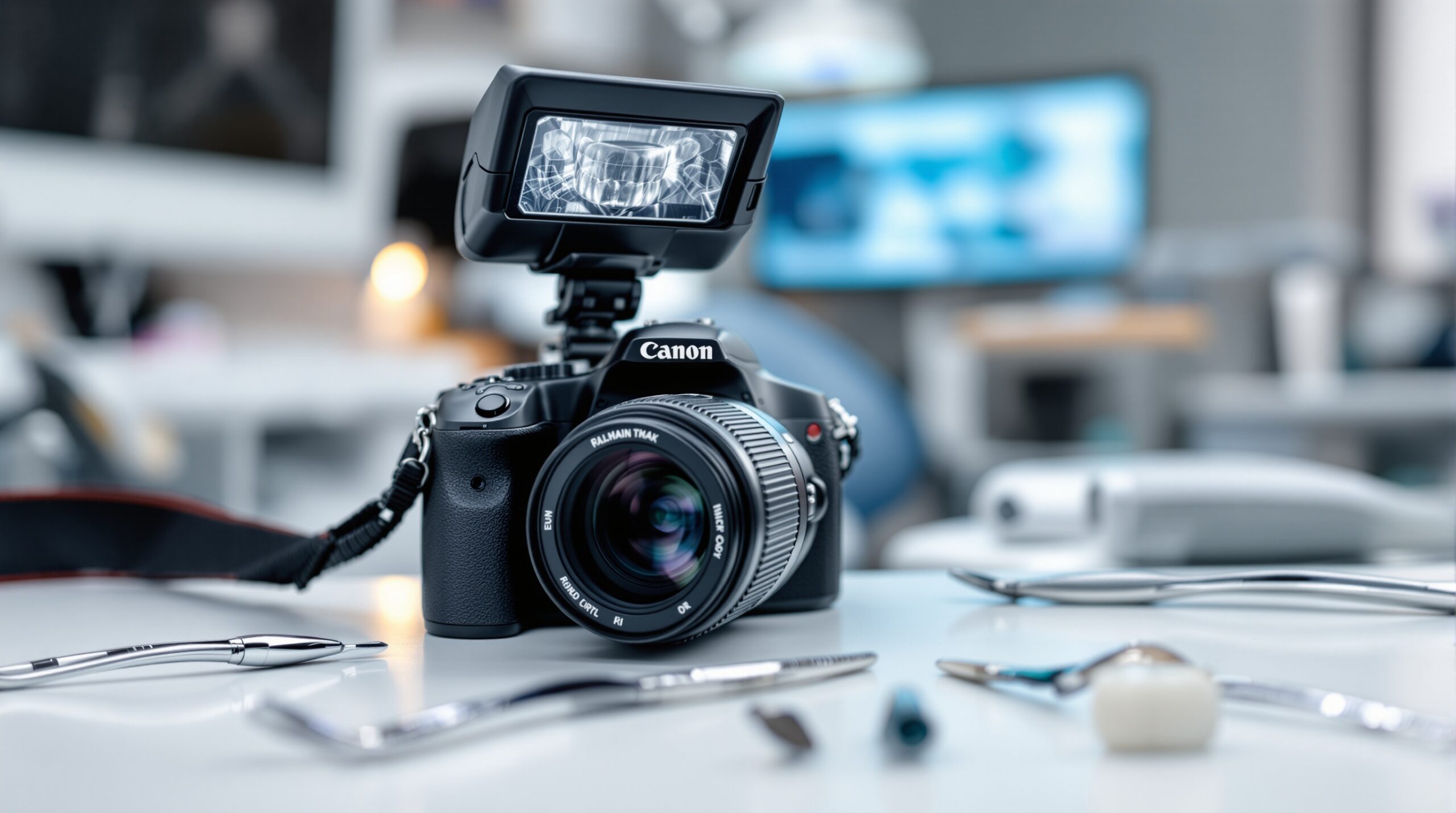
February 12, 2026 The Essential Digital Dental Photography Equipment Guide for 2026: From Camera Body to Flash
Dental photography has evolved from a nice-to-have skill into a clinical necessity. Whether you’re documenting cases for treatment planning, communicating with labs, building patient trust through visual education, or preparing for medico-legal documentation, high-quality clinical photographs are indispensable in modern dentistry.
But with the market shifting rapidly from DSLRs to mirrorless systems and smartphone solutions gaining ground, choosing the right equipment can be overwhelming. This comprehensive guide breaks down exactly what you need — and what you don’t — to build a professional dental photography setup in 2026.
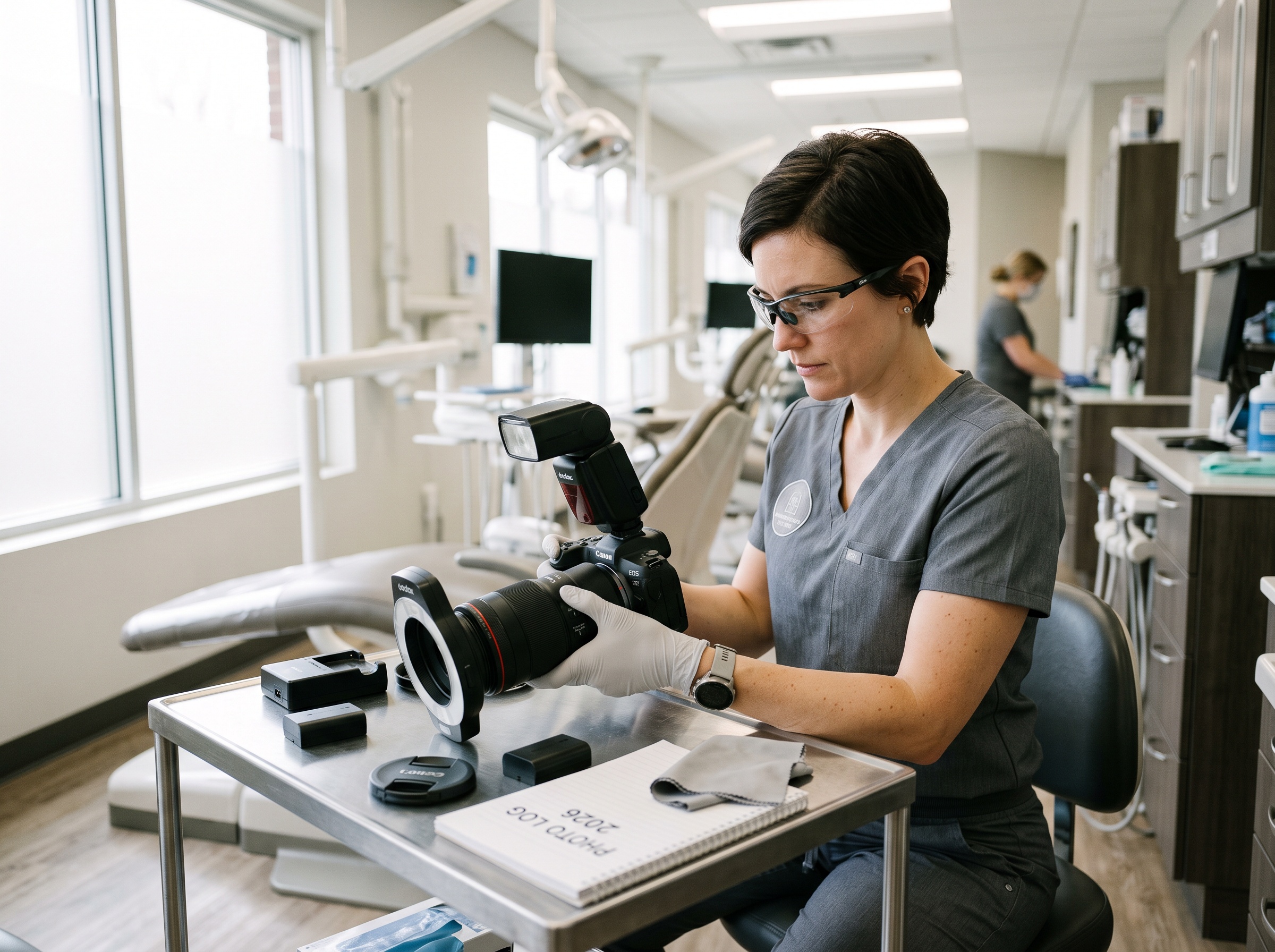
Camera Body: Mirrorless Is Now the Standard
The debate between DSLR and mirrorless cameras is effectively over. Every major manufacturer has stopped developing new DSLR lenses, focusing entirely on mirrorless systems. For dental photography in 2026, mirrorless is the clear choice.
Why Mirrorless Wins for Dental Photography
- Real-time exposure preview: See exactly how your image will look before you press the shutter — critical for getting consistent results in the operatory
- Superior autofocus: Eye-detection and subject-tracking AF systems make capturing sharp images faster and more reliable
- Lighter and more compact: Less fatigue during extended photo sessions
- Silent shooting: Electronic shutters eliminate the loud mirror slap that can startle patients
Recommended Camera Bodies
Best overall: The Canon EOS R7 or Nikon Z50 II offer excellent resolution (20+ megapixels), fast autofocus, and compatibility with a wide range of macro lenses. Both are APS-C sensor cameras that provide additional magnification — a genuine advantage for dental close-ups.
Budget option: The Sony a6400 remains an excellent choice with outstanding autofocus performance and a compact body. It’s been on the market for a few years now, which means competitive pricing.
Premium choice: The Canon EOS R6 Mark III or Nikon Z6 III full-frame cameras deliver exceptional image quality and low-light performance, though the full-frame sensor means less inherent magnification for close-up work.
Regardless of brand, look for at least 20 megapixels of resolution, which provides more than enough detail for clinical documentation and lab communication.
The Macro Lens: Your Most Important Investment
The lens matters more than the camera body for dental photography. A dedicated macro lens capable of 1:1 (life-size) magnification is non-negotiable.
Recommended Focal Lengths
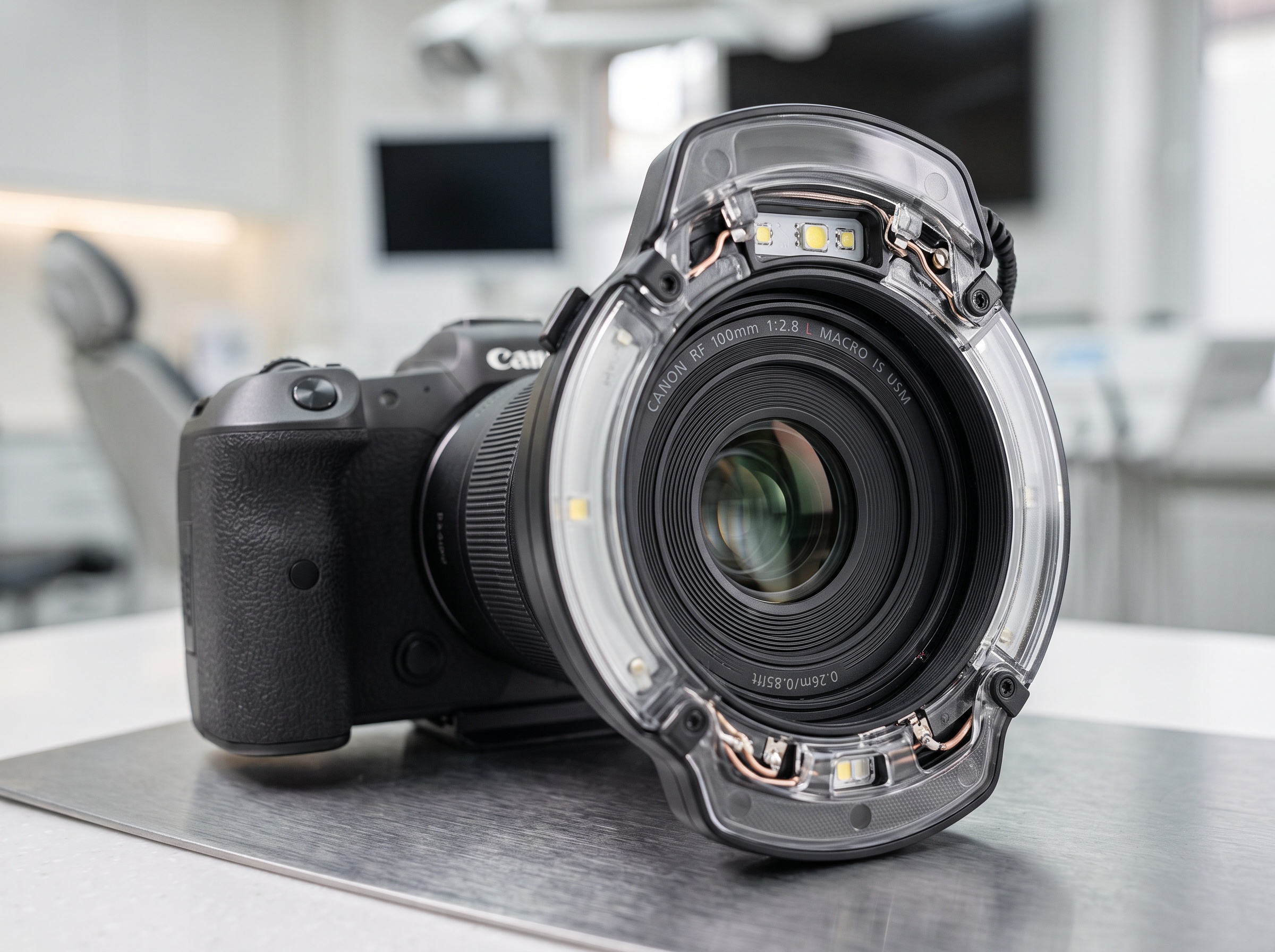
For dental photography, a 100mm macro lens (or equivalent) is the gold standard. This focal length provides:
- Sufficient working distance between the lens and the patient’s mouth
- Natural perspective without distortion
- True 1:1 magnification for detailed intraoral shots
Top Macro Lens Picks
- Canon RF 100mm f/2.8L Macro IS USM: Superb optics with image stabilization
- Nikon NIKKOR Z MC 105mm f/2.8 VR S: Nikon’s best macro lens with vibration reduction
- Sony FE 90mm f/2.8 Macro G OSS: Excellent sharpness and optical stabilization
- Tokina ATX-i 100mm f/2.8 Macro: A budget-friendly third-party option with excellent optical quality
Flash and Lighting: The Make-or-Break Factor
Consistent lighting is what separates amateur snapshots from professional clinical photographs. For dental photography, you have two main options:
Ring Flash
A ring flash mounts directly around the lens barrel and provides even, shadow-free illumination. It’s the most popular choice for dental photography because it’s simple to use and produces consistent results.
Recommended: The Nissin MF18 Macro Flash or Canon Macro Ring Lite MR-14EX II provide excellent ring flash performance. For budget-conscious buyers, the Godox MF12 offers remarkable value.
Twin Flash (Dual Point Flash)
Twin flash systems position two small flash heads on either side of the lens, allowing you to control the lighting ratio between left and right. This creates more dimensional images with subtle shadows that reveal surface texture and contours — particularly valuable for aesthetic cases and lab communication.
Recommended: The Canon MT-26EX-RT or Nikon R1C1 wireless close-up systems provide maximum flexibility. The Godox MF12 twin flash kit offers excellent twin flash capability at a fraction of the price.
Essential Accessories
Retractors
Quality cheek retractors are essential for intraoral photography. Invest in multiple sizes — adult, child, and narrow — in a clear material that minimizes visual distraction. Autoclavable retractors are preferred for infection control.
Dental Mirrors
Rhodium-coated occlusal and buccal dental photography mirrors provide clear, undistorted reflections for capturing areas that can’t be photographed directly. Keep them warm (use a mirror warmer or warm water) to prevent fogging.
Contrastors
Black contrasting backgrounds isolate teeth from surrounding soft tissue, making images significantly more impactful for case presentations and lab communication. Available in various sizes for anterior and lateral views.
The Smartphone Alternative
Modern smartphones — particularly the iPhone 15 Pro/16 Pro and Samsung Galaxy S25 Ultra — have cameras that rival dedicated cameras in many situations. Paired with a smartphone dental photography adapter and lighting system, they can produce clinical-quality images for documentation and patient education.
However, smartphones still fall short of dedicated camera systems in macro magnification, flash control, and overall image quality for publication or detailed lab communication. Consider a smartphone setup as a supplement to, not a replacement for, a dedicated dental photography system.
Recommended Starter Kit
If you’re building a dental photography setup from scratch, here’s what to buy first:
- Camera body: Canon EOS R7 or Nikon Z50 II (~$1,200-$1,500)
- Macro lens: 100mm macro lens for your system (~$500-$1,100)
- Flash: Ring flash or twin flash (~$200-$600)
- Retractors: Set of clear cheek retractors (~$30-$50)
- Mirrors: Occlusal and buccal photography mirrors (~$100-$200)
Total investment: approximately $2,000-$3,500 for a professional dental photography setup that will last years and dramatically improve your clinical documentation, case acceptance, and lab communication.
Getting Started
Don’t let perfect be the enemy of good. Start with the basics — a camera, macro lens, and ring flash — and add accessories as your skills develop. The most important step is simply beginning to integrate photography into your daily clinical workflow. Your patients, lab technicians, and future self reviewing cases will all thank you.
Sorry, the comment form is closed at this time.