


April 14, 2026 Twin-Point Flash Lighting Systems: Advanced Illumination Techniques for Professional Dental Photography
Professional dental photography demands precise lighting control to capture accurate clinical details, making the choice of flash system critical for diagnostic quality images. Twin-point flash systems represent a sophisticated lighting solution that addresses the unique challenges of intraoral photography, offering superior shadow control and dimensional rendering compared to traditional ring flash systems.
Understanding Twin-Point Flash Technology
Twin-point flash systems utilize two separate flash units positioned strategically around the camera lens, typically mounted at 45-degree angles to the optical axis. This configuration creates controlled directional lighting that enhances the three-dimensional appearance of dental structures while minimizing harsh shadows and reflections that can obscure critical anatomical details.

The dual-flash arrangement allows for independent power control of each unit, enabling photographers to create graduated lighting effects that reveal subtle surface textures, marginal integrity, and tissue characteristics essential for comprehensive clinical documentation.
Clinical Advantages Over Ring Flash Systems
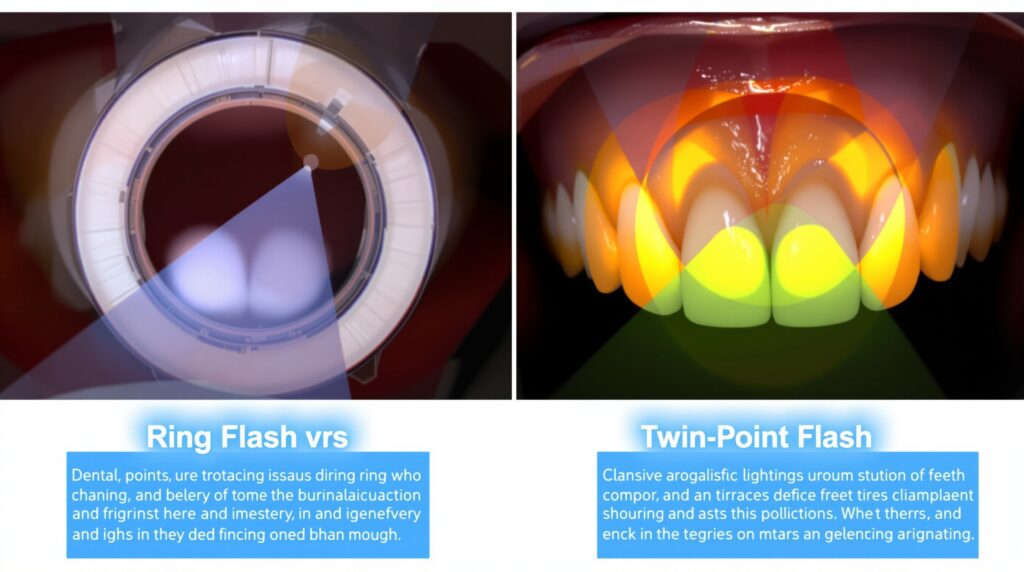
While ring flash systems provide even circumferential illumination, they often create flat, dimensionless images that lack the depth perception necessary for detailed clinical assessment. Twin-point flash systems overcome these limitations through several key advantages:
- Enhanced dimensional rendering: Directional lighting creates natural shadows that define anatomical contours and surface irregularities
- Reduced corneal reflections: Angled positioning minimizes direct reflection from wet surfaces and restorative materials
- Improved color accuracy: Balanced illumination reduces color temperature variations across the photographic field
- Superior detail resolution: Controlled shadow patterns enhance the visibility of fine surface textures and marginal defects
Technical Configuration and Setup
Optimal twin-point flash configuration requires precise positioning to achieve consistent, reproducible results. The flash units should be mounted at equal distances from the lens axis, typically 8-12 centimeters apart, with both units angled inward to converge at the working distance of the macro lens.
Power ratio settings between the two flash units can be adjusted to create specific lighting effects. A 1:1 ratio provides balanced illumination suitable for general documentation, while slight power variations (such as 3:2 or 2:1 ratios) can emphasize specific anatomical features or create subtle modeling effects that enhance diagnostic clarity.
Positioning Techniques for Optimal Results
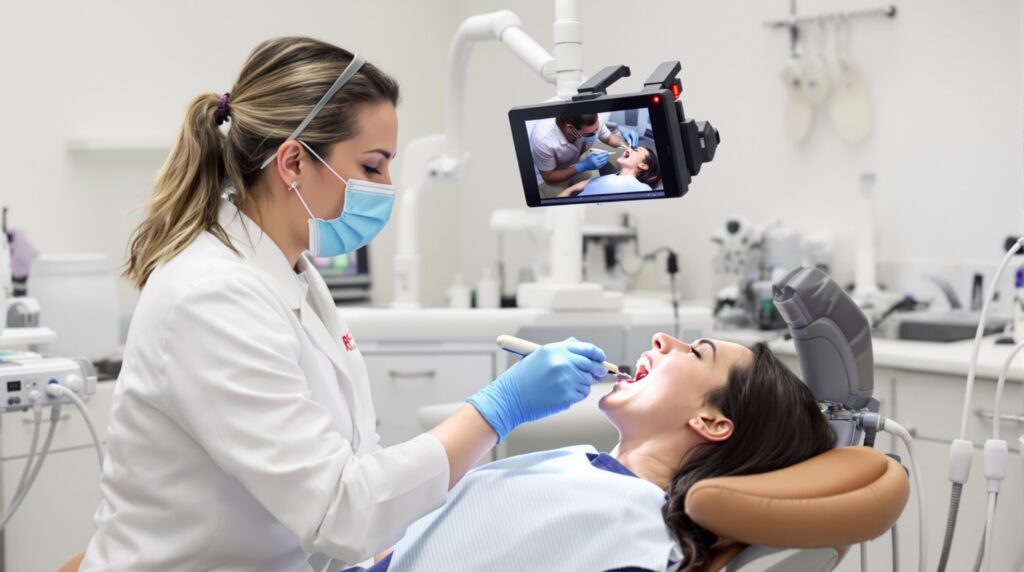
Successful twin-point flash photography requires attention to both flash positioning and camera angle. The photographer should maintain consistent working distances, typically 15-25 centimeters from the subject, to ensure even illumination across the photographic field.
For anterior documentation, positioning the flash units at slightly asymmetrical angles can prevent unwanted reflections from labial surfaces while maintaining adequate illumination of interproximal areas. Posterior photography may require adjustment of flash angles to compensate for the challenging access angles inherent in molar region documentation.
Color Temperature and White Balance Considerations
Twin-point flash systems typically operate at color temperatures between 5200-5800K, closely matching daylight conditions. This consistency is crucial for accurate color reproduction of dental tissues and restorative materials, particularly when images will be used for shade matching or treatment planning purposes.
Custom white balance settings should be established for each specific flash configuration and working environment. Many twin-point systems include modeling lights that assist with composition and provide a preview of the final lighting pattern, allowing photographers to make real-time adjustments before capture.
Integration with Digital Workflow
Modern twin-point flash systems integrate seamlessly with digital dental photography workflows, supporting both tethered shooting protocols and standalone documentation procedures. TTL (Through-The-Lens) metering compatibility ensures consistent exposures across varying clinical conditions, while manual power control allows for creative lighting adjustments when documenting complex cases.
The superior dimensional rendering achieved with twin-point flash systems enhances the effectiveness of digital treatment planning software and facilitates more accurate case presentation to patients and colleagues. The improved image quality also supports advanced imaging applications such as digital smile design and virtual treatment planning protocols.
Conclusion
Twin-point flash lighting systems represent a significant advancement in dental photography technology, offering clinical advantages that directly improve diagnostic accuracy and treatment documentation quality. The enhanced dimensional rendering, reduced reflection artifacts, and superior color accuracy achieved through this lighting approach make twin-point systems an essential tool for practices committed to excellence in clinical photography.
Investment in professional twin-point flash systems delivers measurable improvements in image quality that enhance both clinical documentation and patient communication, making this technology an valuable addition to the modern dental imaging arsenal.
Sorry, the comment form is closed at this time.