


October 6, 2026 The Gray Card in the Operatory: Nailing White Balance at the Moment of Capture
There is a moment, early in every clinical series, when the color of the final image is quietly decided. It is not in editing, and it is not at the laboratory bench. It is in the fraction of a second the shutter is open, under the particular light of your operatory. Everything a ceramist will later trust about the shade, the value, the warmth of a tooth is set then — and a single neutral gray card is how the careful photographer makes sure it is set truthfully.
White balance is the least glamorous subject in dental photography and arguably the most consequential. A beautifully composed, pin-sharp image with the wrong color temperature is a beautiful lie. Here is the craft of getting it right where it actually matters: at capture.
Why the eye is a poor witness to color
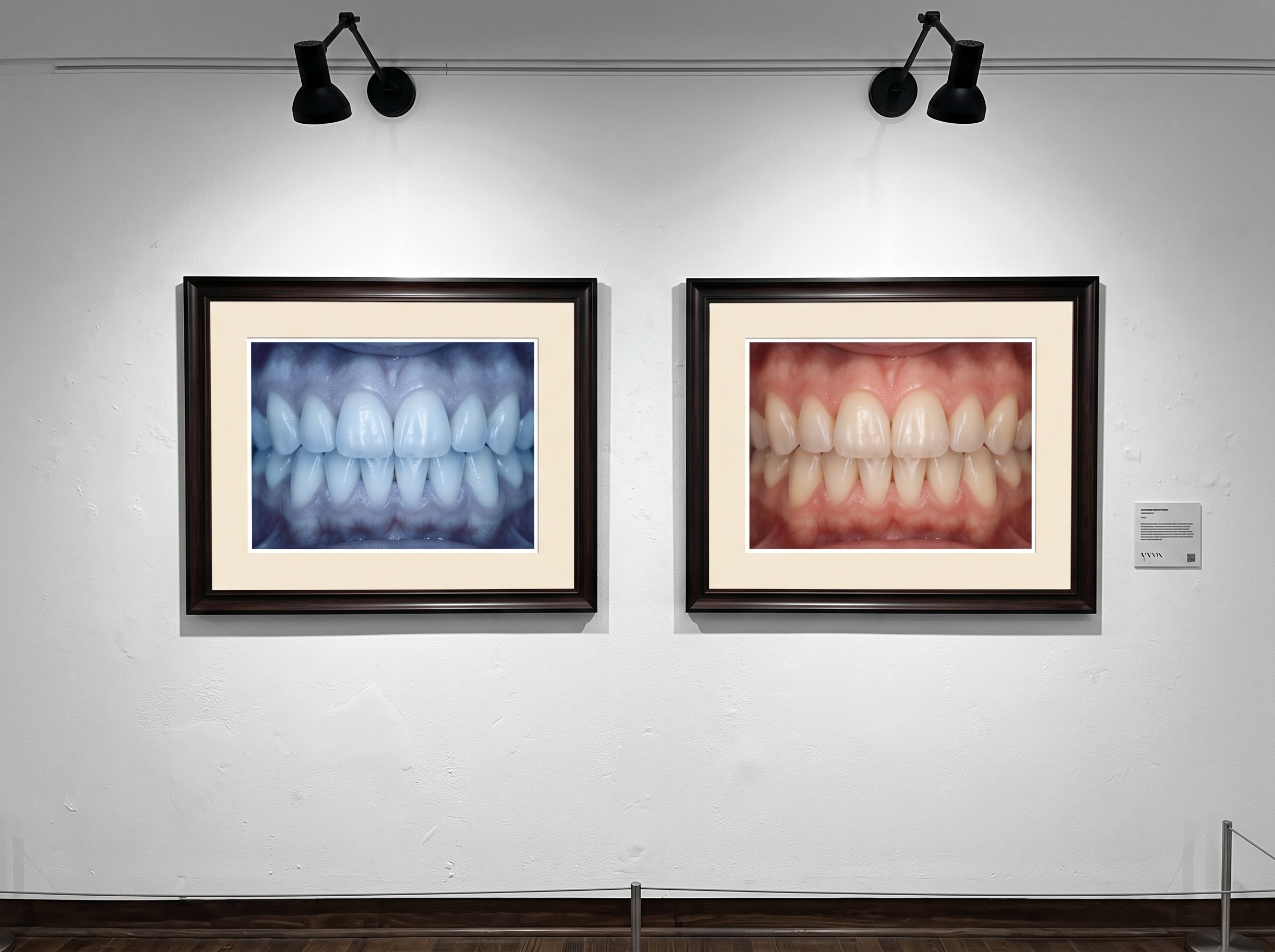
The human visual system is relentlessly adaptive. Walk from daylight into an operatory lit by a mix of overhead LEDs, a fixture over the chair, and the burst of a flash, and your brain silently corrects all of it so that teeth still look “white.” The camera has no such mercy. It records the light that is actually there, color cast and all. This is why a photograph can look subtly blue, green, or amber when the scene looked perfectly neutral to everyone in the room.
Flash helps, because it dominates the exposure with a known, relatively consistent color temperature. But “relatively consistent” is not the same as “accurate,” and ambient light still leaks in. Left to its automatic judgement, the camera guesses — and it guesses differently from frame to frame, depending on how much tooth, lip, retractor, and background fill the sensor. Inconsistent guesses are the enemy of a case documented across several images.
The gray card: one neutral truth in the frame
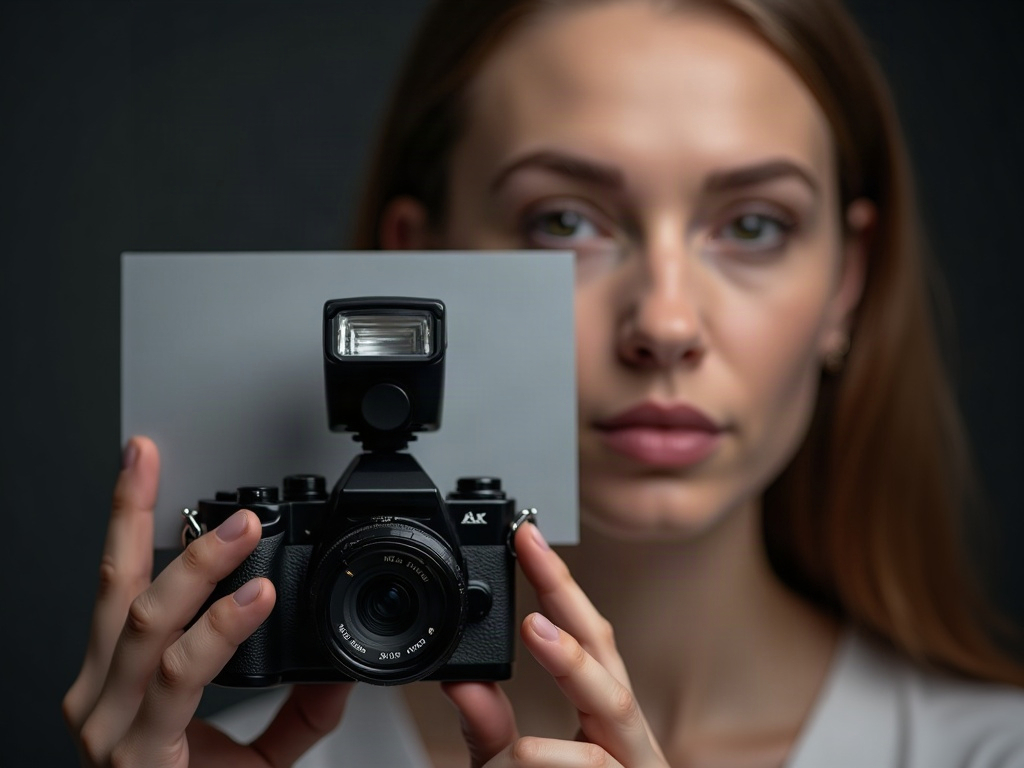
A photographic gray card is a surface manufactured to reflect light neutrally — equal across the spectrum, with no color of its own. Placed in the frame and photographed under the exact light of your series, it gives you something the teeth never can: a patch in the image that is known to be neutral. If the card comes out blue, the whole frame is blue by the same amount, and that error can be removed precisely rather than estimated.
The discipline is simple. At the start of a series, under the lighting and flash you will use for the real shots, take one frame with the gray card held in the field — near the patient’s lips, in the same plane as the teeth. That single calibration frame is your anchor. You can then set a custom white balance from it in the camera, or, if you shoot RAW, click it with the white-balance tool afterward and apply the correction to the entire set. Either way, the color temperature is no longer a guess; it is measured.
Custom white balance in the camera versus correcting RAW
Both routes lead to accurate color, and the choice is one of workflow rather than quality. Setting a custom white balance in-camera from the gray card means your previews and JPEGs are already correct, which is satisfying and fast — but it must be redone whenever the light changes. Shooting RAW and correcting from the card in post gives you a non-destructive safety net: the card frame carries the exact neutral, and one click propagates it across every image taken under that light. For documentation that will travel to a laboratory, RAW plus a card frame is the more forgiving craft, because the original color information is never thrown away.
Whichever you choose, the governing rule is the same: one card frame per lighting condition. Move to a different room, swap the flash, or add window light, and you owe the series a fresh calibration frame.
Where white balance meets the shade match
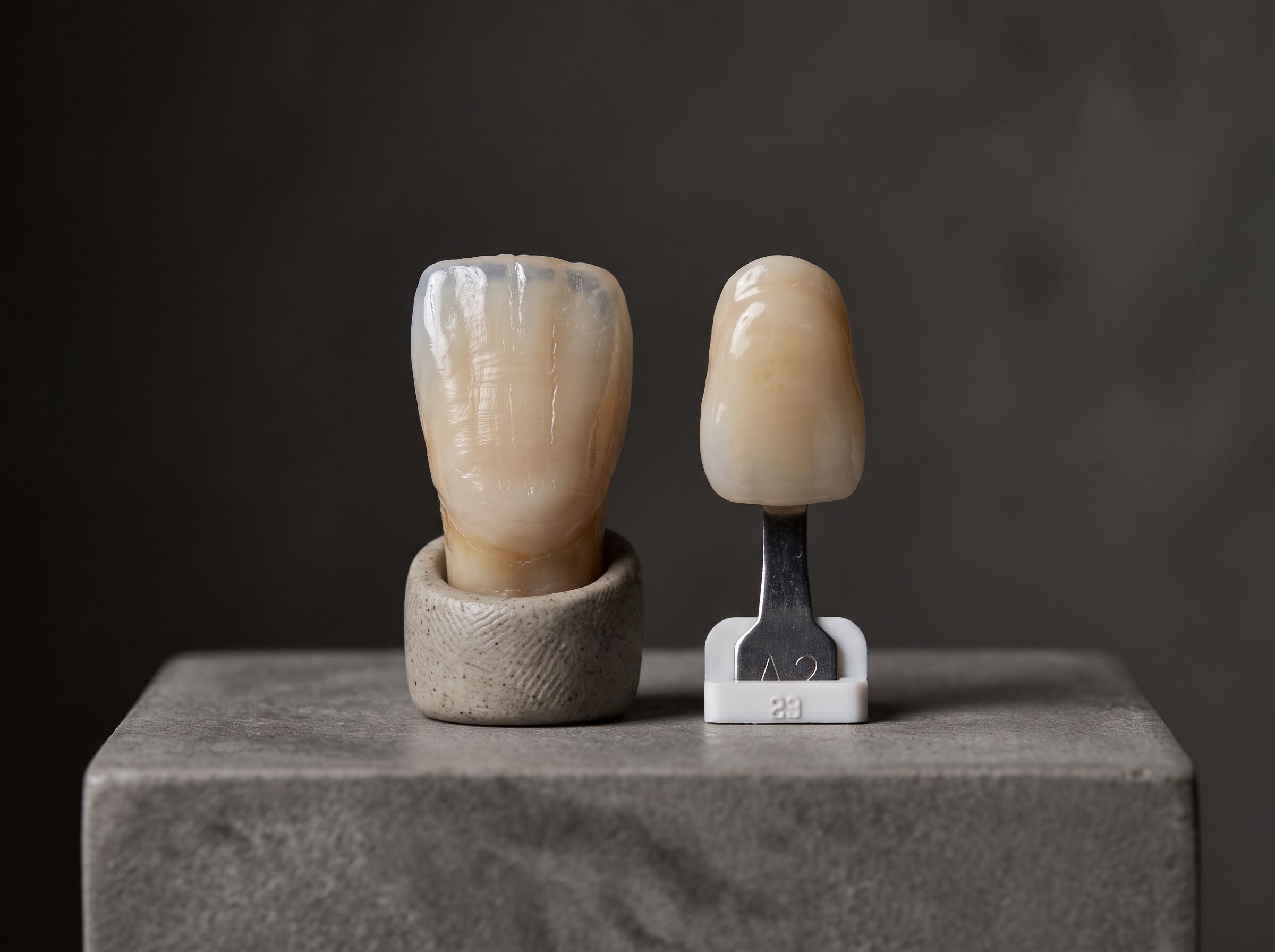
Color accuracy is not an academic virtue; it is the entire basis of laboratory communication. When you photograph a shade tab beside the prepared tooth, the comparison is only meaningful if both are rendered under a correctly balanced color temperature. A frame with a cold cast can make a warm tab read neutral and send the ceramist chasing a shade the patient never had. Anchored to a gray card, the same photograph becomes a dependable instruction: this tooth, this tab, this value — measured, not remembered.
It is worth treating white balance and shade documentation as one combined act. Card frame first, then the shade-tab comparison, then the clinical close-ups — all under the same unaltered light, all sharing the same neutral anchor.
Small habits that protect the color
A few quiet practices keep the discipline honest. Keep the gray card clean and unscratched, because a soiled card is no longer neutral. Fill enough of the calibration frame with the card for the camera or software to sample it cleanly. Avoid letting a strong specular highlight fall across the card, which skews the reading. And resist the temptation to “fix” color by eye afterward on an uncalibrated screen — a correction judged on a monitor that is itself lying only compounds the error.
Future Developments
The trajectory of color in dental imaging is toward removing human judgement from the loop entirely. Spectrophotometric shade devices already measure color objectively rather than photographically, and we can expect that logic to migrate into the camera itself — sensors and software that self-reference a known neutral in every frame, cross-polarized capture that strips specular noise before color is even evaluated, and end-to-end color management that carries a calibrated profile from shutter to laboratory screen without a single manual step. Until that future is seamless, the humble gray card remains the most reliable instrument we have: a small square of certainty, held in the light, that lets the craft of color rest on measurement rather than memory.
No Comments