


May 5, 2026 Automated Calibration Protocols for Intraoral Scanners: Achieving Sub-5μm Accuracy Standards in Modern Digital Workflows
Modern dental practices increasingly rely on intraoral scanners to deliver precise digital impressions, but achieving consistent sub-5 micrometer accuracy requires strict adherence to automated calibration protocols. The 2026 accuracy benchmark established by ISO 12836:2025 Amendment 1 demands ≤4.2μm RMS error, making proper calibration procedures essential for clinical success.
Understanding Sub-5μm Accuracy Requirements
The latest generation of intraoral scanners incorporates AI-driven calibration systems that automatically verify accuracy before patient contact. These systems utilize embedded algorithms to ensure measurement precision meets stringent clinical requirements. Professional dental environments must maintain calibration standards that deliver reliable, repeatable results across all scanning procedures.
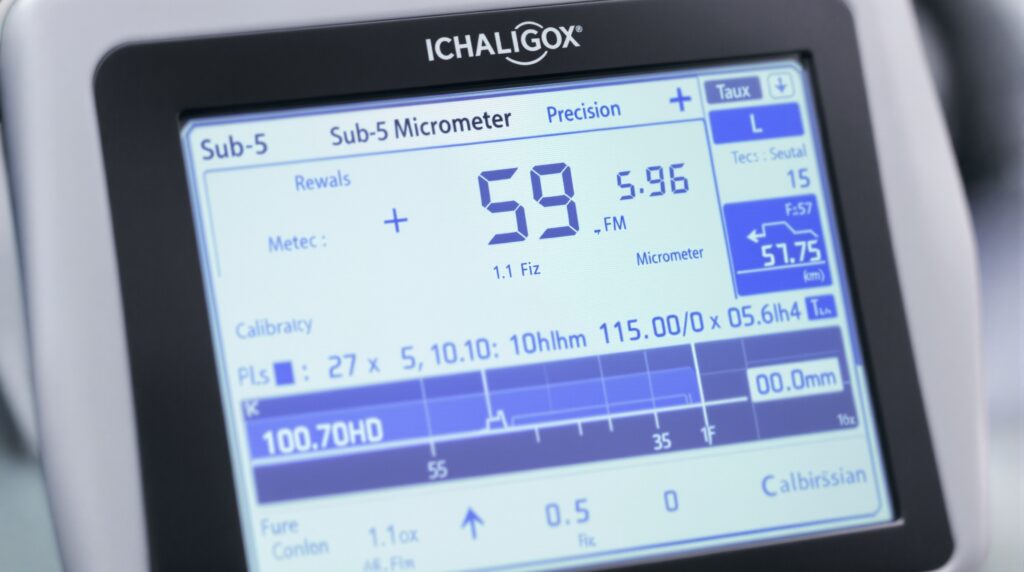
Quality assurance protocols require real-time monitoring of scanner performance metrics. Digital displays provide instant feedback on calibration status, allowing technicians to verify system accuracy before beginning patient procedures. These monitoring systems track deviation patterns and alert operators when recalibration becomes necessary.
Pre-Scan Calibration Procedures
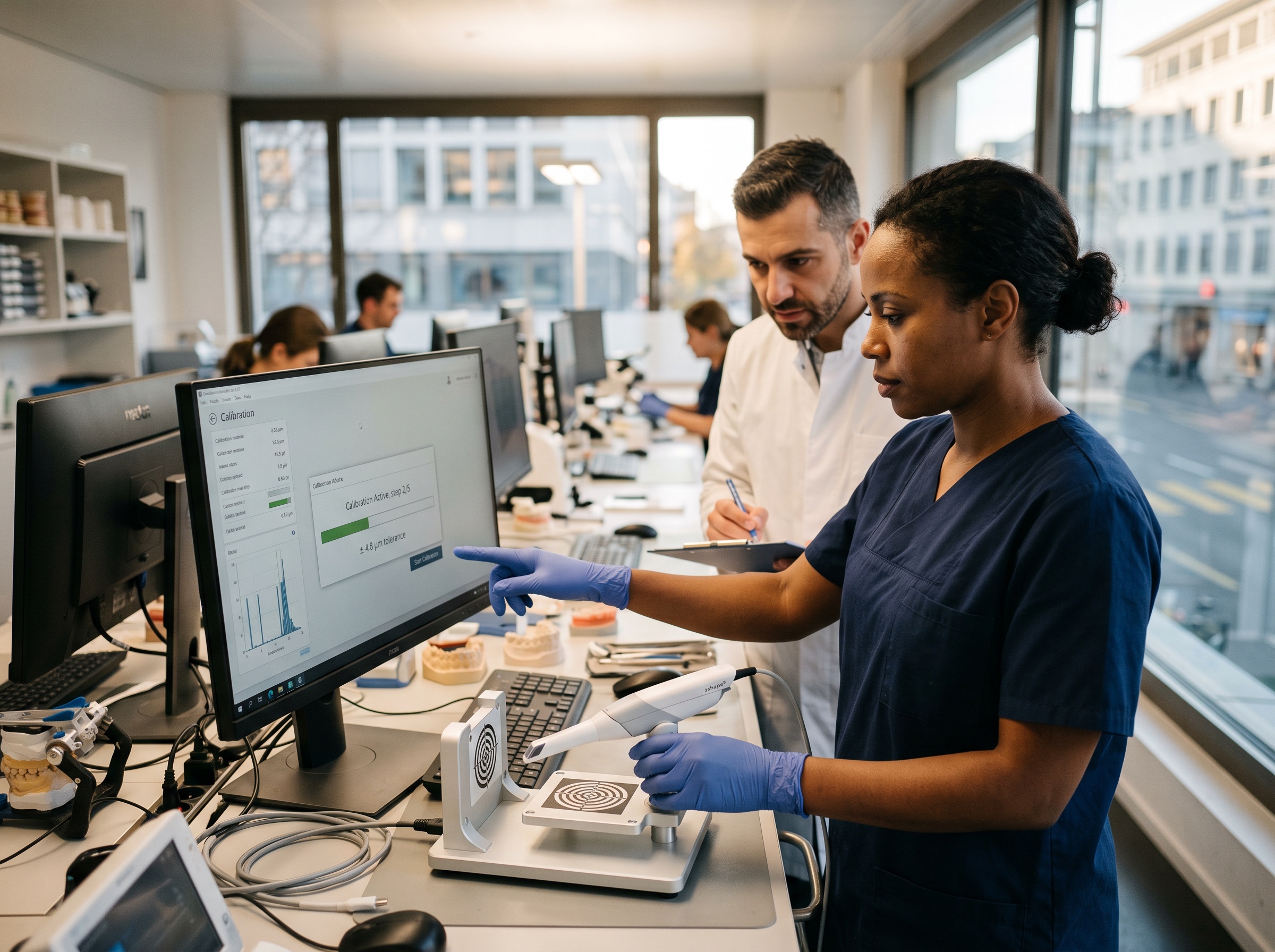
Automated pre-scan calibration represents a fundamental shift in digital impression workflows. Advanced systems like the 3Shape TRIOS 5 SmartCare platform perform comprehensive accuracy verification through multiple measurement cycles. Environmental factors including temperature, humidity, and ambient lighting conditions are continuously monitored to maintain optimal scanning conditions.
Calibration phantoms serve as reference standards for accuracy verification. These precision-manufactured targets contain known geometric features that allow scanners to verify dimensional accuracy across the entire measurement range. Regular phantom testing ensures consistent performance and identifies potential accuracy drift before it affects clinical outcomes.
Real-Time Tissue Recognition Technology
Modern intraoral scanners integrate AI-powered tissue recognition algorithms that automatically adjust scanning parameters based on surface characteristics. Systems like Exocad DentalCAD 2026 utilize machine learning to isolate preparation margins, optimize exposure settings, and compensate for challenging anatomical features.
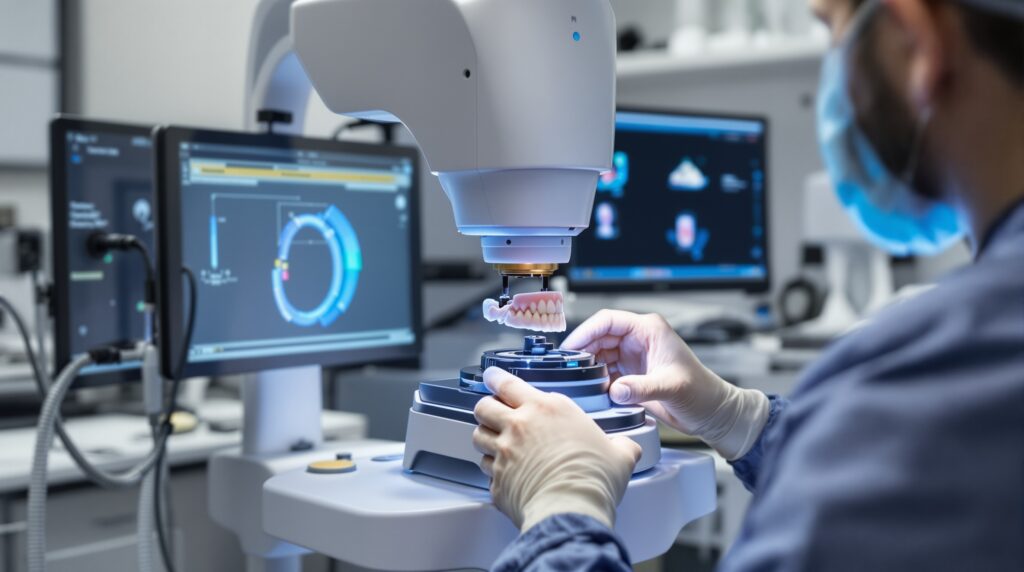
Automated calibration procedures eliminate human error and ensure consistent results across different operators. Professional calibration workflows incorporate multiple verification steps, including geometric accuracy testing, surface texture analysis, and color reproduction validation. These comprehensive protocols guarantee that every scan meets clinical accuracy requirements.
Clinical Implementation Strategies
Successful implementation of automated calibration protocols requires structured workflow integration. Dental practices must establish regular calibration schedules that align with manufacturer recommendations and clinical usage patterns. High-volume practices may require daily calibration verification, while lower-volume settings can implement weekly protocols.
Training programs for dental staff must emphasize the importance of calibration compliance. Understanding calibration indicators, interpreting accuracy metrics, and recognizing system alerts ensures that all team members can maintain optimal scanner performance. Documentation of calibration activities provides quality assurance records for regulatory compliance and performance tracking.
Environmental Control Considerations
Scanner accuracy depends heavily on environmental stability. Temperature variations, humidity fluctuations, and vibration can significantly impact measurement precision. Professional installations include environmental monitoring systems that track conditions and alert operators when parameters exceed acceptable ranges.
Proper storage and handling procedures protect scanner components from environmental damage. Calibration targets and reference phantoms require careful storage to maintain dimensional stability. Regular inspection of these critical components ensures continued accuracy verification capability.
Future Developments in Scanner Calibration
Emerging technologies promise even greater automation in scanner calibration procedures. Cloud-based calibration monitoring systems will provide remote oversight of scanner performance across multiple practice locations. Machine learning algorithms will predict calibration needs based on usage patterns and environmental conditions.
Integration with practice management systems will automate calibration scheduling and compliance tracking. These advances will reduce administrative burden while improving accuracy assurance for digital impression workflows.
The evolution toward fully automated calibration represents a significant advancement in digital dentistry. Practices that adopt comprehensive calibration protocols position themselves at the forefront of precision digital imaging technology, delivering superior patient outcomes through consistent accuracy standards.
Sorry, the comment form is closed at this time.