


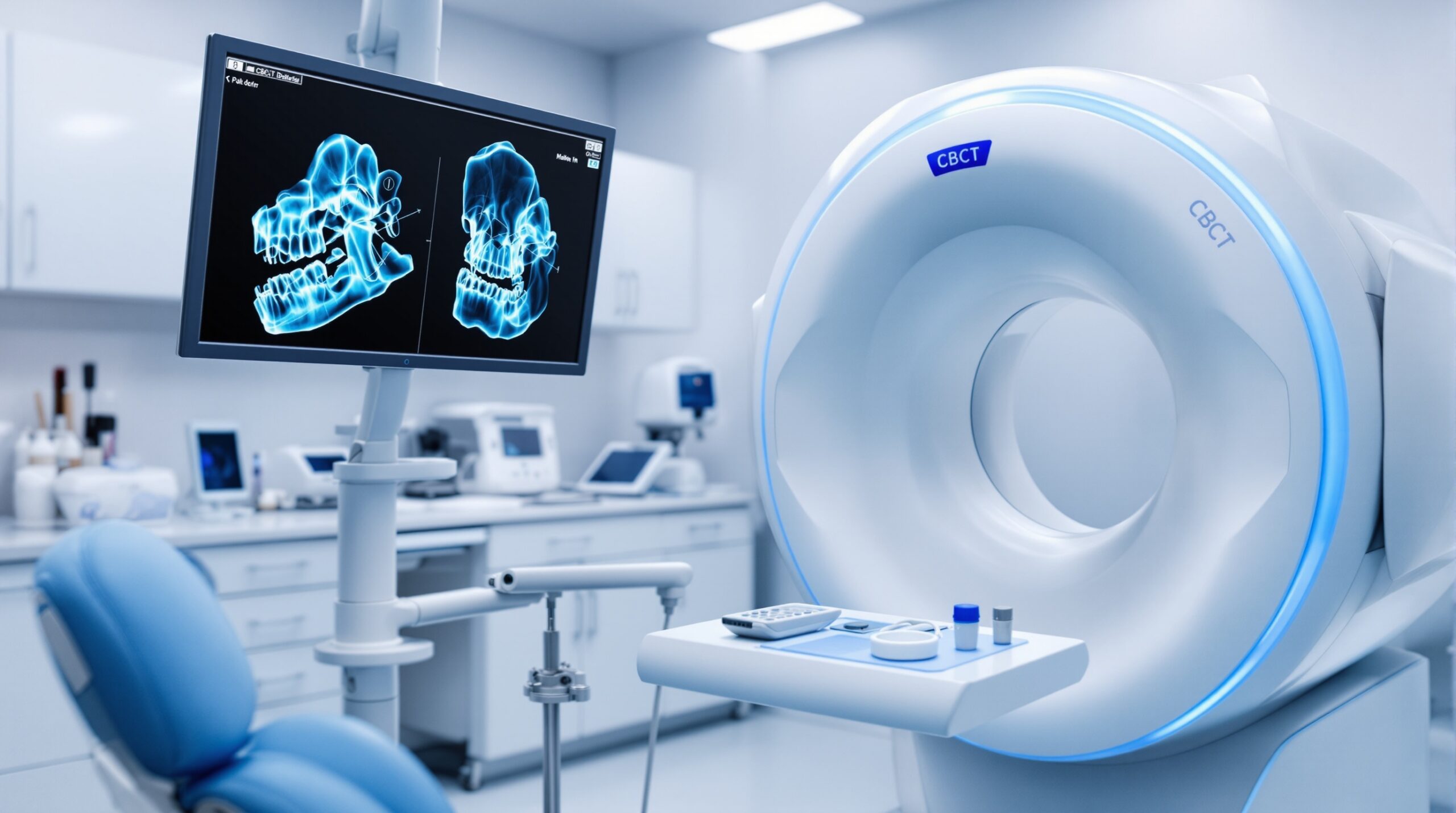
February 14, 2026 CBCT Technology: A Complete Guide for Modern Dental Practices
Cone Beam Computed Tomography (CBCT) has fundamentally transformed diagnostic imaging in dentistry over the past two decades. Unlike traditional two-dimensional radiographs, CBCT provides three-dimensional volumetric data that enables clinicians to visualize anatomical structures with unprecedented clarity and precision. For dental practices looking to elevate their diagnostic capabilities, understanding CBCT technology is no longer optional — it is essential.
What Is CBCT and How Does It Work?
CBCT uses a cone-shaped X-ray beam that rotates around the patient in a single 360-degree (or partial) arc. During this rotation, the system captures between 150 and 600 individual projection images, which are then reconstructed by specialized software into a three-dimensional dataset. This dataset can be viewed in axial, coronal, and sagittal planes, as well as rendered into 3D volumetric models.
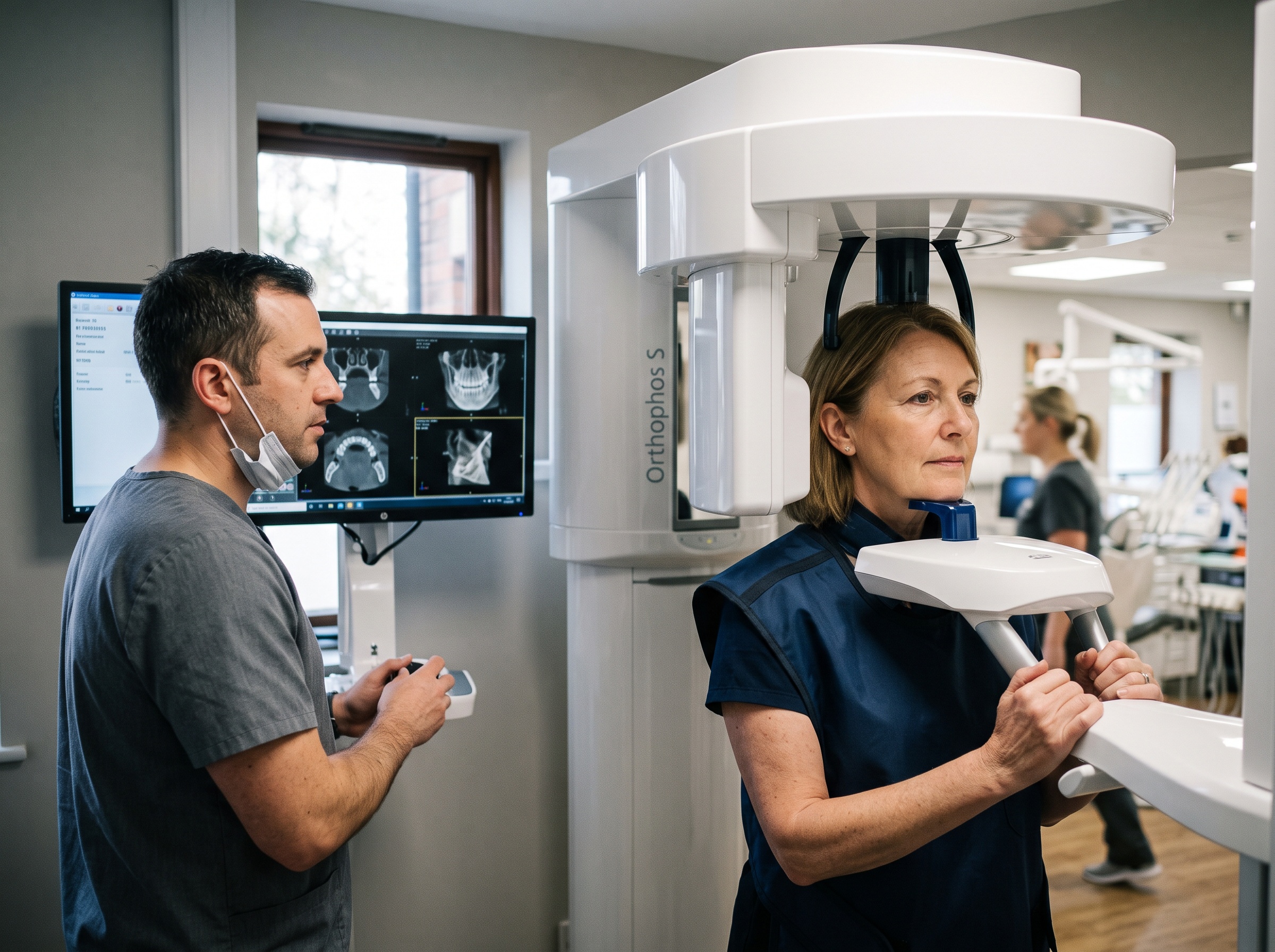
The key difference between CBCT and medical CT scanners lies in the beam geometry. Medical CT uses a narrow fan beam that requires multiple rotations and significantly higher radiation doses. CBCT achieves comparable diagnostic quality for dental applications at a fraction of the radiation exposure — typically between 5 and 74 microsieverts depending on the field of view and machine settings, compared to 2,000 microsieverts for a standard medical CT of the head.
Clinical Applications in Dentistry
Implant Planning
Perhaps the most well-known application of CBCT in dentistry is implant treatment planning. Three-dimensional imaging allows clinicians to precisely evaluate bone density, measure available bone height and width, identify the location of the inferior alveolar nerve, and assess proximity to the maxillary sinus. Modern implant planning software integrates directly with CBCT data to create surgical guides, dramatically improving placement accuracy and reducing complications.
Endodontics
CBCT has proven invaluable in endodontic diagnosis and treatment planning. It reveals additional root canals that may be invisible on periapical radiographs, identifies vertical root fractures, helps diagnose periapical pathology that overlaps with anatomical structures, and guides the management of resorptive defects. The American Association of Endodontists recommends CBCT as the imaging modality of choice when conventional radiographs provide insufficient diagnostic information.
Orthodontics
In orthodontics, CBCT enables comprehensive assessment of skeletal relationships, airway analysis, impacted tooth localization, and temporomandibular joint evaluation. The ability to generate cephalometric projections from CBCT data means that separate cephalometric radiographs may no longer be necessary, reducing overall radiation exposure for orthodontic patients.
Oral Surgery and Pathology
Third molar extractions benefit from CBCT imaging when two-dimensional radiographs suggest proximity to the inferior alveolar canal. CBCT clearly delineates the spatial relationship between tooth roots and the nerve canal, allowing surgeons to plan their approach and reduce the risk of nerve injury. Additionally, CBCT provides superior visualization of cysts, tumors, and other pathological lesions compared to panoramic radiography.
Selecting the Right CBCT System
When evaluating CBCT units for your practice, several key specifications deserve careful consideration:
Field of View (FOV): CBCT systems offer various FOV options, from small (5×5 cm) for focused endodontic or single-implant imaging, to medium (8×8 cm) for quadrant-level assessment, to large (16×13 cm or greater) for full maxillofacial evaluation. Many modern units offer selectable FOV, providing maximum flexibility. Smaller FOV scans deliver higher resolution at lower radiation doses.
Voxel Size: The voxel (volumetric pixel) size determines image resolution. Most dental CBCT units offer voxel sizes ranging from 75 to 400 micrometers. Endodontic applications typically require voxel sizes of 150 micrometers or less, while implant planning can be effectively performed at 200-300 micrometers.
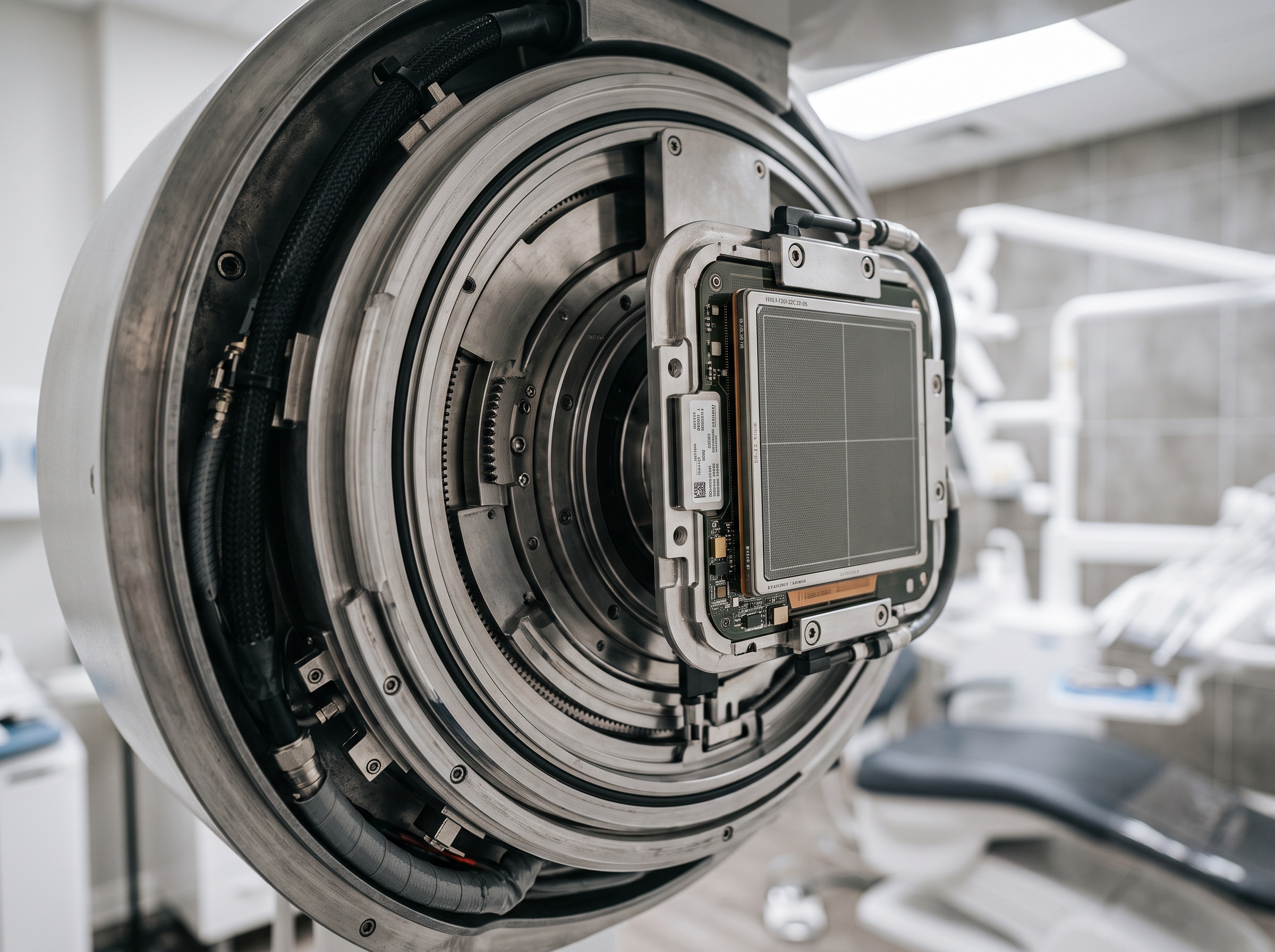
Scan Time: Faster scan times reduce motion artifacts, which is particularly important for pediatric or anxious patients. Modern units can complete a scan in as little as 5 seconds, though higher-resolution scans may require 15-20 seconds.
Software Integration: The accompanying software suite is as important as the hardware. Look for DICOM compatibility, intuitive navigation tools, measurement capabilities, implant planning modules, and the ability to export data to third-party planning software and 3D printers.
Radiation Safety and the ALARA Principle
While CBCT delivers substantially less radiation than medical CT, responsible use requires adherence to the ALARA (As Low As Reasonably Achievable) principle. Key guidelines include:
- Use the smallest FOV that adequately covers the region of interest
- Select the lowest resolution setting that provides diagnostic-quality images for the clinical question
- Never use CBCT as a screening tool — there must be a specific clinical indication
- Document the clinical justification for every CBCT scan
- Use manufacturer-recommended exposure settings as starting points and optimize from there
- Follow national and international guidelines for CBCT use in dentistry
Integration Into Practice Workflow
Successfully incorporating CBCT into your practice requires more than purchasing a machine. Staff training is critical — radiographic technicians need to understand patient positioning, FOV selection, and exposure optimization. Clinicians must develop proficiency in three-dimensional image interpretation, which differs significantly from reading two-dimensional radiographs.
Many manufacturers and professional organizations offer comprehensive training programs. The American Academy of Oral and Maxillofacial Radiology provides guidelines for CBCT education, and several universities offer continuing education courses specifically focused on CBCT interpretation.
From a workflow perspective, consider how CBCT data will flow through your practice management system. Ensure your network infrastructure can handle the large file sizes (a single CBCT scan can generate 200-500 MB of data), and plan for adequate data storage and backup solutions.
The Future of CBCT in Dentistry
CBCT technology continues to evolve rapidly. Emerging developments include artificial intelligence-assisted image analysis for automated detection of pathology, reduced-dose protocols that maintain diagnostic quality, integration with optical scanning for combined hard and soft tissue visualization, and enhanced 3D printing workflows that streamline the production of surgical guides and custom prosthetics.
As these technologies mature, CBCT will become even more central to evidence-based dental practice. Practices that invest in this technology today — along with proper training and protocols — position themselves at the forefront of modern patient care.
Conclusion
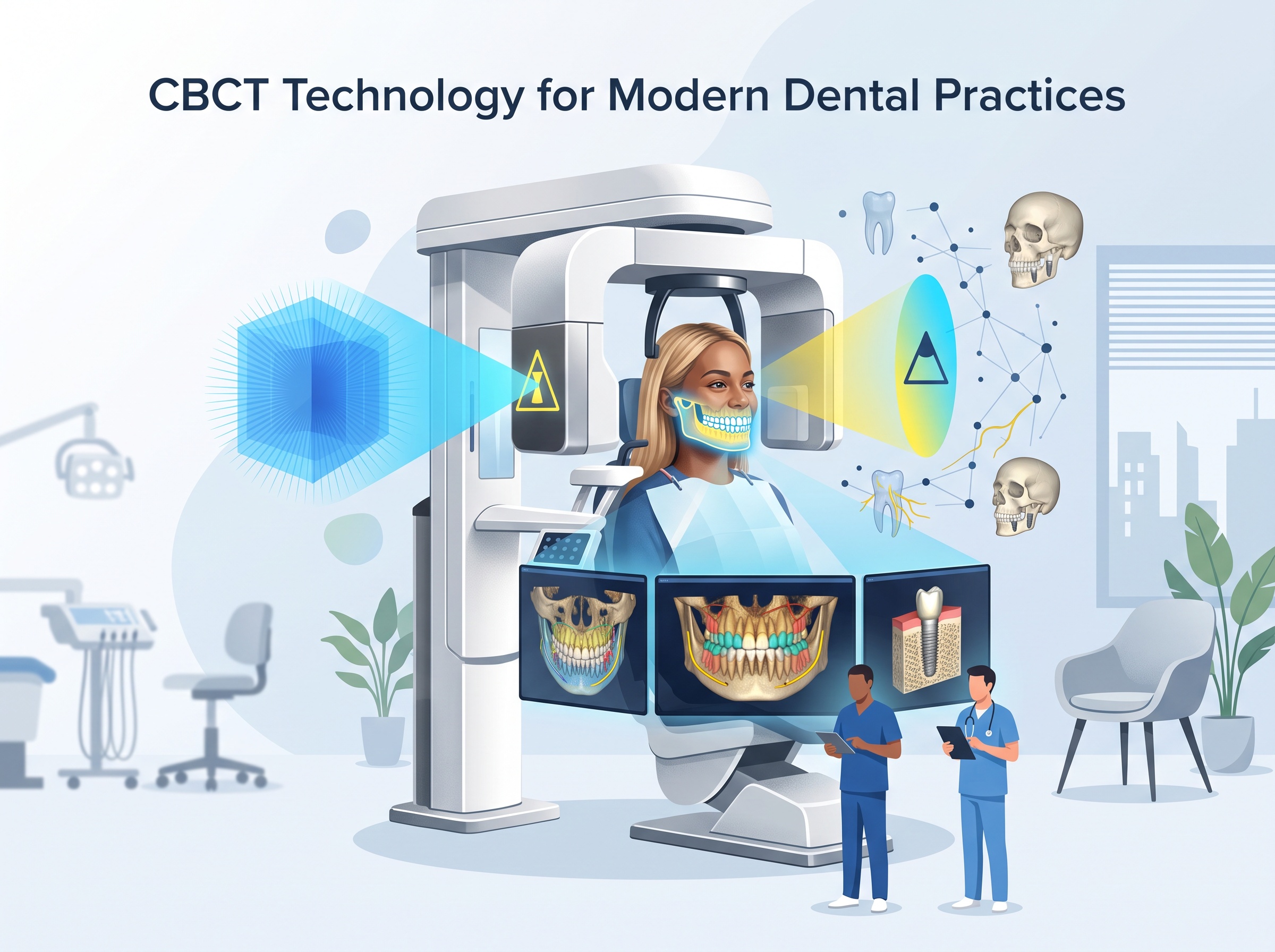
CBCT represents one of the most significant advances in dental diagnostic imaging. Its ability to provide three-dimensional visualization of complex anatomical structures has improved treatment planning accuracy across virtually every dental specialty. By understanding the technology, selecting the right system for your practice needs, and implementing responsible imaging protocols, you can leverage CBCT to deliver superior patient outcomes while maintaining the highest standards of radiation safety.
Sorry, the comment form is closed at this time.