


October 11, 2026 The Preview Becomes the Plan: AI Smile Design and the Automated Journey From Scan to Printed Mock-Up
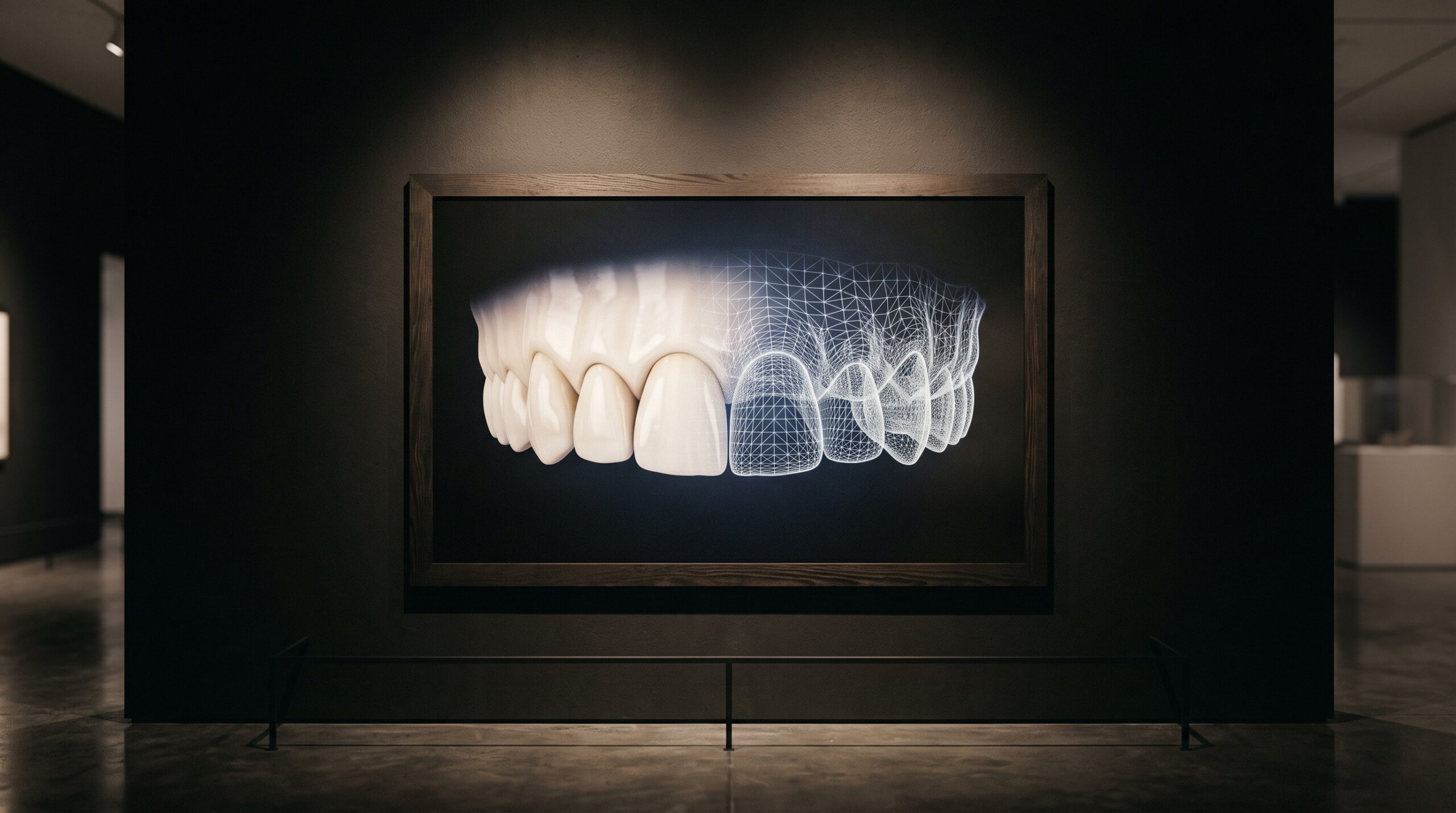
For most of its history, the smile design lived in the clinician’s head and the ceramist’s hands. A diagnostic wax-up was sculpted in wax on a stone model, a slow and deeply skilled act of imagining a better smile into three physical dimensions. The patient, meanwhile, was asked to trust a description. The gap between what the dentist pictured and what the patient understood was the quiet source of a great deal of disappointment. The whole arc of digital smile design has been an effort to close that gap by making the plan visible — and in late September 2026, the Fort Lauderdale platform SmileFy pushed that effort a long step further, announcing an AI 3D Design System that it describes as a fully automated path from a patient’s scan to a 3D-printable mock-up. It is worth looking past the announcement to the imaging pipeline underneath, because that is where the craft either survives or quietly erodes.
What “scan to print” actually compresses
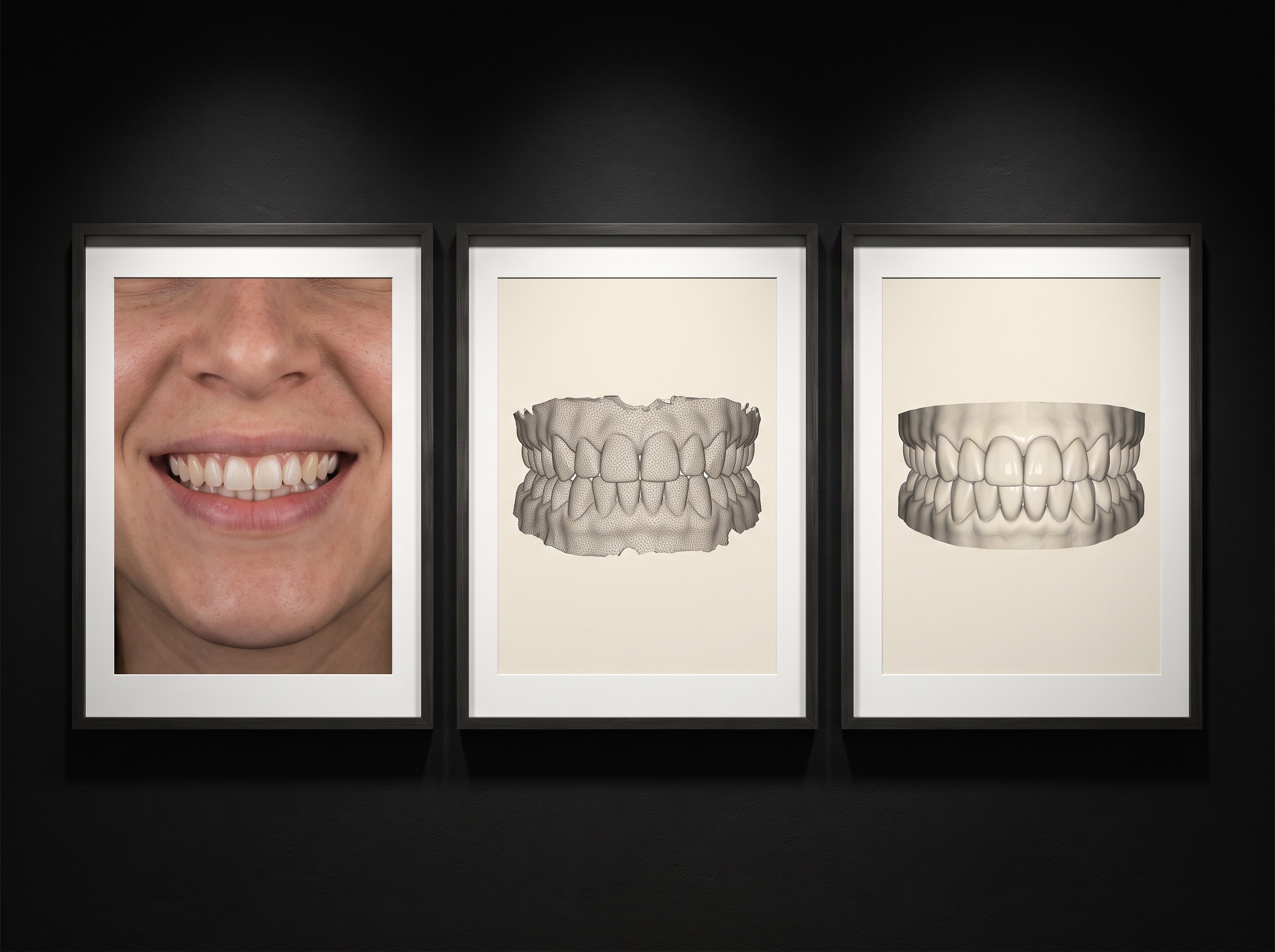
The headline claim is automation, but the honest way to read it is compression. A traditional digital smile design is a sequence of deliberate steps: capture high-quality facial and intraoral photographs, acquire an intraoral scan of the dentition, calibrate everything to real-world scale, draw the aesthetic reference lines, select and position idealized tooth forms from a library, sculpt a digital wax-up, and finally export a model for milling or printing. What an AI system does is collapse that sequence — detecting the facial landmarks, proposing the tooth arrangement, and generating a 3D design in a fraction of the clicks, with the vendor’s language of “one-click” and “immediate” simulation making the promise explicit. The stages have not disappeared. They have been folded inside the model, executed in seconds rather than hours.
That distinction matters because every one of those compressed steps is still an imaging decision with consequences. The automation does not relieve the clinician of judgment; it relocates it — from drafting the design to reading whether the design the machine drafted is true to the face in front of them.
The picture the machine starts from
An AI design is only ever as good as the images it is fed, and this is where the oldest rule in this gallery reasserts itself: garbage in, garbage out. A smile-simulation engine works from a frontal portrait and an intraoral record, and if the portrait is poorly lit, color-shifted, or shot at the wrong angle, the machine inherits those errors and renders them back with unearned confidence. The same discipline that governs any clinical capture applies with new force when an algorithm, not a human, will interpret the result. A photograph made with accurate, calibrated white balance at the moment of capture gives the model honest color to reason about; a scan taken under proper moisture control and isolation gives it honest geometry. Feed the system a compromised first picture and its elegant one-click output is simply a polished rendering of a flawed premise.
The aesthetic rules, now executed in milliseconds
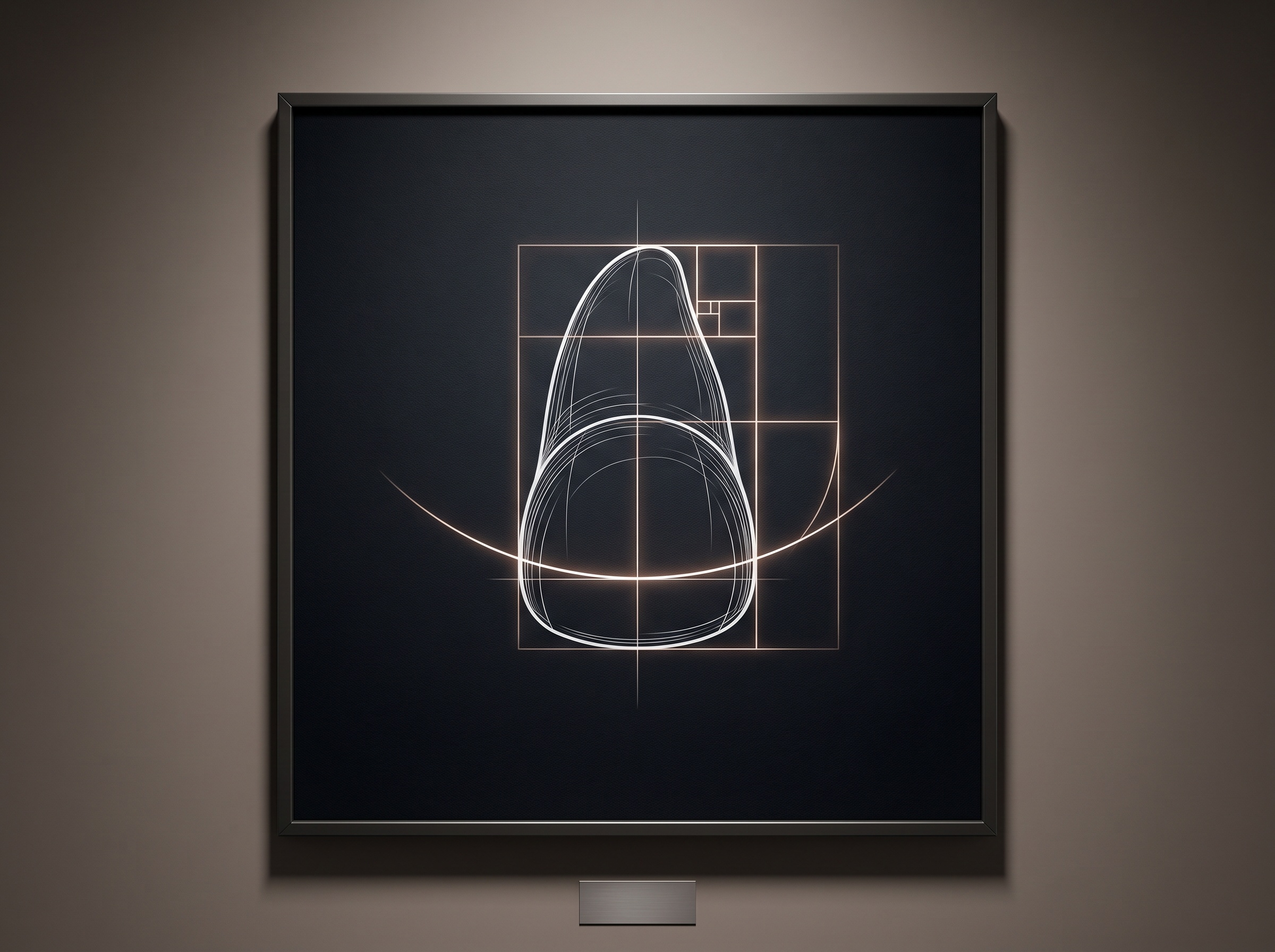
It is tempting to treat AI smile design as a break with the past. It is better understood as the automation of principles the great cosmetic clinicians already held. The machine positions an incisal edge, respects a midline, proportions the central incisors against the laterals and canines, and sweeps the incisal plane into a smile arc that follows the curve of the lower lip. These are not new ideas; they are the grammar of smile design, and a good system applies them as defaults while leaving them open to override. The value — and the risk — is that the rules are now applied instantly and invisibly. A clinician who understands why a central incisor should dominate, or why a flat incisal plane reads as aged, can correct a machine that has produced a technically symmetrical but lifeless result. A clinician who treats the output as an oracle cannot. The aesthetic literacy that used to live in the wax-up has not become optional; it has become the thing that distinguishes a supervised design from an automated guess.
From a 3D file to something you can wear
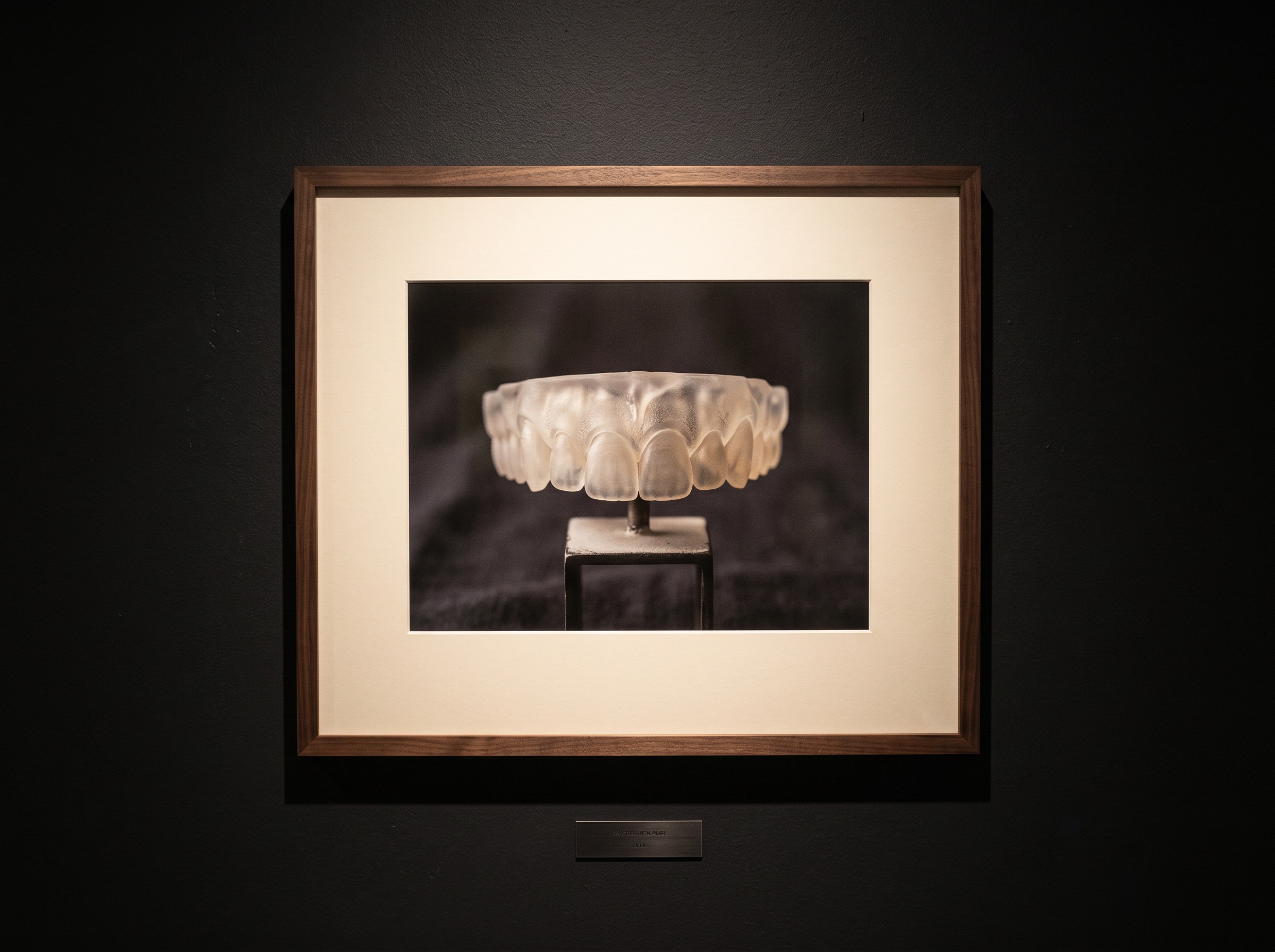
The final move — “to print” — is the one that gives the whole pipeline its clinical weight. A 2D simulation is persuasive on a screen but weightless; a 3D design exported as a printable mesh becomes a physical object. Printed in resin as a mock-up shell or used to fabricate a try-in, it can be seated directly over the patient’s teeth, letting them see and feel a proposed smile in their own mouth before anything irreversible is done. This is the motivational mock-up, and it is the point at which imaging stops being a picture and becomes a rehearsal of the outcome. Because the design can be carried forward as a scaffold for provisionals and a reference the ceramist works against, it also tightens the chain between plan and result — the same ambition behind building a single unified record, as when face scans, CBCT, and intraoral data are fused into one virtual patient. A smile design that prints is a smile design that has to be right in three dimensions, not merely flattering in two.
What the automation gives, and what it quietly asks
The genuine gift here is access and speed. A procedure that once demanded a trained technician and the better part of a day can now produce a credible 3D preview chairside, in the first consultation, while the patient is still in the room. That changes the conversation — a visible, shared design is a far better basis for consent and expectation than a verbal promise, and it lets more practices offer predictability that was previously the preserve of a few specialists. SmileFy’s own framing of accessibility and simplicity is, on that score, fair. But the quiet ask is accountability. An automated design arrives looking finished, which is precisely its danger: a rendering carries an authority its underlying assumptions may not deserve. The responsible use is to treat the AI output as a sophisticated first draft to be measured against the real face, the real function, and the real tissues — not as a verdict. The machine proposes; the clinician still disposes.
Future Developments
The trajectory is easy to see and worth watching with clear eyes. Smile-design engines will fuse more inputs — dynamic video of the face in motion, CBCT for the bone and roots beneath the planned edges, shade data for truly predictive color — moving from a static idealized render toward a design that respects biology as much as aesthetics. They will couple more tightly to printing and milling, shrinking the loop from idea to wearable mock-up to final restoration. The likely endpoint is not a machine that designs smiles so much as one that drafts them instantly and then spends its intelligence helping the clinician interrogate the draft. This gallery has always held that an image earns its place by what it uniquely lets us see. An AI smile design, at its best, lets patient and clinician see the same future at the same moment — and the enduring craft, as ever, is making sure the beautiful picture is also a true one.
Sources & further reading:
- SmileFy Launches AI 3D Design System, Automating Smile Mock-Ups From Scan to Print (Sept 22, 2026)
- SmileFy Introduces AI Tool for Immediate Smile Simulations and 3D Designs (Orthodontic Products)
No Comments