


April 5, 2026 Dental-Dedicated MRI: The Future of Radiation-Free Oral Imaging
Dental-Dedicated MRI: The Future of Radiation-Free Oral Imaging
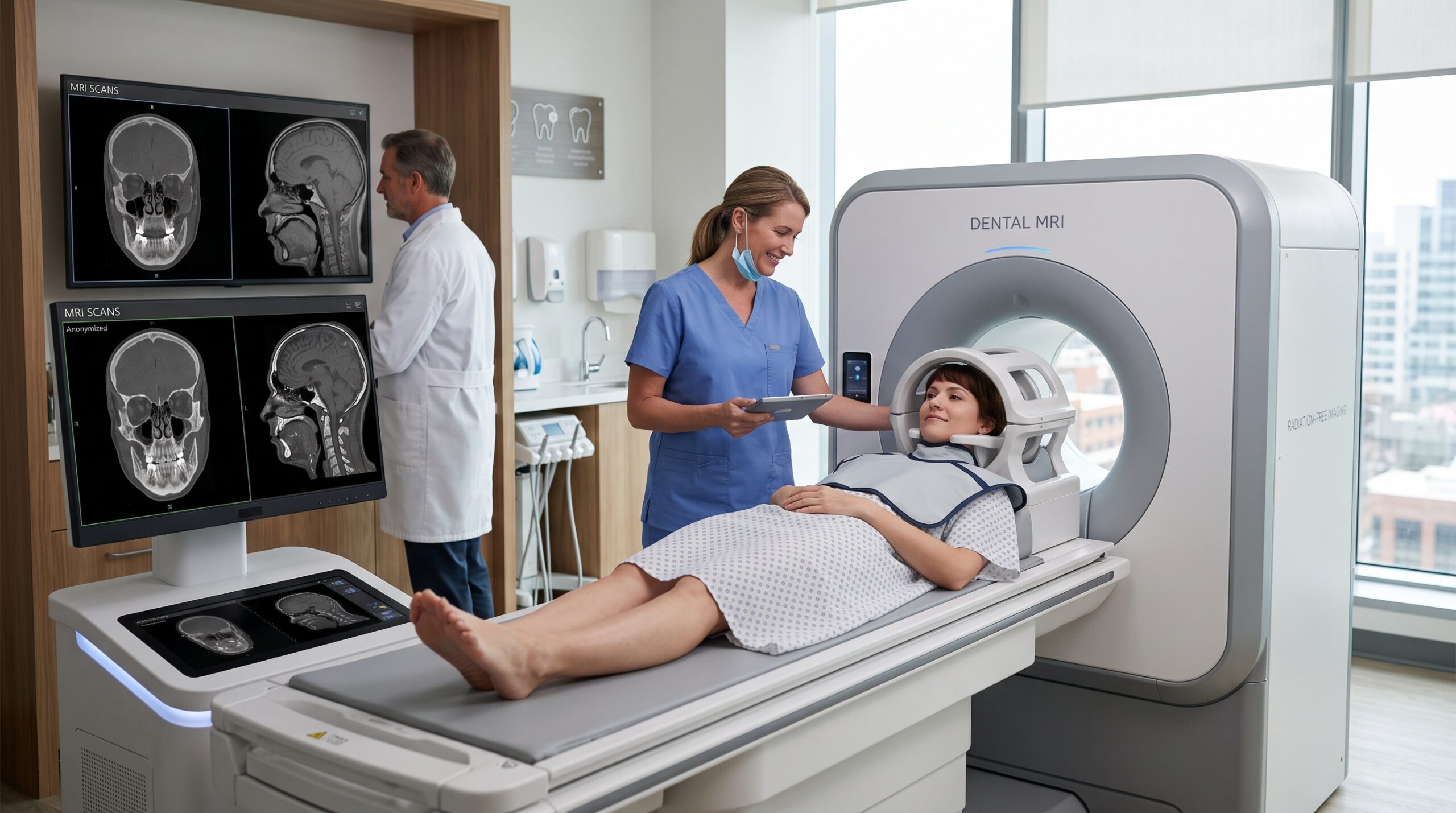
Magnetic Resonance Imaging (MRI) technology has revolutionized medical diagnostics across numerous specialties, and now dental-dedicated MRI (ddMRI) is emerging as a groundbreaking advancement in oral healthcare. This innovative approach to dental imaging offers unprecedented visualization of soft tissues while eliminating radiation exposure entirely.
Understanding Dental-Dedicated MRI Technology
Unlike traditional dental imaging methods that rely on ionizing radiation, dental-dedicated MRI utilizes powerful magnetic fields and radio waves to create detailed cross-sectional images of oral structures. Recent developments in 2025 have brought point-of-care ddMRI systems directly into dental practices, making this advanced technology more accessible than ever before.
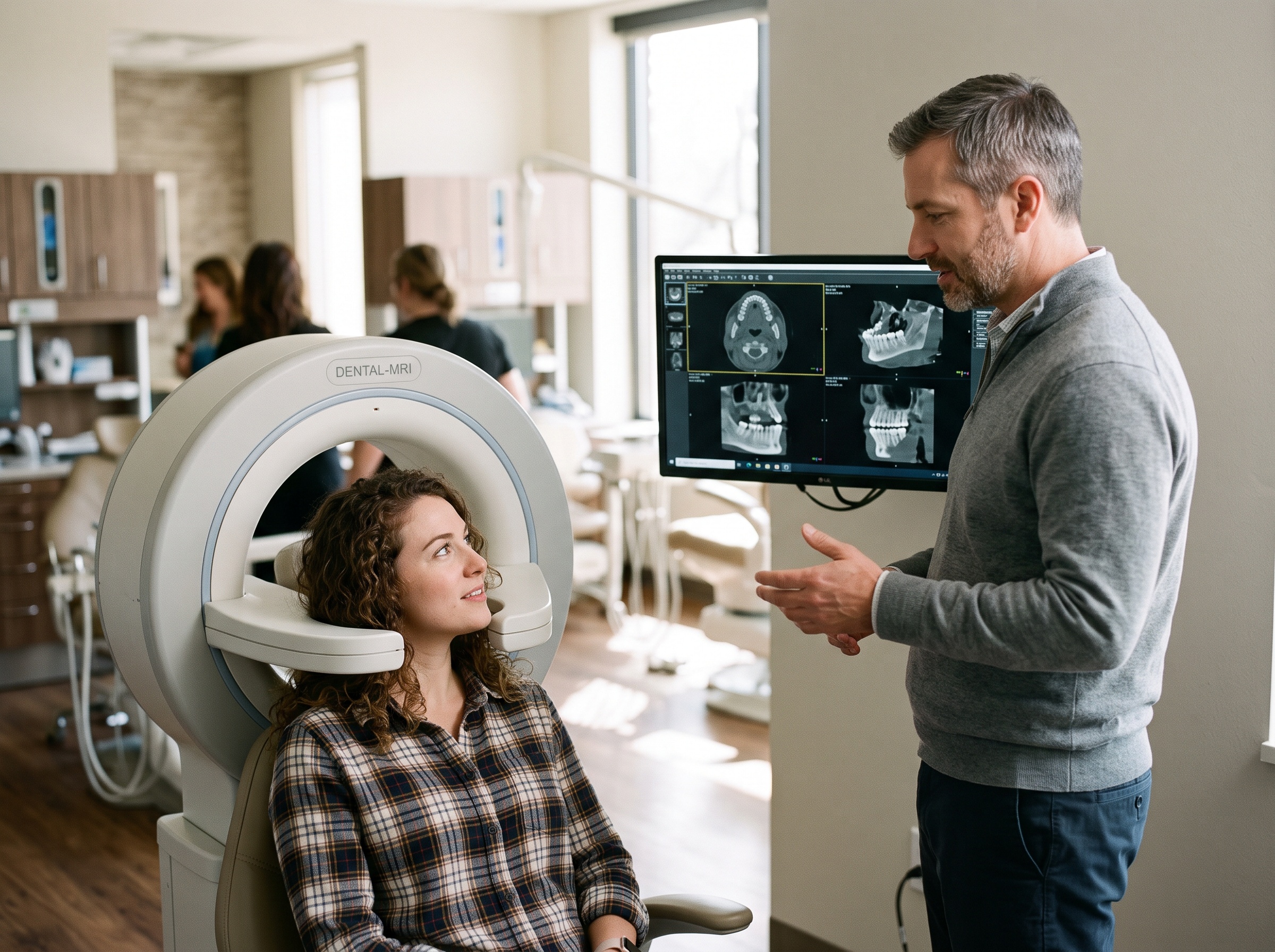
The key advantage of ddMRI lies in its exceptional soft tissue contrast and multiplanar imaging capabilities. While conventional dental X-rays excel at showing hard tissues like teeth and bone, they provide limited information about soft tissue structures that are crucial for comprehensive diagnosis.
Clinical Applications and Advantages
Dental MRI proves particularly valuable for temporomandibular joint (TMJ) disorders, where soft tissue evaluation is critical. Research demonstrates that MRI can accurately predict soft tissue changes following acute condylar injury, with disc displacement and hemarthrosis directly correlating to injury severity.
Key Benefits of Dental MRI:
- Zero radiation exposure – completely safe for pregnant patients and frequent imaging
- Superior soft tissue visualization – ideal for TMJ disc assessment and muscle evaluation
- Multiplanar capabilities – provides sagittal, coronal, and axial views simultaneously
- Non-invasive diagnostics – eliminates need for exploratory procedures
- Enhanced treatment planning – enables precise visualization of anatomical relationships
TMJ Disorder Diagnosis and Management
The temporomandibular joint represents one of the most complex joints in the human body, and accurate diagnosis of TMJ disorders requires detailed visualization of both hard and soft tissue components. Dental MRI excels in this area by providing clear images of the articular disc, joint effusion, and surrounding musculature.
Studies comparing dental-dedicated MRI with cone-beam computed tomography (CBCT) demonstrate that while CBCT remains superior for bony structure evaluation, ddMRI offers unmatched capability for soft tissue assessment. This complementary relationship suggests that optimal TMJ evaluation may benefit from both imaging modalities.
Comparison with Traditional Imaging Methods
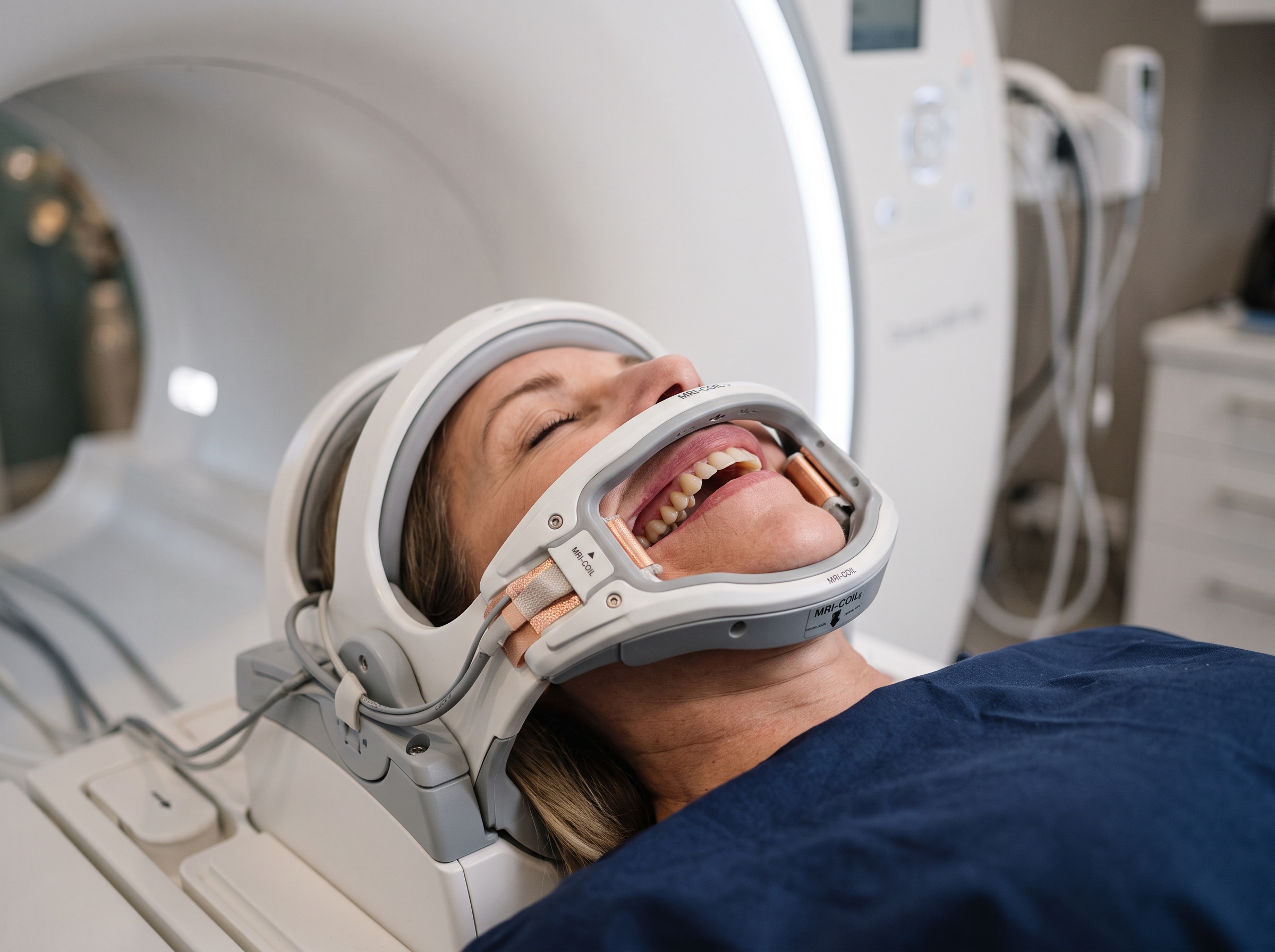
Traditional dental imaging relies heavily on two-dimensional radiographs and three-dimensional CBCT scans, both of which utilize ionizing radiation. While these methods provide excellent visualization of mineralized tissues, they offer limited soft tissue detail and cannot differentiate between various soft tissue types.
Dental MRI addresses these limitations by offering:
- Detailed visualization of joint effusions and inflammatory changes
- Assessment of disc position and morphology in multiple jaw positions
- Evaluation of muscle tension and pathology
- Detection of early degenerative changes before they become apparent on conventional imaging
Technical Considerations and Limitations
Despite its advantages, dental MRI does present certain challenges. Image acquisition times are typically longer than conventional radiography, and patient cooperation is essential for optimal results. Additionally, the presence of metallic dental restorations can create artifacts that may compromise image quality in some areas.
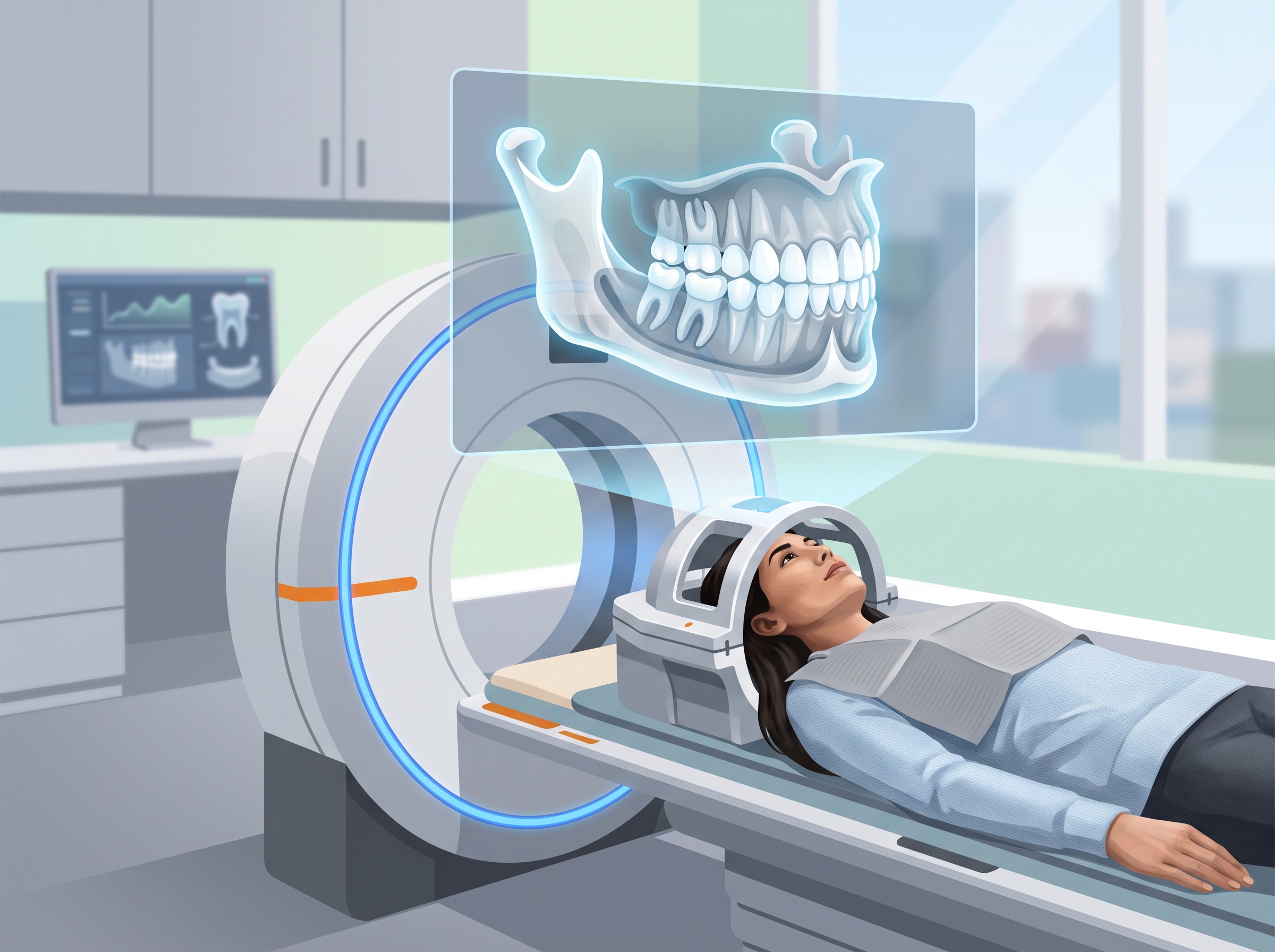
The specialized thin-slice reconstruction techniques used in dental MRI differ from those employed in medical MRI. Thin slices of approximately 0.5 mm are extracted orthogonally and combined to produce panoramic reconstructions, maintaining anatomical detail while minimizing soft tissue overlap.
Future Applications and Clinical Integration
As dental-dedicated MRI technology continues to evolve, its applications are expanding beyond TMJ evaluation. Potential future uses include assessment of salivary gland pathology, evaluation of oral and maxillofacial tumors, and monitoring of orthodontic treatment progress through detailed soft tissue analysis.
The integration of dental MRI into routine practice represents a paradigm shift toward more comprehensive, radiation-free diagnostic imaging. As the technology becomes more accessible and cost-effective, it promises to enhance diagnostic accuracy while prioritizing patient safety.
Conclusion
Dental-dedicated MRI represents a significant advancement in oral imaging technology, offering radiation-free visualization of soft tissues with unprecedented detail. While it complements rather than replaces traditional imaging methods, ddMRI provides valuable diagnostic information particularly for TMJ disorders and other conditions requiring soft tissue evaluation. As this technology continues to mature and become more widely available, it will undoubtedly play an increasingly important role in comprehensive dental diagnosis and treatment planning.
Related Reading
- Ultrasound Imaging in Modern Dentistry: Radiation-Free Diagnostic Applications and Clinical Benefits
- SWIFT MRI Technology in Dentistry: Revolutionary Magnetic Resonance Imaging for Comprehensive Oral Tissue Visualization
- Extraoral Periapical Radiography: Advanced Patient-Comfort Solutions for Challenging Dental Imaging Cases
Sorry, the comment form is closed at this time.