


April 9, 2026 DIAGNOdent Laser Fluorescence Imaging: Precision Caries Detection Technology for Modern Dental Practice
DIAGNOdent laser fluorescence imaging represents a breakthrough in non-invasive caries detection technology, utilizing precise 655nm wavelength red diode laser to identify early-stage tooth decay that traditional visual examination and radiography might miss. This advanced diagnostic tool has revolutionized preventive dentistry by detecting bacterial metabolites and changes in tooth structure before cavitation occurs.
The Science Behind Laser Fluorescence Detection
The DIAGNOdent system operates on the principle that carious tooth tissue exhibits different fluorescence properties compared to healthy enamel and dentin. When the device’s red diode laser (655nm wavelength) penetrates tooth structure, it excites bacterial porphyrins and other organic compounds present in demineralized areas. These substances fluoresce at longer wavelengths (>680nm), producing measurable signals that correlate directly with the extent of mineral loss and lesion depth.
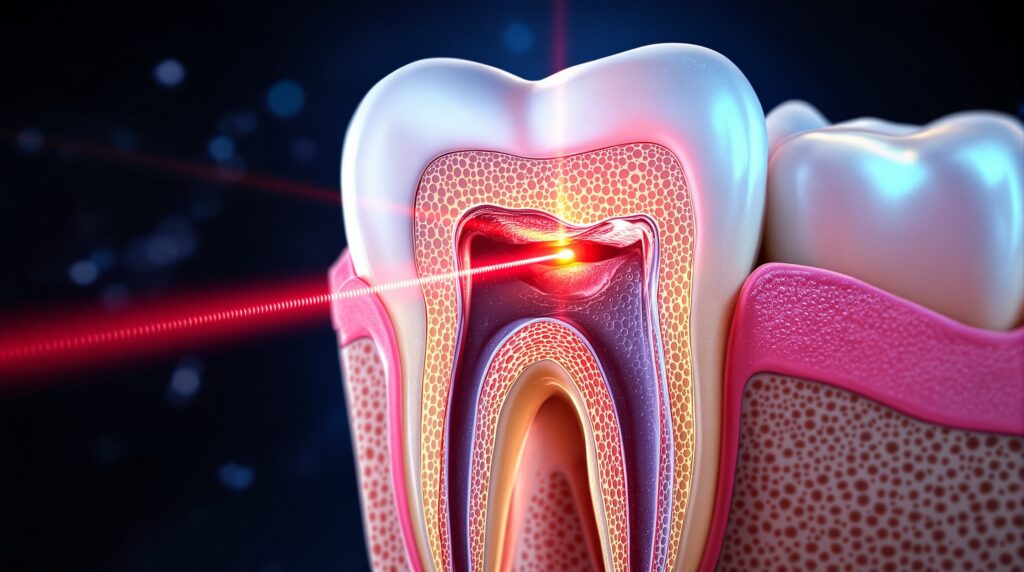
The technology’s precision stems from its ability to detect changes at the molecular level. Bacterial metabolism in carious lesions produces specific fluorophores that absorb the 655nm laser light and re-emit it at characteristic wavelengths. The device’s photodiode sensor, equipped with a long-pass filter, captures this fluorescent emission and converts it into numerical readings that indicate the presence and severity of demineralization.
Clinical Applications and Diagnostic Advantages
DIAGNOdent technology excels in detecting several types of caries that pose diagnostic challenges:
- Occlusal pit and fissure caries: Hidden decay within anatomical grooves where visual inspection is limited
- Smooth surface lesions: Early demineralization on buccal, lingual, and interproximal surfaces
- Secondary caries: Recurrent decay around existing restorations
- Root surface caries: Demineralization in exposed root surfaces, particularly valuable in geriatric patients
The device provides quantitative readings (0-100 scale) that enable practitioners to monitor lesion progression over time, making it invaluable for preventive treatment protocols. Values below 20 typically indicate healthy tooth structure, while readings above 30 suggest active demineralization requiring intervention.
Technical Specifications and Clinical Protocol
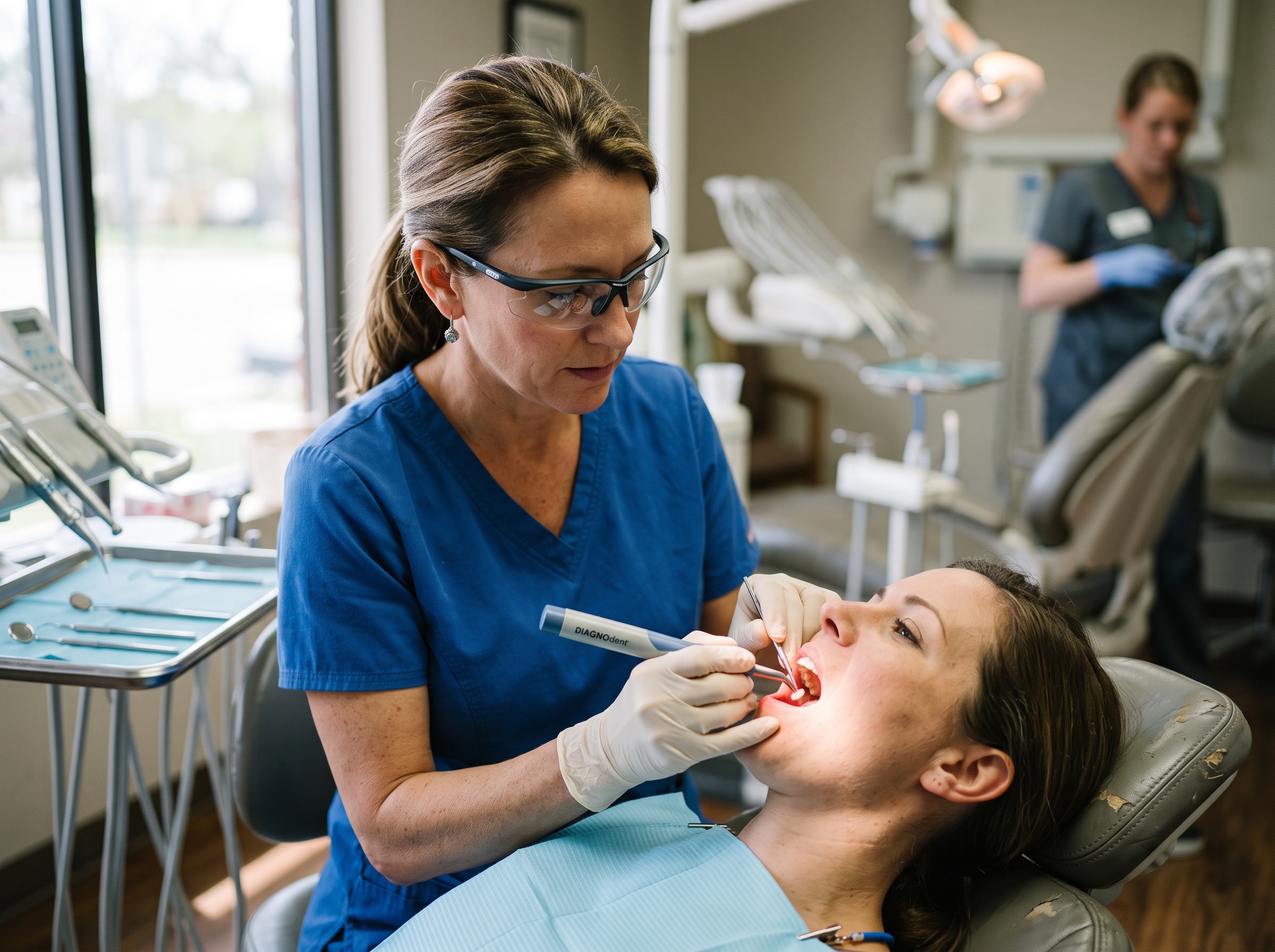
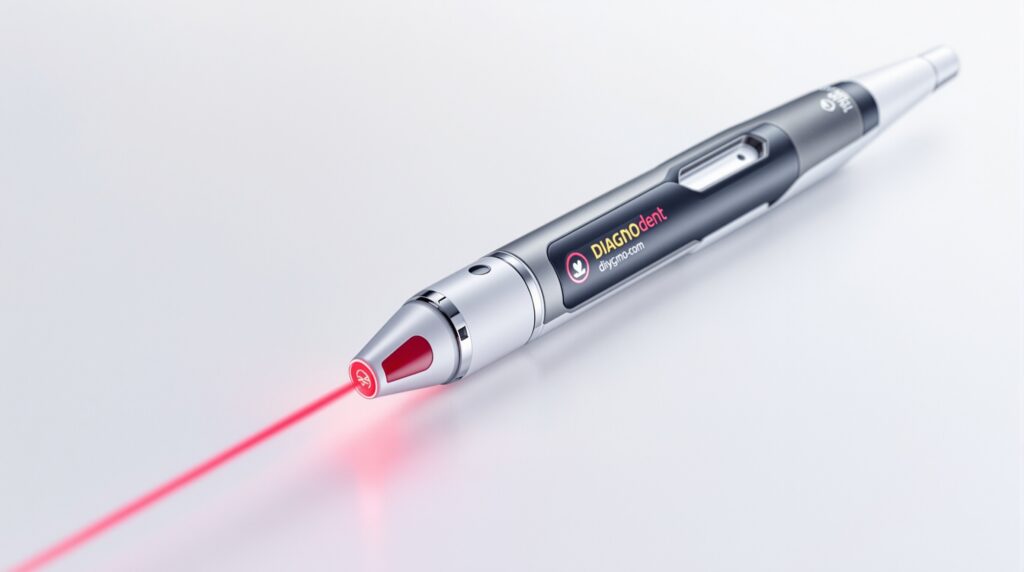
Modern DIAGNOdent devices feature ergonomic pen-style designs with interchangeable probe tips for different clinical applications. The sapphire fiber tip delivers consistent laser energy while maintaining optimal angulation for various tooth surfaces. The device’s calibration protocol ensures accuracy across different tooth types and clinical conditions.
Clinical implementation requires specific protocols for optimal results:
- Thorough cleaning of tooth surfaces to remove plaque and debris
- Proper calibration using ceramic standards and healthy tooth structure
- Consistent probe positioning perpendicular to the examined surface
- Multiple readings from different angles to ensure comprehensive assessment
- Documentation of numerical values for longitudinal monitoring
Integration with Digital Treatment Planning
Contemporary dental practices integrate DIAGNOdent readings with comprehensive diagnostic protocols including radiography, visual examination, and patient risk assessment. This multimodal approach enhances diagnostic accuracy while supporting evidence-based treatment decisions. The technology’s ability to detect mineral loss before radiographic changes become apparent makes it particularly valuable for interceptive treatment strategies.
The quantitative nature of laser fluorescence readings facilitates communication with patients about their oral health status. Numerical values provide tangible evidence of disease presence and progression, supporting patient education and treatment acceptance. This objective measurement system also proves valuable for insurance documentation and clinical research applications.
Clinical Outcomes and Evidence Base
Extensive clinical research demonstrates DIAGNOdent’s effectiveness in improving caries detection sensitivity compared to visual-tactile examination alone. Studies indicate the technology can detect demineralization in its earliest stages, when remineralization therapy remains most effective. The device shows particular value in pediatric dentistry, where early intervention can prevent extensive restorative procedures.
Long-term clinical studies reveal that incorporating laser fluorescence into routine examinations reduces the incidence of undiagnosed caries by up to 40%. This improvement in diagnostic accuracy translates to more conservative treatment approaches, preservation of healthy tooth structure, and enhanced patient outcomes.
The technology’s reproducibility makes it ideal for monitoring the effectiveness of preventive interventions such as fluoride therapy, dietary modifications, and improved oral hygiene protocols. Serial measurements over time provide objective evidence of treatment success or the need for more aggressive intervention.
As dental practices continue embracing evidence-based diagnostics, DIAGNOdent laser fluorescence imaging stands as a proven technology that bridges the gap between traditional clinical examination and advanced diagnostic capabilities, offering practitioners and patients alike the benefits of precise, non-invasive caries detection.
Related Reading
- Quantitative Light-Induced Fluorescence (QLF) Imaging: Revolutionary Caries Detection Technology in Modern Dentistry
- Near-Infrared Transillumination (NIRT): Advanced Dental Imaging for Early Caries Detection
- Polarized Light Microscopy in Enamel Analysis: Advanced Birefringence Techniques for Caries Detection and Remineralization Studies
Sorry, the comment form is closed at this time.