


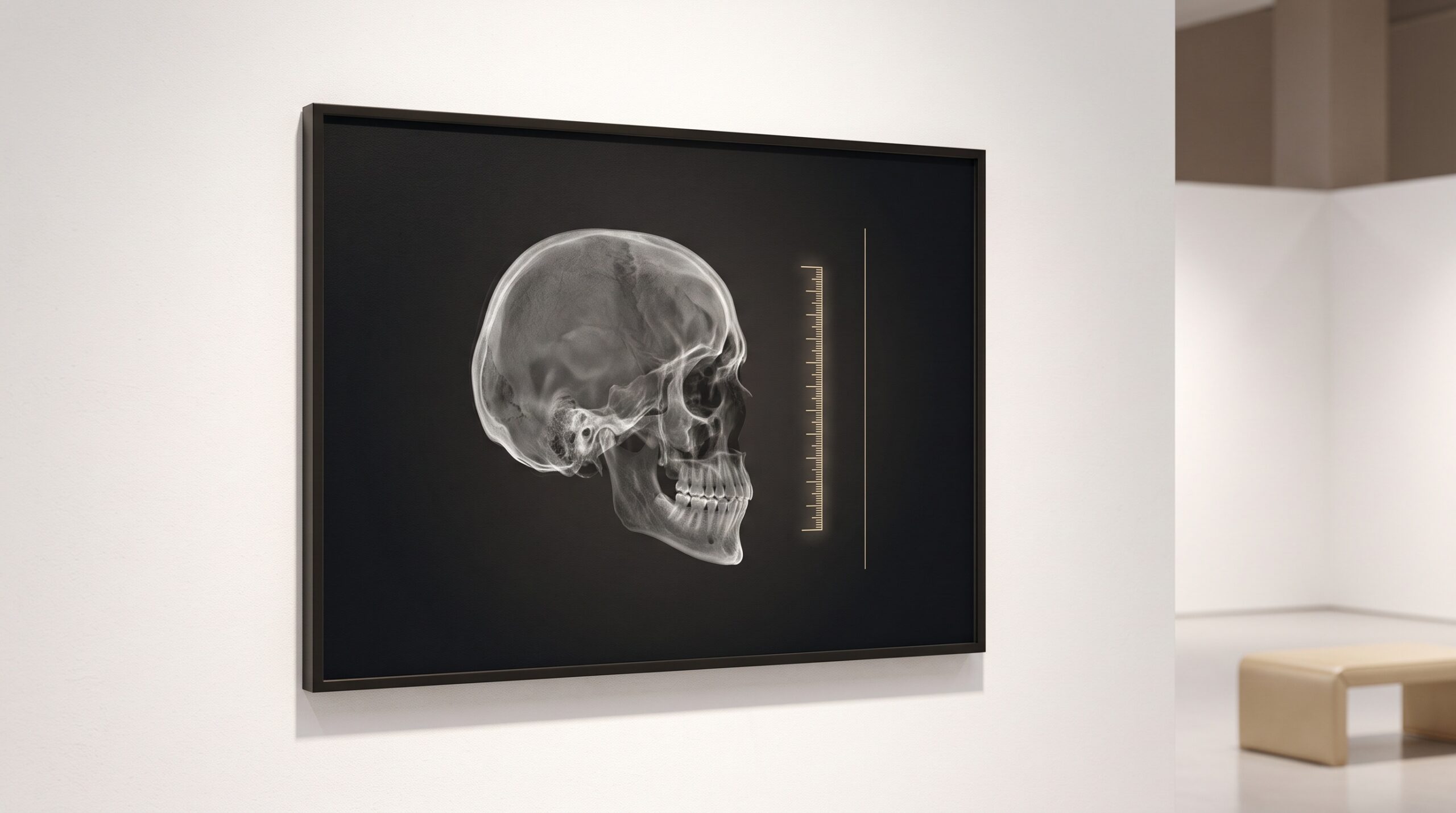
October 4, 2026 How Much Is Normal? Diagnostic Reference Levels and the Quiet Discipline of CBCT Dose
A cone-beam scanner is an obliging instrument. Ask it for a larger field, a finer voxel, a cleaner image, and it will oblige without hesitation and without comment, delivering exactly the radiation those requests cost. What it never does is ask the one question the clinician ought to be asking in its place: was that much necessary? For most of the technology’s life in dentistry, nobody had a way to answer. A dose was simply the dose the machine happened to give. The Diagnostic Reference Level is the quiet attempt to change that — to hand the practice a mirror and let it see, for the first time, how its own doses compare with everyone else performing the very same exam.
A Line, Not a Limit
The idea is easy to misread, so it is worth stating plainly: a Diagnostic Reference Level is not a dose ceiling, not a legal maximum, not a figure you are forbidden to cross. It is a benchmark drawn from reality. Gather the typical dose that many facilities deliver for a standard examination — a routine mandibular scan, say — and the reference level is conventionally set near the upper end of that crowd, often the seventy-fifth percentile. The meaning is diagnostic rather than punitive. If your practice’s usual dose for that exam sits comfortably below the line, you are in ordinary company. If it sits above, nothing is wrong by definition, but something is now owed: an explanation. Perhaps the cases genuinely demand it. Perhaps a protocol was set once and never revisited. The reference level does not accuse; it simply points, and asks you to look where it is pointing.
The Instrument That Varies by Orders of Magnitude
The reason dental CBCT needs this mirror more than almost any other modality is the sheer breadth of its dose range. Two scanners in two neighbouring practices can deliver radiation that differs not by a few percent but by a factor of ten or more for what the appointment book calls the same scan. Field of view is the dominant lever — a full craniofacial volume irradiates vastly more tissue than a collimated box around a single molar — but resolution, tube current, exposure time, and the manufacturer’s default protocols all compound the spread. This is a modality whose dose is almost entirely a matter of choices, and choices made invisibly. A benchmark is the only thing that renders those choices legible, converting a private machine setting into a number that can be compared, questioned, and improved. It is the dose equivalent of the discipline we described in the craft of the low-dose scan — except that where reconstruction rescues a thin signal after the fact, the reference level works on the exposure before it is ever made.
The Trouble Beneath the Benchmark
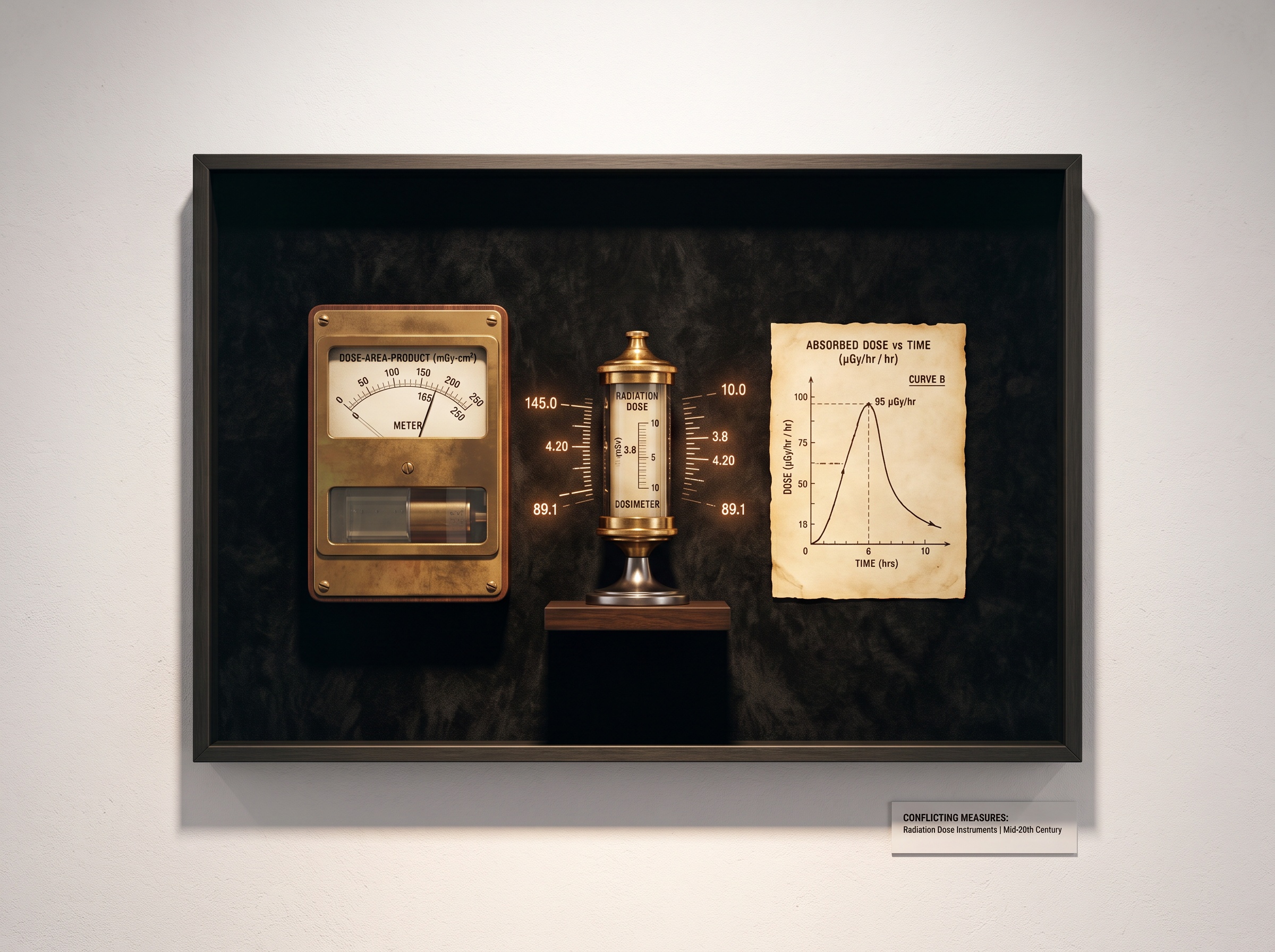
Here the story turns honest, because the recent critical appraisals of dental CBCT reference levels have found the ground less solid than the elegant idea suggests. The problem is metrological: the field has not agreed on a single language for dose. Some studies report dose-area product, others kerma-area product, others quantities borrowed uneasily from medical CT whose fan-beam geometry never matched the cone. Add inconsistent definitions of field-of-view size, varying patient groups, and small samples, and the result is a set of published reference levels that cannot always be laid side by side without quietly comparing different things. This is not a reason to dismiss the project; it is a reason to build it properly. A benchmark is only as trustworthy as the measurement beneath it, and a dose figure means little until you know which instrument spoke it — the same lesson, in a different register, as why a CBCT’s gray values are not true Hounsfield units. The number looks authoritative; the standard behind it is still being written.
Optimisation Is Where the Line Earns Its Keep
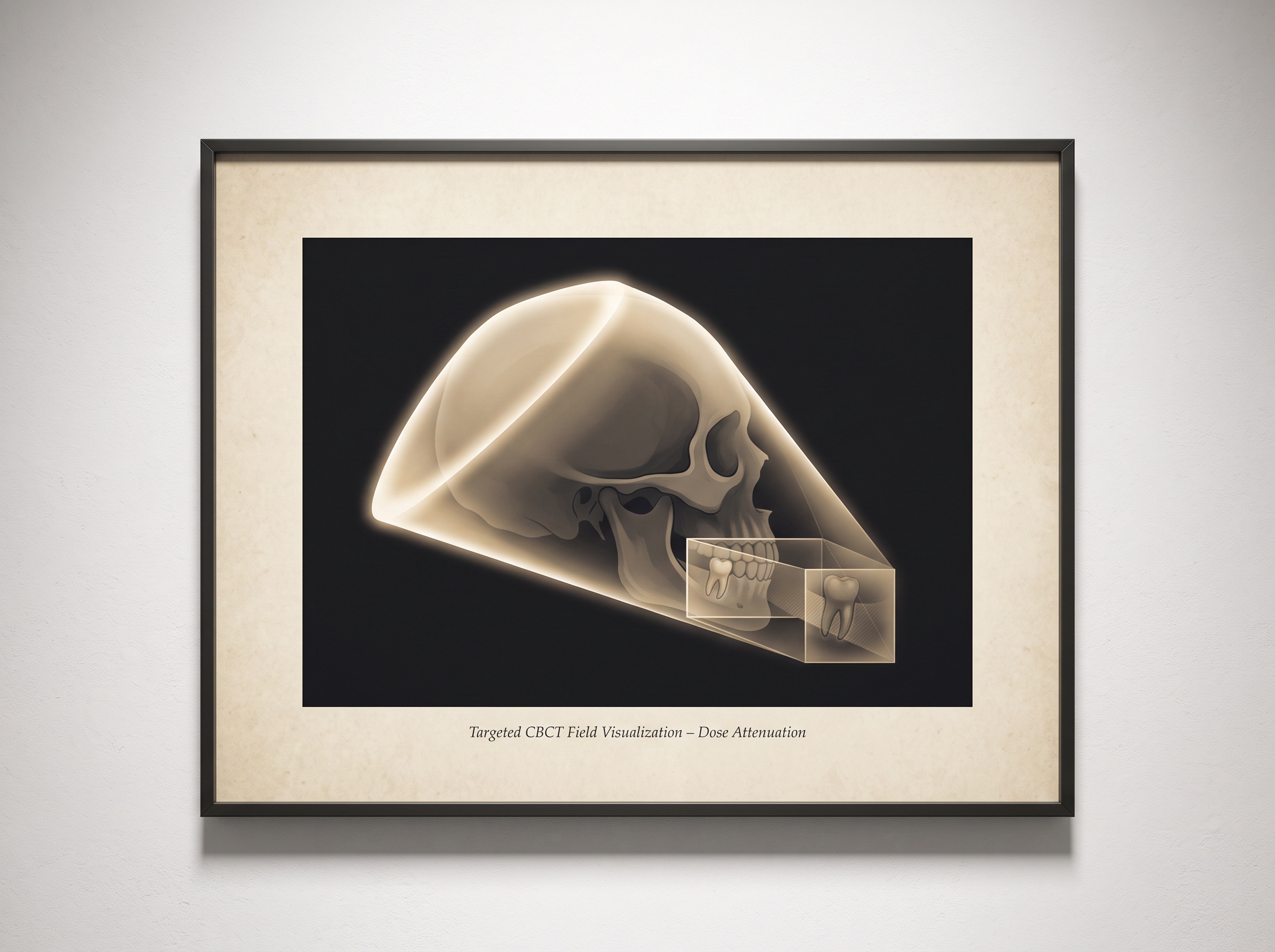
A reference level that only measures is a thermometer; the value is in what it provokes. When a practice finds its typical dose sitting above the benchmark, the levers to bring it down are well understood and mostly unglamorous. Collimate the field of view to the actual clinical question rather than the maximum the machine allows. Reconsider whether every case needs the finest voxel, when a coarser one would answer the question at a fraction of the exposure. Revisit the default protocols the scanner shipped with, which are set for image richness, not restraint. None of this is a counsel of starving the image — an underexposed scan that misses the lesion is the most expensive dose of all, which is precisely the balance weighed in the risk of not looking. The reference level simply ensures that the balance is struck deliberately, by a clinician who has seen the number, rather than by a factory default nobody has questioned since installation.
The Discipline of Knowing Your Own Dose
What all of this asks of a practice is modest and, for that reason, often skipped: know your own numbers. Record the dose-relevant figures your scanner reports for your routine examinations. Compare them, over a run of cases, against the best available reference level for that exam and field size. Notice the protocol that sits stubbornly high and ask whether it should. This is auditing, not artistry, and it will never produce a more beautiful radiograph — but it is the habit that separates a practice that merely owns a cone-beam scanner from one that understands what the scanner costs each patient it serves. Modern guidance, including the renewed emphasis from the American Dental Association on using imaging in moderation and only where it changes the clinical decision, points the same way: justify the scan, then optimise the dose, and keep a record honest enough to check yourself against.

Future Developments
The near future of this discipline is standardisation — a single, agreed dose quantity for dental CBCT, defined for comparable fields of view, so that reference levels built in one country can genuinely inform practice in another. Beyond that lies something quieter and more powerful: reference levels that stop being published tables a clinician must seek out and become live feedback the scanner itself provides. One can imagine a console that, as a protocol is selected, shows where this exam’s dose falls against the national benchmark before the exposure is made — the mirror held up at the only moment it fully matters. The measurement will keep improving, and the day will come when no dental scan is delivered without the machine knowing, and gently showing, how its dose compares with the rest. What will remain entirely human is the judgement the number exists to inform: whether, for this patient and this question, the dose about to be given is the one that should be. The benchmark can tell you what is normal. Only the clinician can decide what is right.
Sources & further reading:
- CBCT: radiation risk or diagnosis risk? (Nature)
- New ADA recommendations confirm dental imaging most effectively used in moderation (American Dental Association)
Sorry, the comment form is closed at this time.