


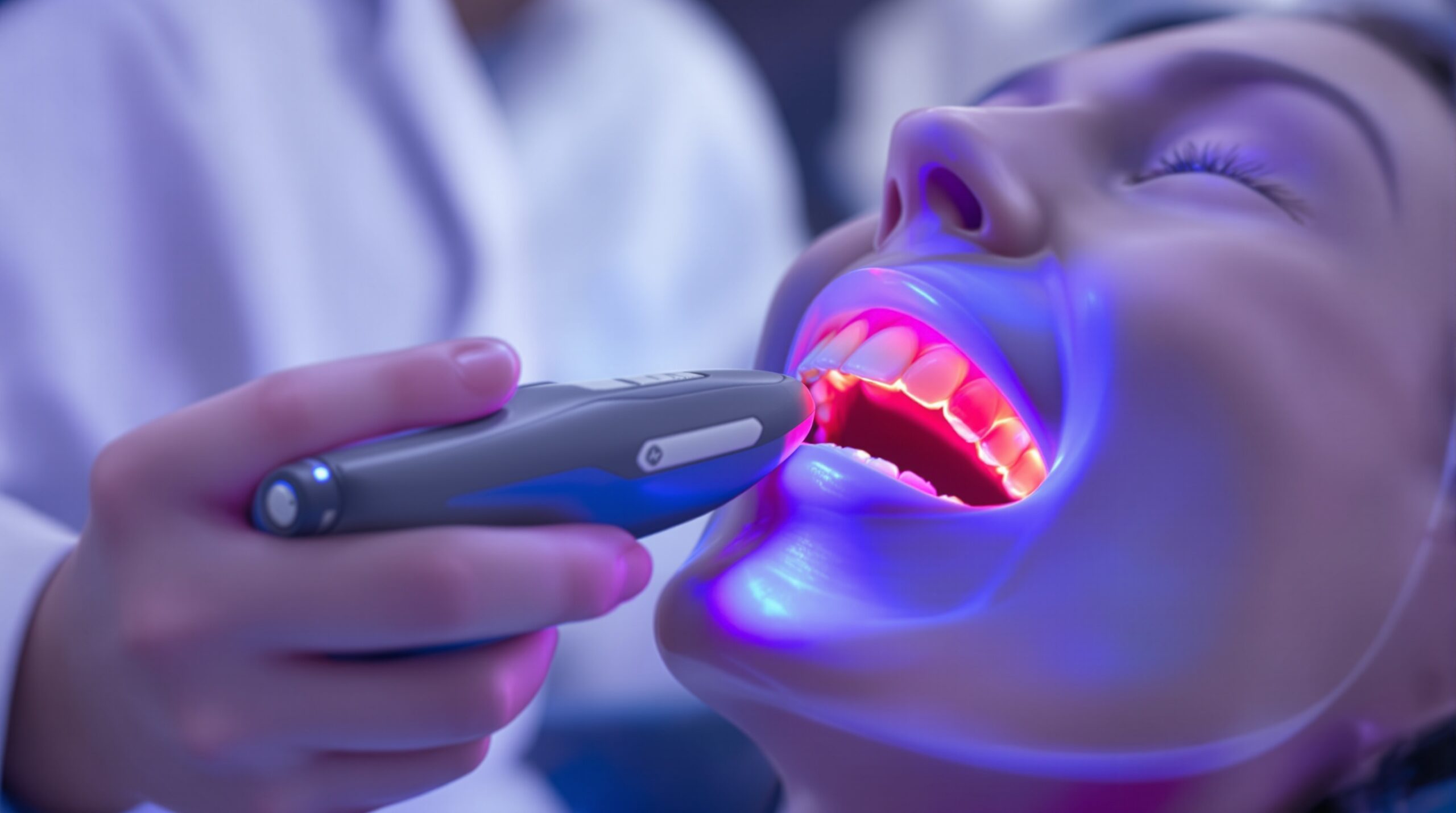
April 10, 2026 Red Fluorescence Plaque Detection: Revolutionary 405nm LED Technology for Enhanced Dental Imaging
Dental plaque detection has evolved significantly with the introduction of fluorescence-based imaging technologies that can identify bacterial biofilms without the need for traditional disclosing agents. Red fluorescence plaque detection using 405nm LED illumination represents a breakthrough in non-invasive oral health assessment, offering clinicians precise, real-time visualization of plaque accumulation patterns.
The Science Behind Red Fluorescence Detection
Red fluorescence in dental plaque originates from porphyrins produced by specific oral bacteria, particularly those associated with mature biofilm formations. When exposed to 405nm blue-violet LED light, these bacterial porphyrins emit a characteristic red fluorescence signature that can be detected and quantified using specialized imaging systems.
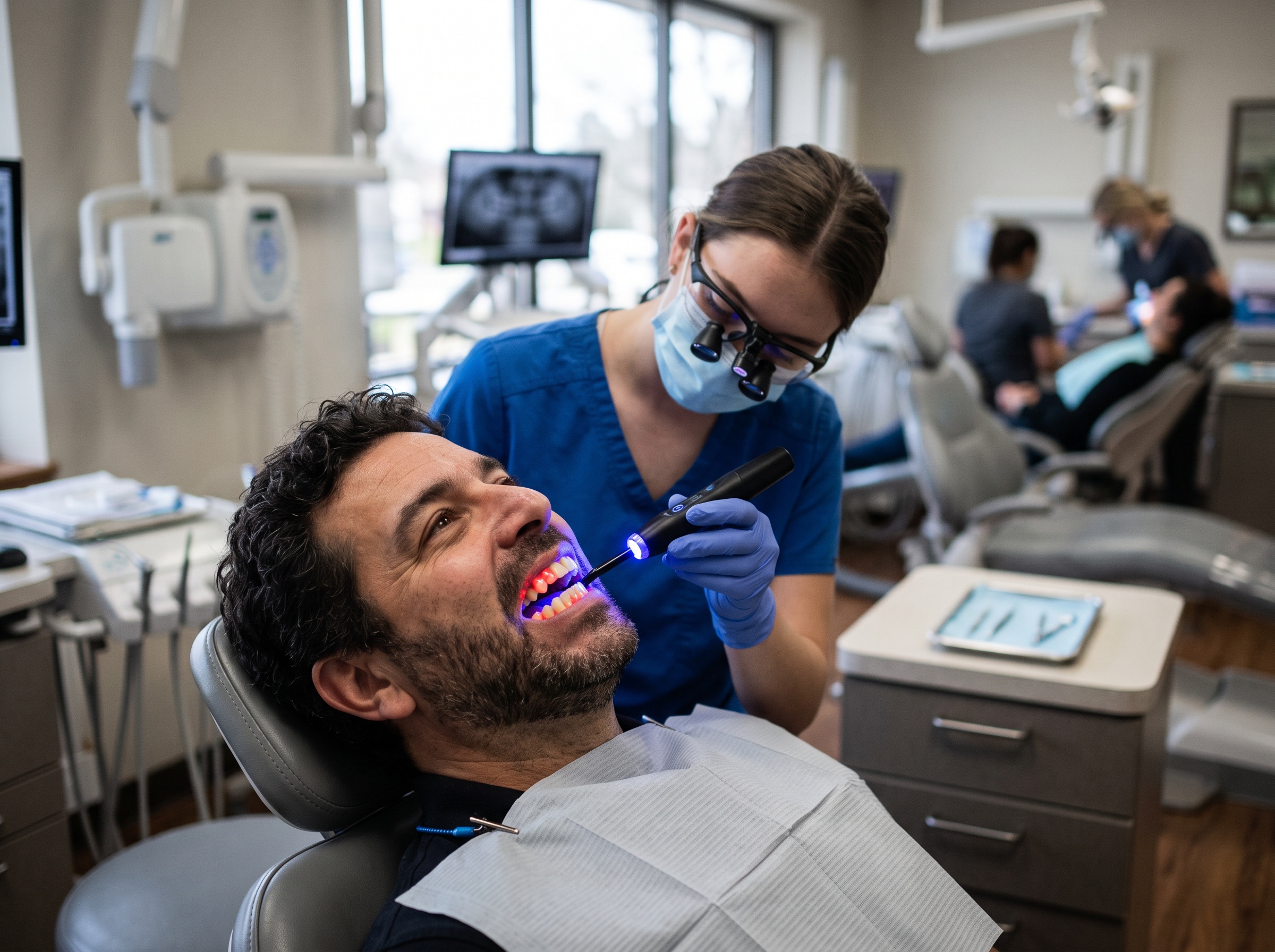
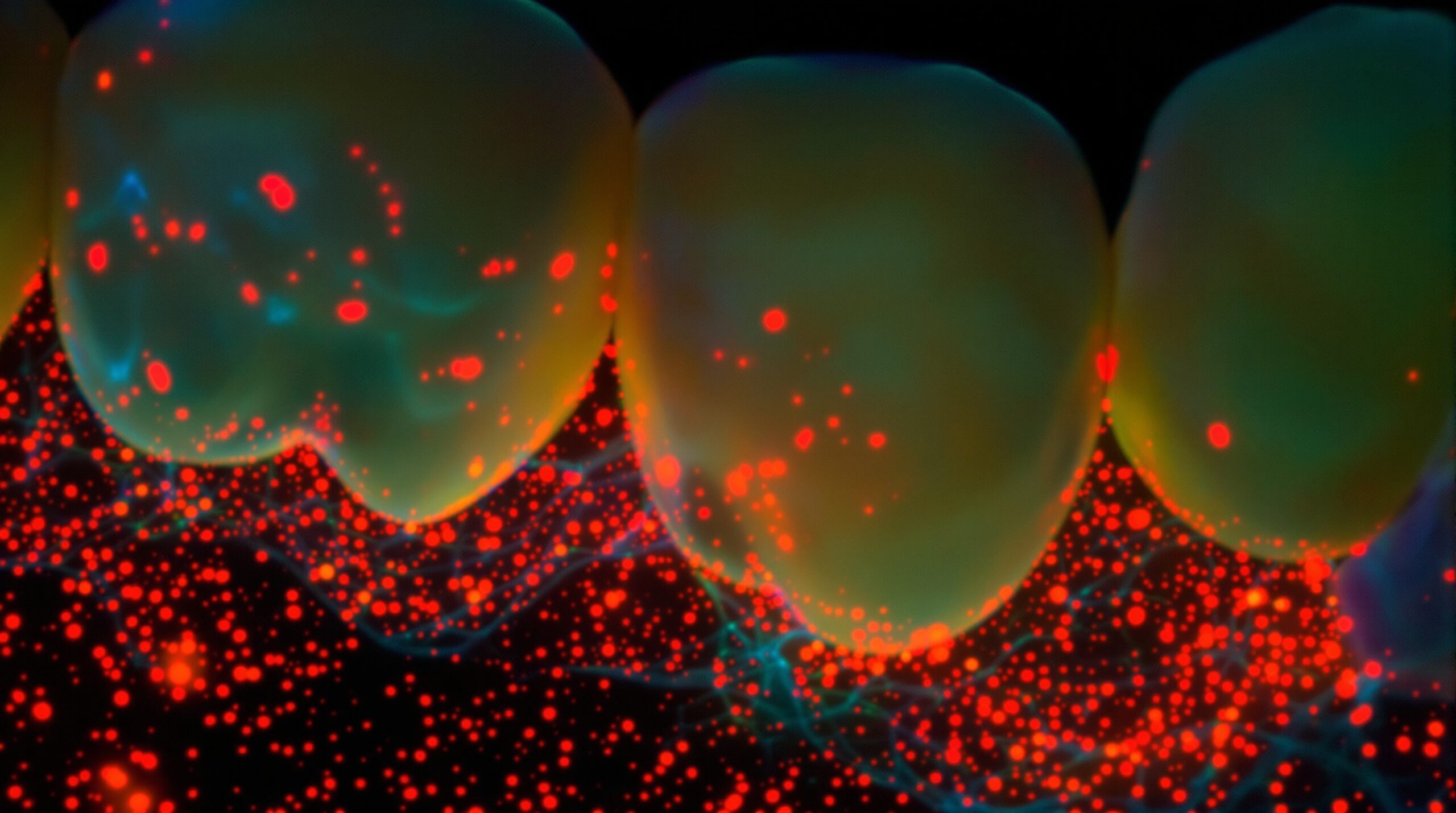
This natural fluorescence phenomenon allows dental professionals to identify plaque deposits that may not be readily visible under conventional white light examination. The technology is particularly effective at detecting mature plaque formations where bacterial communities have established complex biofilm structures.
Clinical Applications and Benefits
The implementation of 405nm LED fluorescence systems in clinical practice offers several advantages over traditional plaque detection methods:
- Non-invasive assessment: No disclosing solutions required
- Real-time visualization: Immediate feedback during examination
- Quantitative analysis: Digital assessment of plaque coverage ratios
- Patient education: Visual demonstration of oral hygiene effectiveness
- Treatment monitoring: Objective tracking of plaque reduction over time
Handheld Device Technology
Modern fluorescence detection systems employ compact, handheld devices equipped with 405nm light-emitting diodes and specialized optical filters. These instruments can be easily integrated into routine dental examinations without disrupting established clinical workflows.
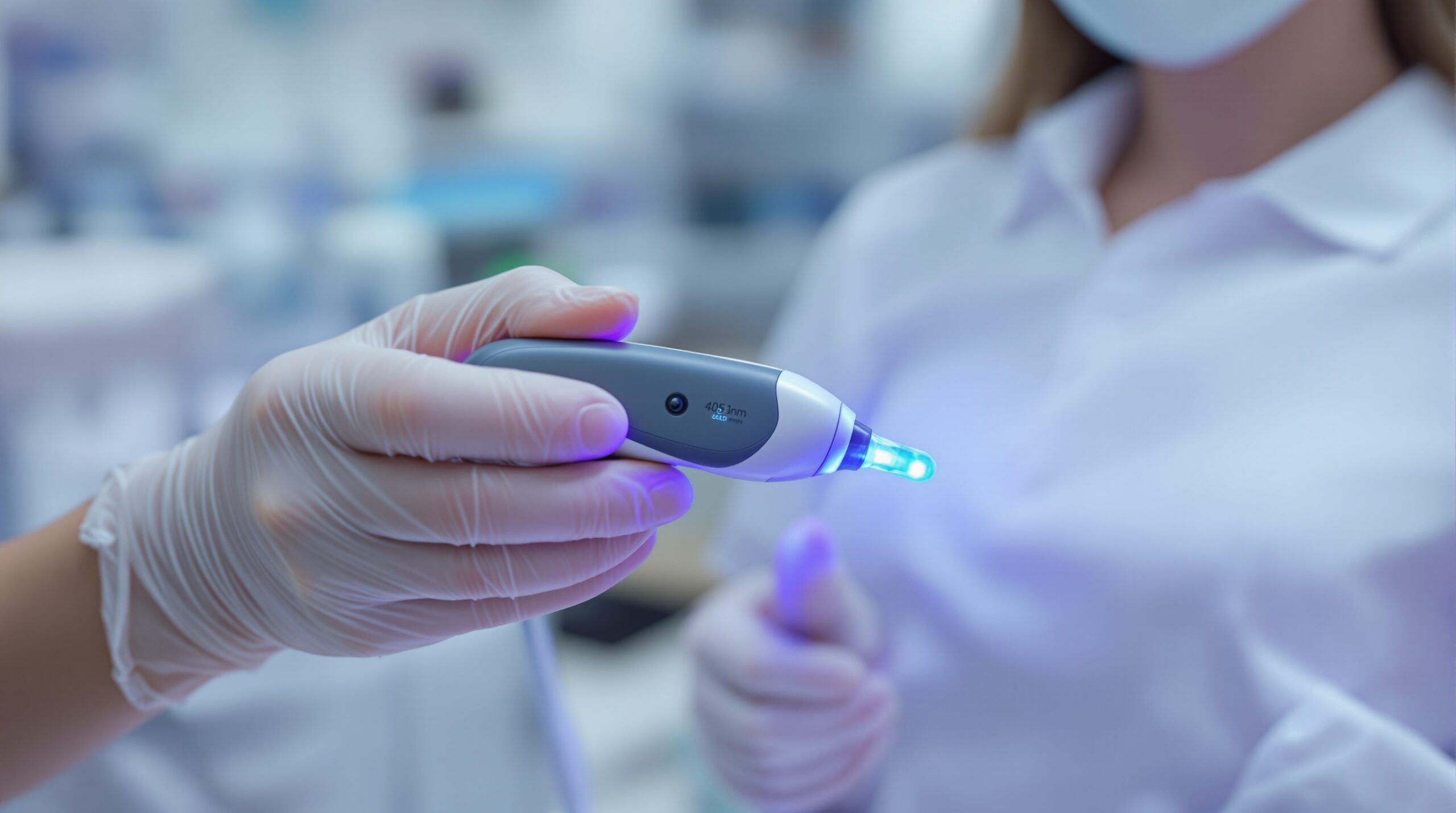
Clinical validation studies have demonstrated high sensitivity and specificity for these devices when compared to commercial reference systems, with plaque coverage ratios ranging from 0 (no plaque) to 1 (complete coverage) providing objective measurements for documentation and treatment planning.
Digital Image Processing and Analysis
Advanced computer vision algorithms process fluorescence images to calculate precise plaque coverage ratios using pixel-level analysis. Histogram thresholding techniques segment images into plaque and non-plaque areas, enabling comprehensive quantitative assessment of oral hygiene status.
This digital approach eliminates subjective interpretation variability and provides standardized metrics that can be tracked longitudinally to monitor treatment effectiveness and patient compliance with oral hygiene protocols.
Clinical Implementation Strategies
Successful integration of red fluorescence plaque detection requires consideration of several clinical factors:
Patient Positioning and Technique
- Standard intraoral examination positioning
- Consistent LED illumination angle and distance
- Ambient light control for optimal fluorescence visualization
- Systematic tooth surface examination protocol
Documentation and Record-Keeping
Digital image capture capabilities allow for permanent record-keeping and progress monitoring. Fluorescence images can be integrated into electronic health records, providing objective documentation of plaque patterns and treatment responses.
Future Developments and Research
Ongoing research continues to refine fluorescence-based plaque detection technologies, with developments focusing on:
- Enhanced sensitivity for early plaque detection
- Artificial intelligence integration for automated analysis
- Multi-wavelength fluorescence systems
- Smartphone-compatible detection platforms
- Integration with digital treatment planning software
Cost-Effectiveness and Accessibility
The development of low-cost, open-source fluorescence detection systems makes this technology increasingly accessible to diverse practice settings. Miniaturized devices with simplified operation protocols enable widespread adoption while maintaining clinical accuracy.
Step-by-step device assembly guides and web-hosted analysis software support cost-effective implementation, particularly beneficial for community health programs and educational institutions seeking advanced plaque detection capabilities.
Conclusion
Red fluorescence plaque detection using 405nm LED technology represents a significant advancement in preventive dental care. By providing objective, quantitative assessment of plaque accumulation without requiring disclosing agents, these systems enhance diagnostic accuracy while improving patient education and treatment monitoring capabilities.
As technology continues to evolve, fluorescence-based plaque detection will likely become a standard component of comprehensive oral health examinations, supporting more effective prevention strategies and improved patient outcomes through enhanced visualization of bacterial biofilm dynamics.
Related Reading
- Quantitative Light-Induced Fluorescence (QLF) Imaging: Revolutionary Caries Detection Technology in Modern Dentistry
- DIAGNOdent Laser Fluorescence Imaging: Precision Caries Detection Technology for Modern Dental Practice
- Near-Infrared Transillumination (NIRT): Advanced Dental Imaging for Early Caries Detection
Sorry, the comment form is closed at this time.