


August 27, 2026 Scoring the Soft Frame: When a Neural Network Learns to Read the Pink Esthetic
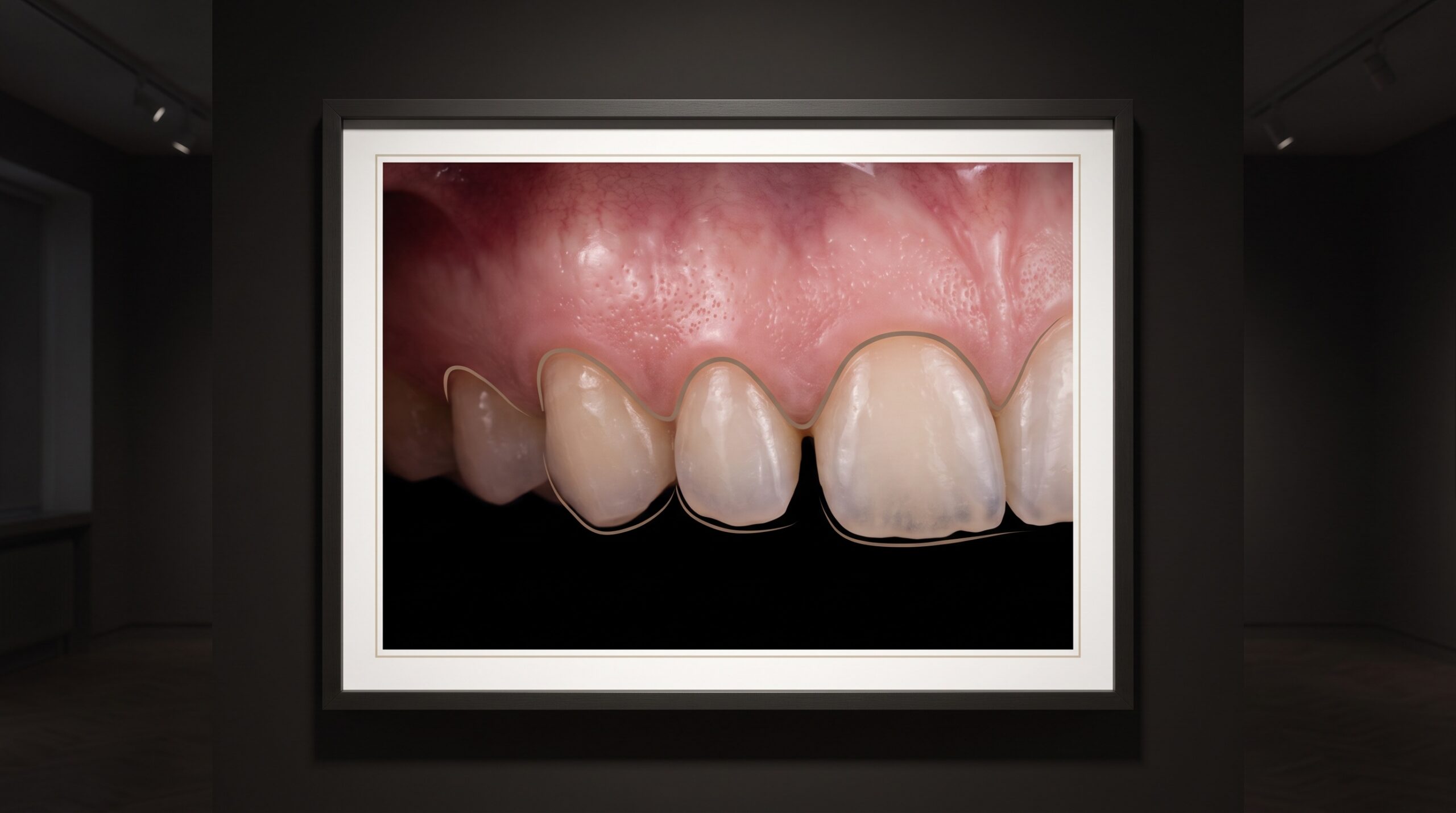
Every restoration in the esthetic zone is really two pictures at once. There is the tooth – the ceramic, the translucency, the borrowed light of enamel – and there is the frame around it: the pink margin of gingiva, its papillae, its contour, its color. A clinician can build a flawless crown and still lose the case at the frame, because the eye reads the whole composition, not the centerpiece alone. The difficulty has always been that the frame resists measurement. It is soft, it is subjective, it is the part of the mouth we describe with adjectives. A proof-of-concept study has now asked a blunt question: can a neural network learn to read that frame from a photograph, and hand back a number?
The Number Behind the Beauty
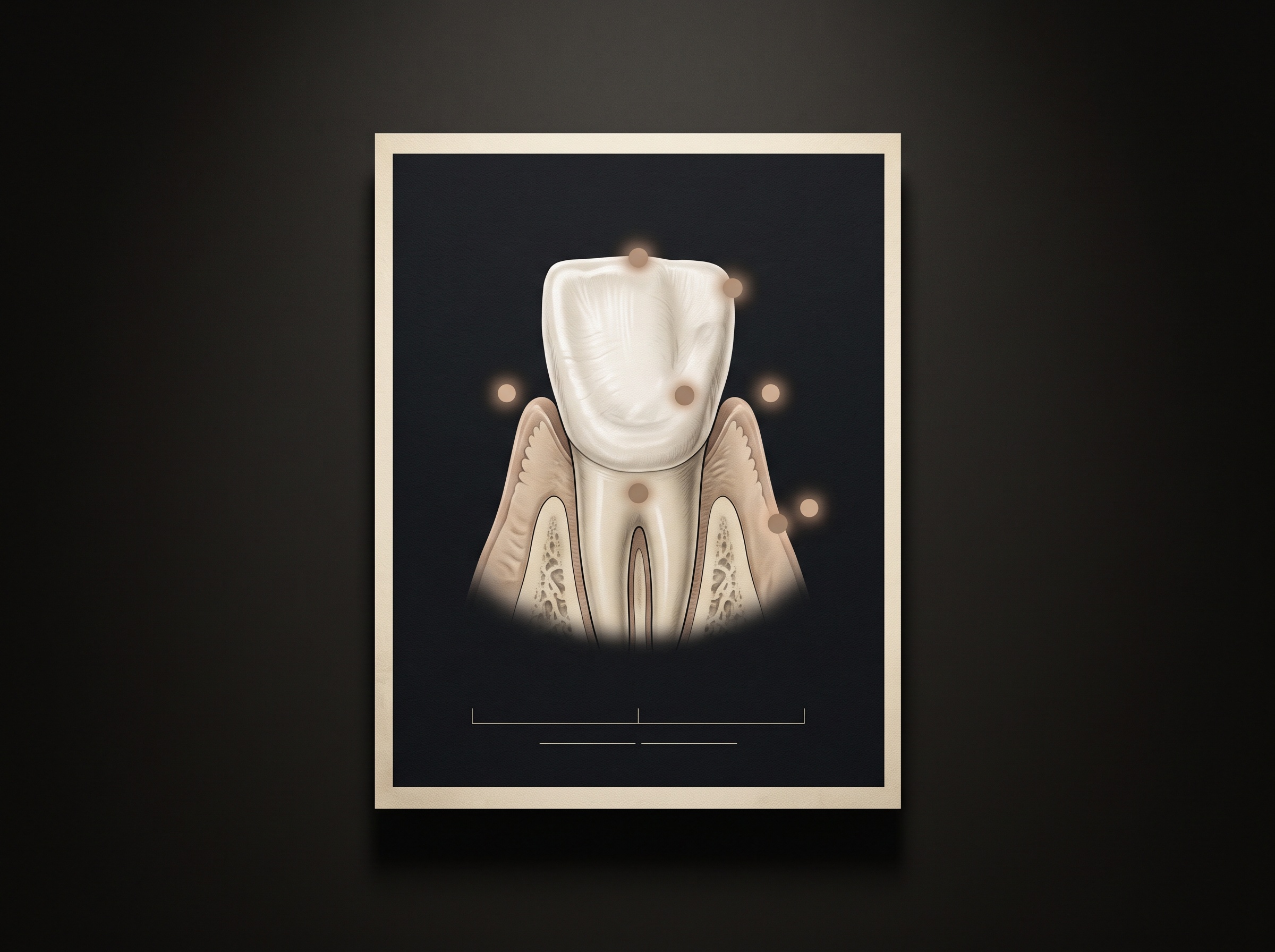
Long before any machine was involved, the profession had already tried to make the pink frame legible. The Pink Esthetic Score, introduced by Fürhauser and colleagues in 2005, takes the soft tissue around a single implant restoration and breaks it into seven small verdicts: the mesial papilla, the distal papilla, the level of the soft-tissue margin, its contour, any deficiency in the alveolar process, and finally the color and texture of the mucosa itself. Each variable is scored zero, one, or two – present and ideal, deficient, or absent – and the parts sum to a single figure. It is one of the quiet triumphs of clinical photography that a subjective impression of a gumline can be turned into a repeatable index at all.
But a score is only as consistent as the eyes assigning it, and the eyes disagree. Inter-examiner variability has haunted the Pink Esthetic Score since its debut; two skilled clinicians can look at the same well-lit photograph and part ways by several points. That inconsistency is exactly the kind of gap machine vision was built to close – not because the machine has better taste, but because it never gets tired, never drifts, and renders the same verdict on the same pixels every time.
Teaching the Machine to Grade a Gumline
The proof-of-concept work took the obvious but demanding path: show a deep learning model enough scored clinical photographs that it learns to associate patterns of pink with the numbers experts assign. This is the same family of convolutional architecture that, elsewhere in dentistry, reads caries on radiographs or segments anatomy on a scan. Here the subject is not radiodensity but the far subtler grammar of soft tissue – the way a papilla either fills its embrasure or leaves a dark triangle, the way healthy mucosa stipples like an orange peel, the way a margin sits symmetrically against its neighbor or betrays a millimeter of recession.
What makes the gingival case harder than a radiograph is that everything the model must judge is carried in color, contour, and light. A shadow can imitate a deficiency. A flash placed badly can flatten the very stippling the score rewards. This is why the machine’s reading is inseparable from photographic craft: garbage capture yields a garbage score, no matter how sophisticated the network. The same disciplines that make a human reading reliable – controlled lighting, consistent framing, the tamed reflections of cross-polarized clinical photography – are precisely what a model needs to see the tissue rather than the glare on top of it.
The Radical Part: A Preview Before the Picture Exists
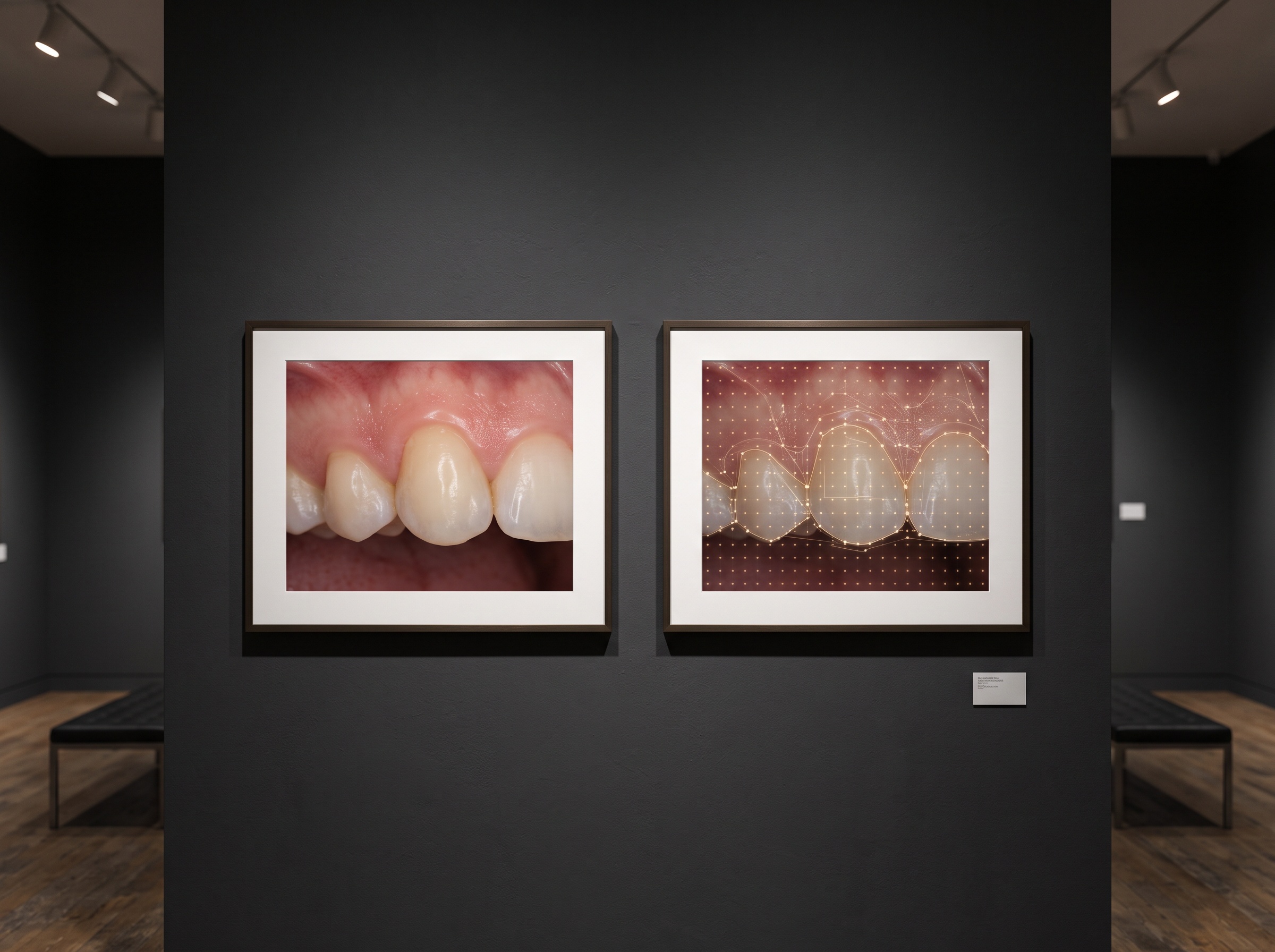
Reading an existing result is useful. Predicting one is transformative. The more provocative ambition in this line of work is not to score the photograph you already have, but to forecast the score of a result that has not happened yet – to look at a site before implant placement and offer a preview of the esthetic outcome the soft tissue is likely to settle into. For a patient weighing a procedure in the most visible real estate of the face, that is a profound shift: the conversation moves from promise to prediction, from “trust the plan” to “here is the likely frame.”
This ambition sits alongside a broader movement to make beauty measurable, the same impulse behind our look at the mathematics of the smile, where golden proportion and the recurring esthetic dimension turn an intuition into geometry. The Pink Esthetic Score is that impulse applied to the soft tissue; a predictive model is that impulse pointed at the future. Neither replaces judgment. Both give judgment a scaffold.
What a Proof of Concept Is Honest About
The phrase “proof of concept” is doing real work, and it deserves respect. A model trained on a bounded set of photographs learns the world it was shown – a particular mix of skin tones, lighting rigs, cameras, and clinical conventions. Ask it to score an image captured under conditions it has never seen and it can stumble, confidently. The soft tissue also changes with time; a score at healing is not a score at one year, and a photograph freezes a moment the biology has not finished writing. A machine that predicts an outcome is making a bet about remodeling it cannot observe.
None of this diminishes the direction. It clarifies it. The value here is not an oracle that replaces the clinician’s eye but a second, tireless reader that flattens variability and refuses to flatter anyone – the same argument that runs through automated reading elsewhere in imaging, from caries detection to whole-mouth screening on a single network. Consistency, not genius, is the gift.
The Photograph as Instrument
There is a deeper lesson in all of this for anyone who treats the clinical image as craft. The moment a machine can score a photograph, the photograph stops being mere documentation and becomes an instrument of measurement – and instruments demand calibration. A Pink Esthetic Score read by a model is only trustworthy if the capture that fed it was controlled: fixed magnification, neutral color, polarized light, a repeatable geometry. The rise of automated scoring is, paradoxically, an argument for slowing down at the moment of capture. The network cannot recover the stippling your flash erased or the contour your angle foreshortened.
In that sense the gallery metaphor holds all the way down. A curator lights a painting so the work, not the varnish, reaches the eye. The clinical photographer lights the gingiva so the tissue, not the reflection, reaches the sensor – and now, the model. The score is only ever as honest as the frame it was read from.
Future Developments
The near horizon is a model that no longer hands back a single opaque number but shows its reasoning: highlighting the deficient papilla, the asymmetric margin, the patch of thinned mucosa, so the score becomes a map rather than a verdict. Beyond that lies genuine prediction integrated into planning – a preview of the pink frame rendered from a pre-operative photograph and a proposed implant position, letting clinician and patient see the likely esthetic result before a single incision. Reach further still and the still image gives way to sequence: models trained on healing over time, forecasting not just the outcome but its trajectory. The Pink Esthetic Score began as an attempt to make a beautiful, stubbornly subjective thing repeatable. Teaching a machine to read it is the next verse of the same song – the long, patient project of turning the art of the smile into something we can measure without ever forgetting that it is, first, art.
Sources & further reading:
Sorry, the comment form is closed at this time.