


November 26, 2026 Faster Than the Hand Can Shake: The Aidite Rapid 5 and What Scan Speed Does to the Image
Every generation of intraoral scanner is sold on the same promise, stated a little louder each year: it is faster. The newly introduced Aidite Rapid 5 wears the claim in its name. Yet speed, taken alone, is a strange thing to celebrate about an imaging device, because the clinician does not keep the seconds saved. What the clinician keeps is the image, the three-dimensional model that will stand in for the patient through every subsequent step of planning, design and manufacture. So the more revealing question is not how quickly the Rapid 5 finishes a scan, but what its haste does to the picture it leaves behind. Speed, it turns out, is not a convenience bolted onto image quality. It is one of the quiet forces that shapes it.
What the mouth does while you are capturing it
A dental arch is not a still life. The patient breathes, the tongue strays, saliva pools and recedes, and the jaw drifts by fractions of a millimetre no one can feel. A scanner does not photograph this scene in a single instant; it collects a rapid sequence of small three-dimensional frames and knits them together. The slower that collection runs, the longer the window in which the subject can betray it, and the more frames arrive already spoiled by motion or intrusion. A faster capture rate shortens that window. It is the same logic that lets a quick camera shutter freeze a bird in flight while a slow one smears it. The Rapid 5’s headline is speed, but the aesthetic consequence is a model built from cleaner evidence, with fewer frames thrown away and fewer artefacts smuggled in. This is why the march toward lighter, faster wands has been as much about image integrity as about comfort: a tool that moves easily and captures quickly simply gives the mouth less chance to move the picture.
Density is detail, and speed buys density
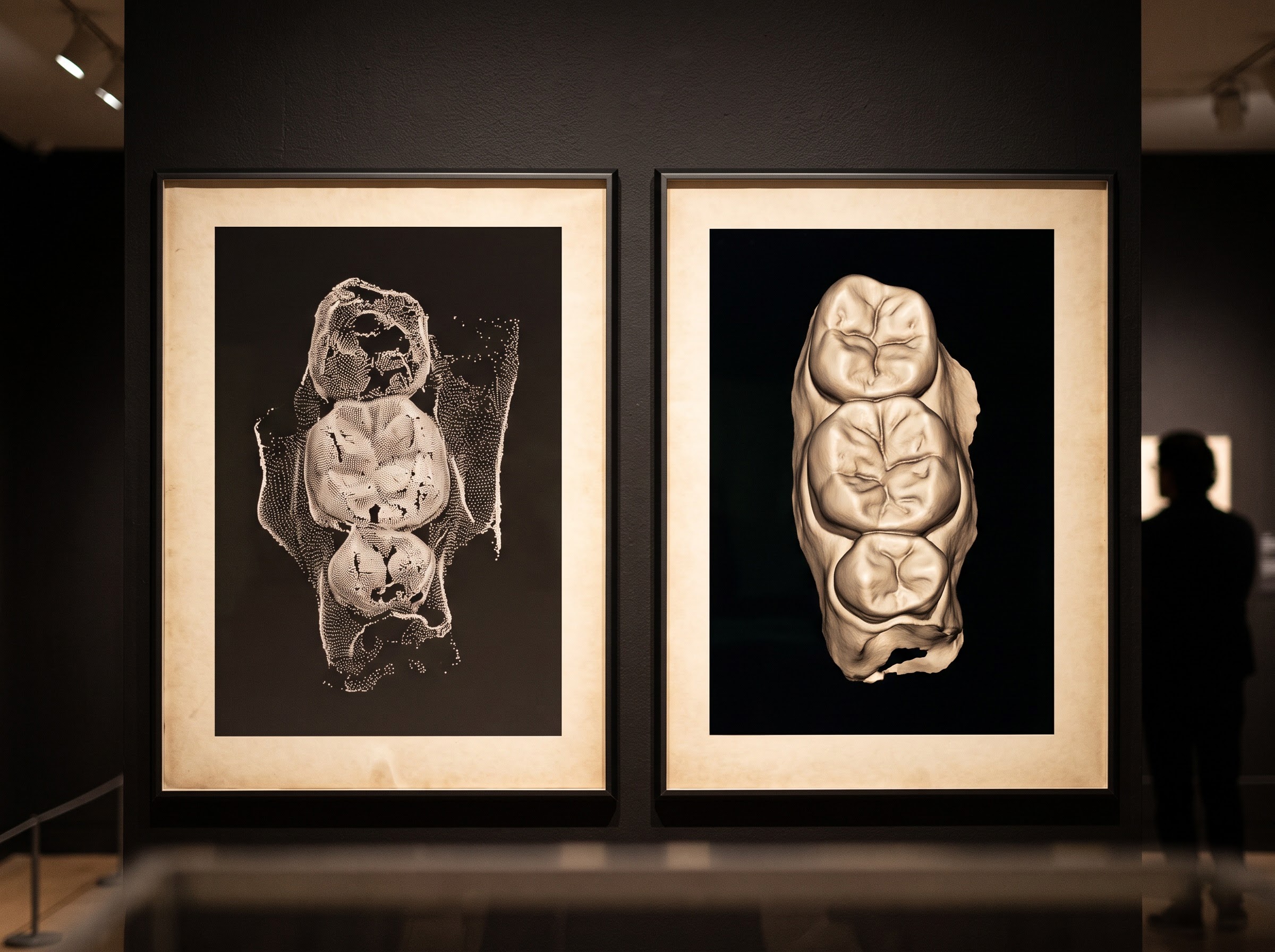
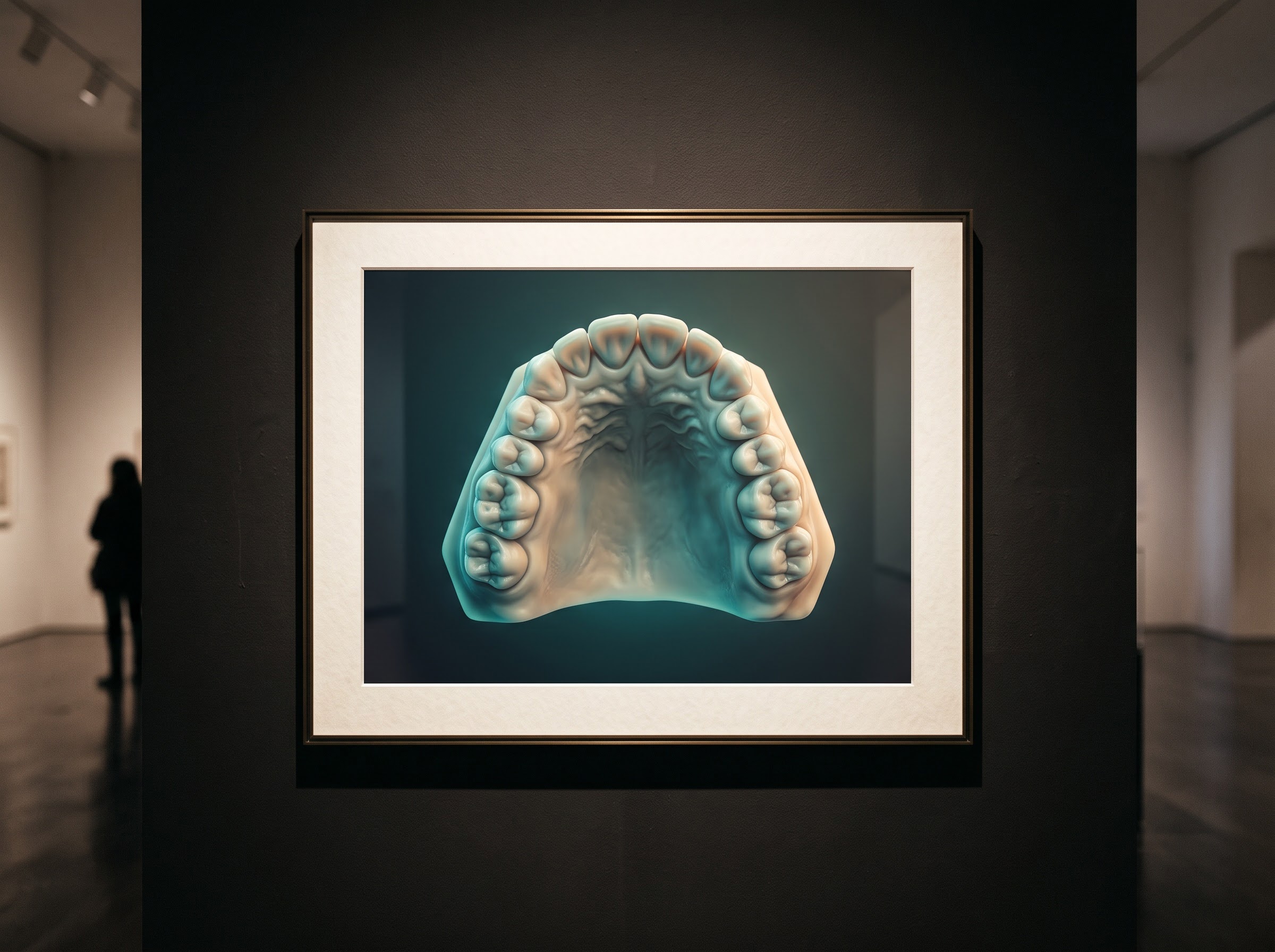
Zoom into any digital impression and you reach its atoms: a mesh of points, joined into countless small triangles that drape over the tissue like a net. The finer that net, the more faithfully it records a sharp occlusal groove, a crisp preparation margin, the gentle swell of a papilla. A coarse mesh averages these away into a plausible smoothness, and smoothness is the enemy of a diagnostic surface. Here speed pays a second, less obvious dividend. A scanner that gathers more frames per second lays more overlapping, genuinely measured points over the same stretch of tissue, so the density that survives into the final model is real rather than interpolated. Slower capture leaves gaps the software must fill with educated guesses. The distinction matters most exactly where dentistry is least forgiving, along a margin line a crown must seal against, where a tenth of a millimetre decides whether the restoration fits or leaks.
The hidden art of registration
Between the raw frames and the finished model sits the least visible and most demanding craft in the whole process: registration. Thousands of times a second, the software must decide how each new frame fits onto the model already built, searching for shared geometry to lock the pieces into alignment. Where the anatomy is rich and distinctive, cusps, embrasures, a characterful incisal edge, it finds that purchase easily. Where the terrain is long and featureless, an edentulous ridge, a broad smooth palate, it can hesitate, and hesitation becomes drift: the subtle doubling, warping or stretch that turns a confident scan into a suspect one. Faster frame rates are registration’s ally, because densely overlapping frames give the algorithm far more evidence for each alignment decision. The image we admire as seamless is in fact the product of millions of micro-judgements, each one a tiny act of visual reasoning performed faster than the eye could follow.
Speed must not cost colour
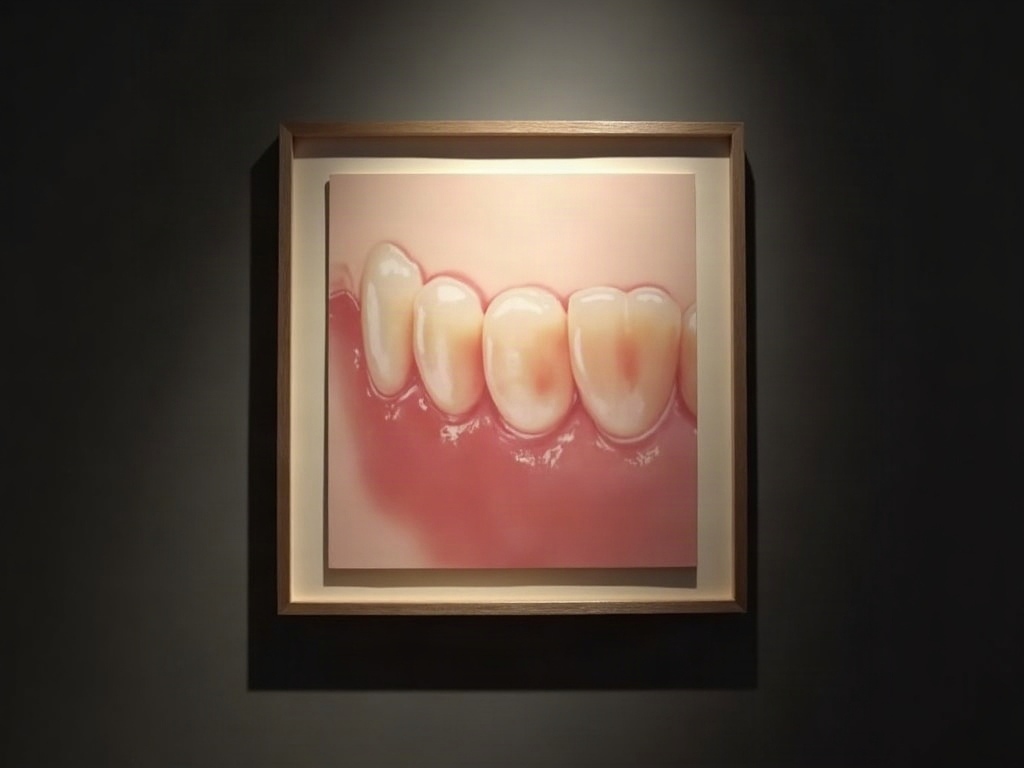
A modern intraoral scan is not only shape; it is colour, and colour carries clinical meaning. The flush of inflamed gingiva, the translucency at an enamel edge, the grey cast of a non-vital tooth, these are read in hue as much as in form. The risk with any pursuit of raw speed is that colour fidelity becomes the quiet sacrifice, the captured tissue rendered a little paler, a little flatter, its diagnostic blush washed out in the rush. A scanner worth its frame rate must hold texture and true colour at the same tempo, so the model is not merely geometrically correct but chromatically honest. When that balance holds, the scan becomes something richer than a mould: a faithful portrait that preserves the warm, living character of the tissue it was taken from, the quality this gallery has always prized in an image.
From fleeting frames to a trusted object
The payoff for all of this arrives downstream, long after the wand is set down. A scan captured fast, dense and true becomes a model confident enough to be treated as the patient themselves, handed to the laboratory, to the mill, to the software that turns a raw scan into a proposed smile and then a printed mock-up. Every weakness in the capture, a soft margin, a drifted span, a washed-out hue, propagates forward and compounds, because each later stage trusts the image absolutely and cannot know what the image quietly got wrong. This is why a faster scanner is never merely about saving chair time. It is about raising the trustworthiness of the single artefact on which everything after it depends, and about putting that reliable three-dimensional capture into more hands than ever before.
Future Developments
The arrival of a device like the Rapid 5 marks a point on a curve that shows no sign of flattening. As capture rates climb, the frame will cease to be a bottleneck at all, and the scanner’s intelligence will shift from merely keeping up with the hand to anticipating it, flagging a thin margin or an unresolved span in real time and asking, gently, to see it again before the patient ever stands up. Colour capture will grow more quantitative, drifting toward measured, reproducible shade rather than pleasing approximation, and the line between the diagnostic model and the aesthetic rendering will blur until a single pass yields both. What endures beneath every one of these advances is the oldest discipline in imaging: that the picture must be true before it is beautiful, and that speed, however impressive, earns its place only by making the truth easier to catch. The gallery will keep watching, because each faster capture is, at heart, one more attempt to hold a living thing perfectly still in light.
Sources & further reading:
No Comments