


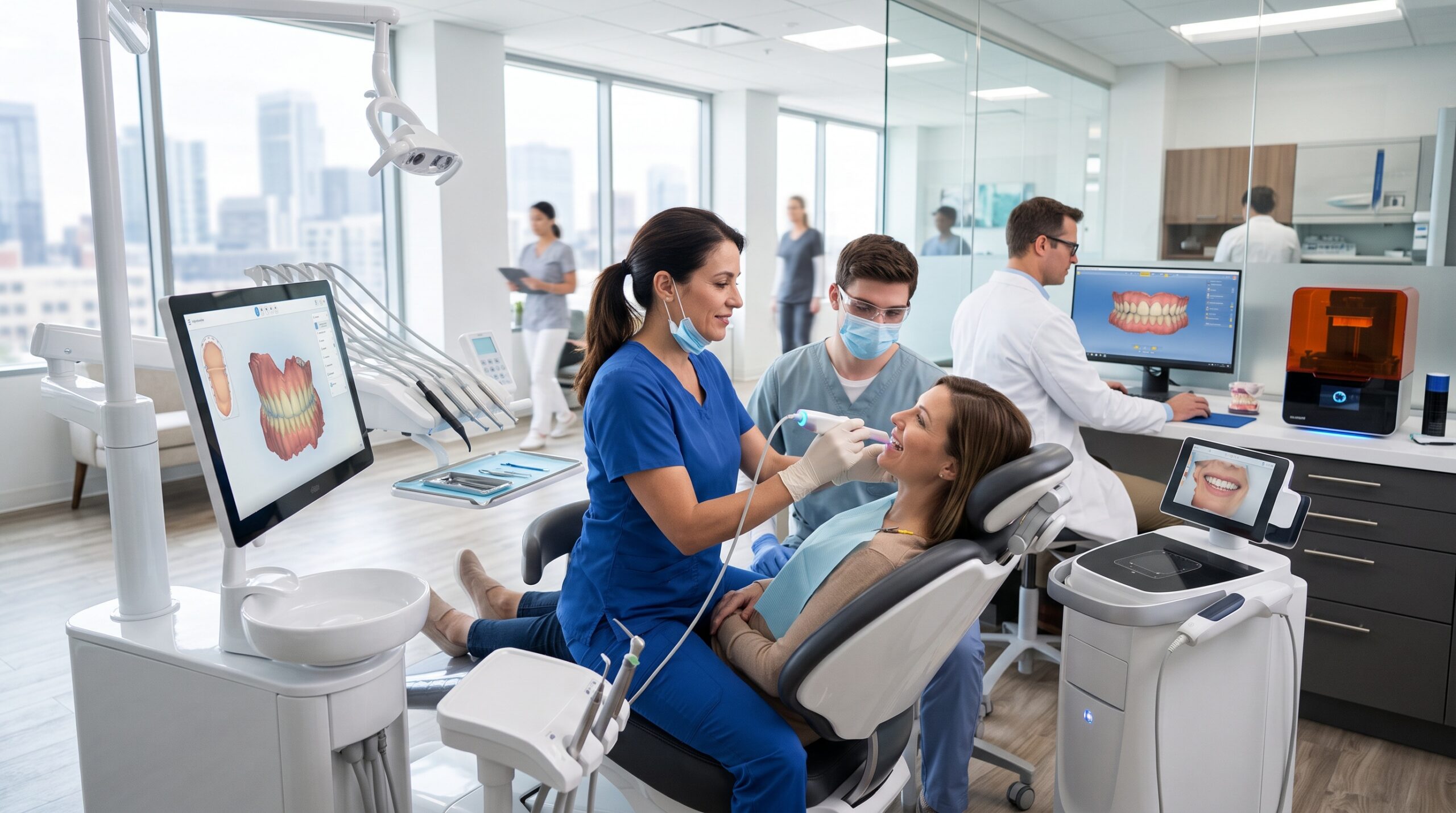
February 17, 2026 Digital Impression Systems and Workflow Integration: Transforming Modern Dental Practice
Digital impression technology has fundamentally transformed the traditional approach to capturing dental impressions, replacing messy impression materials and time-consuming procedures with precise, efficient, and patient-friendly digital workflows. Modern intraoral scanners have revolutionized how dental professionals approach restorative, orthodontic, and implant procedures, creating seamless integration between clinical practice and laboratory fabrication.
Understanding Digital Impression Technology
Digital impression systems utilize sophisticated optical scanning technology to capture three-dimensional representations of intraoral structures with remarkable accuracy and detail. These systems employ various scanning technologies, including structured light, confocal microscopy, and active triangulation, each offering unique advantages in terms of accuracy, speed, and ease of use.
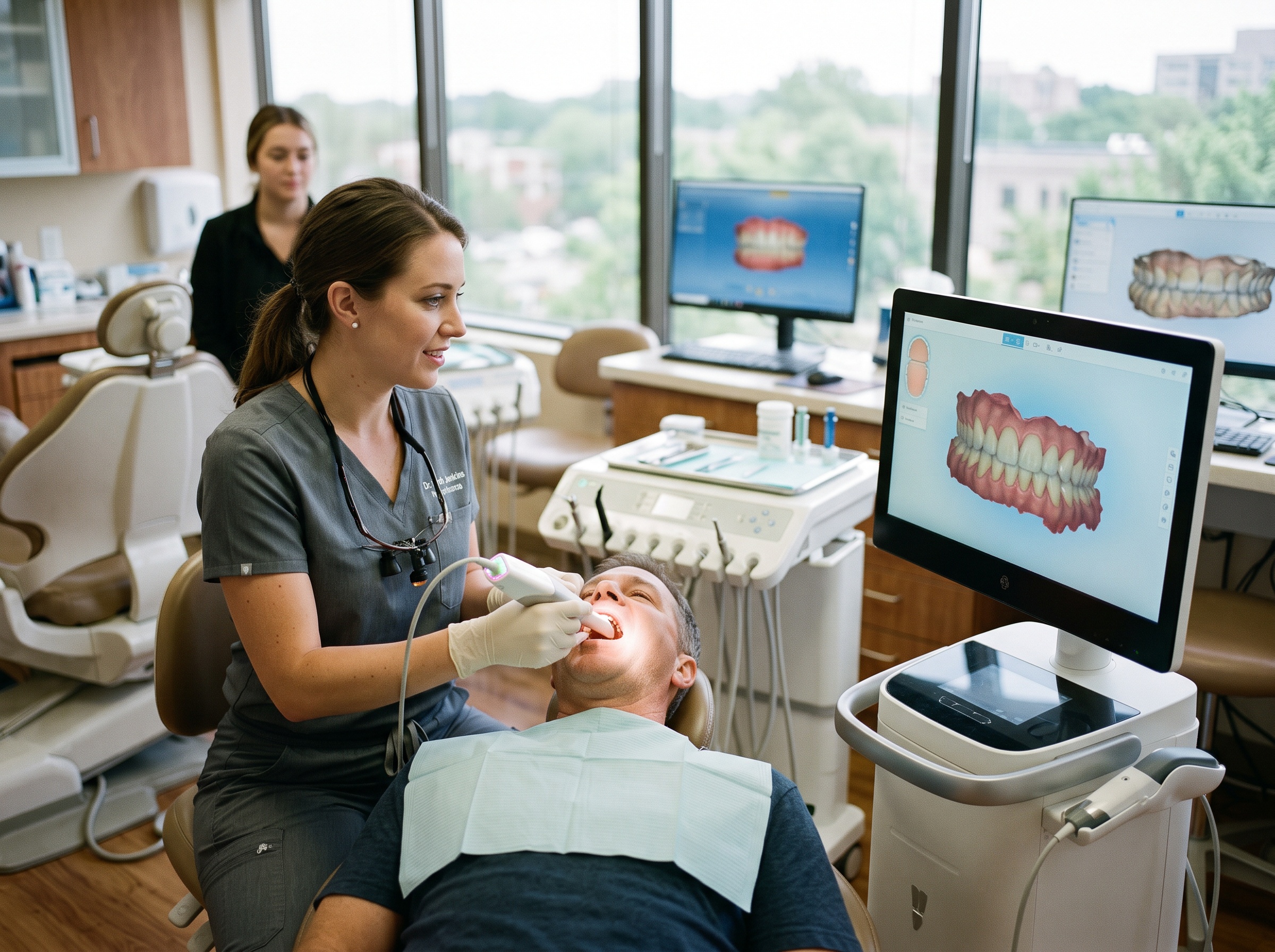
Contemporary intraoral scanners achieve accuracy levels that meet or exceed traditional impression techniques while providing immediate visualization of captured data. The ability to see scan results in real-time allows practitioners to identify and address any deficiencies immediately, eliminating the uncertainty associated with conventional impressions where problems aren’t discovered until the case returns from the laboratory.
Workflow Integration and Practice Efficiency
The integration of digital impression systems into clinical workflows represents a paradigm shift in practice management and patient care delivery. Digital impressions eliminate the traditional steps of impression taking, pouring, and shipping models to laboratories. Instead, digital files can be transmitted electronically to laboratories or milling centers within minutes of completion.
This streamlined workflow reduces turnaround times significantly. While traditional impressions might require several days for laboratory processing and shipping, digital workflows can often deliver finished restorations in a fraction of the time. Some practices with in-office milling capabilities can provide same-day restorations, transforming the patient experience and practice economics.
Clinical Applications and Procedural Advantages
Digital impression systems excel across a wide range of clinical applications. For single-unit restorations, the precision and accuracy of digital impressions often surpass traditional techniques while providing superior patient comfort. The absence of impression materials eliminates the risk of gagging and discomfort associated with conventional impression taking.
In orthodontic applications, digital impressions provide detailed information for treatment planning and aligner fabrication. The ability to capture precise anatomical details facilitates accurate tooth movement predictions and treatment outcome visualization. Many orthodontic laboratories now require digital impressions for their most advanced treatment options.
For implant restorative procedures, digital impressions offer particular advantages in accuracy and workflow efficiency. Scan bodies can be used to capture precise implant positions, and the digital data can be used for both surgical planning and prosthetic fabrication. This integration between surgical and restorative phases improves predictability and reduces the number of patient appointments required.
Patient Experience and Communication Benefits
Digital impression systems significantly enhance the patient experience compared to traditional impression techniques. The elimination of impression materials removes the discomfort, gagging, and anxiety often associated with conventional impressions. Patients can breathe normally throughout the scanning procedure, and the process can be paused at any time if necessary.
The visual nature of digital impressions provides excellent patient communication opportunities. Practitioners can show patients their scanned teeth immediately, highlighting areas of concern and explaining treatment recommendations with visual aids. This immediate feedback enhances patient understanding and acceptance of treatment plans.
Quality Control and Accuracy Considerations
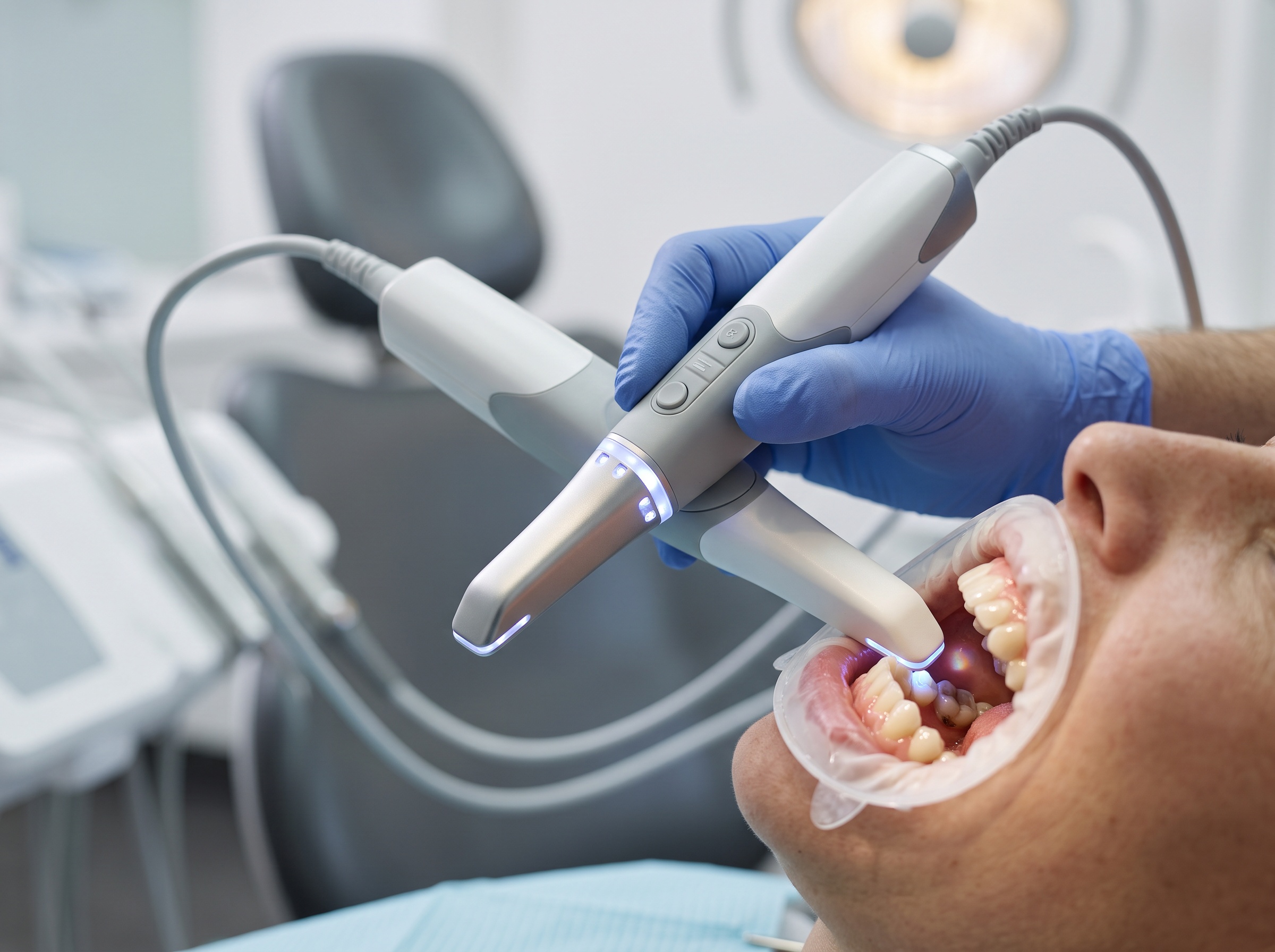
Modern digital impression systems incorporate sophisticated quality control measures that ensure accurate data capture. Real-time visualization allows practitioners to identify areas that may need rescanning immediately, rather than discovering problems after impression pouring or at the laboratory. Many systems provide accuracy indicators that guide the operator through the scanning process.
The precision of digital impressions has been validated through extensive research, with studies consistently showing accuracy levels that meet or exceed clinical requirements for most applications. The elimination of dimensional changes associated with impression material setting and model pouring actually improves overall accuracy in many cases.
Laboratory Integration and Communication
Digital workflows facilitate enhanced communication between clinicians and laboratory technicians. Digital impression files contain precise anatomical information that can be easily shared and manipulated. Laboratory technicians can evaluate margin definition, tissue contours, and occlusal relationships more accurately than with traditional models.
Many laboratories now offer design preview services where practitioners can review proposed restorations digitally before fabrication. This collaboration ensures that the final restoration meets clinical requirements and aesthetic expectations before manufacturing, reducing remakes and improving patient satisfaction.
Economic Considerations and Return on Investment
While digital impression systems require significant initial investment, the long-term economic benefits are substantial. The elimination of impression materials, shipping costs, and remake fees contributes to improved practice profitability. Additionally, the time savings associated with digital workflows allows practitioners to see more patients and increase practice revenue.
The improved patient experience and reduced appointment times often lead to increased case acceptance and patient referrals. Many practices report that digital impression capabilities become a significant competitive advantage in their local market.
Staff Training and Implementation Strategies
Successful implementation of digital impression technology requires comprehensive staff training and protocol development. All team members should understand the technology and workflow implications to ensure smooth integration into existing practice systems. Initial training should focus on proper scanning technique, software navigation, and troubleshooting common issues.
Gradual implementation strategies often work best, starting with simple single-unit cases before progressing to more complex procedures. This approach allows the team to develop confidence and expertise while minimizing patient impact during the learning curve.
Future Developments and Emerging Technologies
Digital impression technology continues to evolve rapidly, with improvements in scanning speed, accuracy, and ease of use appearing regularly. Color scanning capabilities are becoming standard, providing enhanced visualization for soft tissue evaluation and restoration matching. Some systems are beginning to incorporate fluorescence detection for caries identification during the scanning process.
Artificial intelligence integration represents the next frontier in digital impression technology. AI algorithms can automatically identify margins, suggest scan paths, and detect potential issues during data capture. These features will further streamline workflows and reduce operator dependence on technique-sensitive procedures.
Integration with CAD/CAM Systems
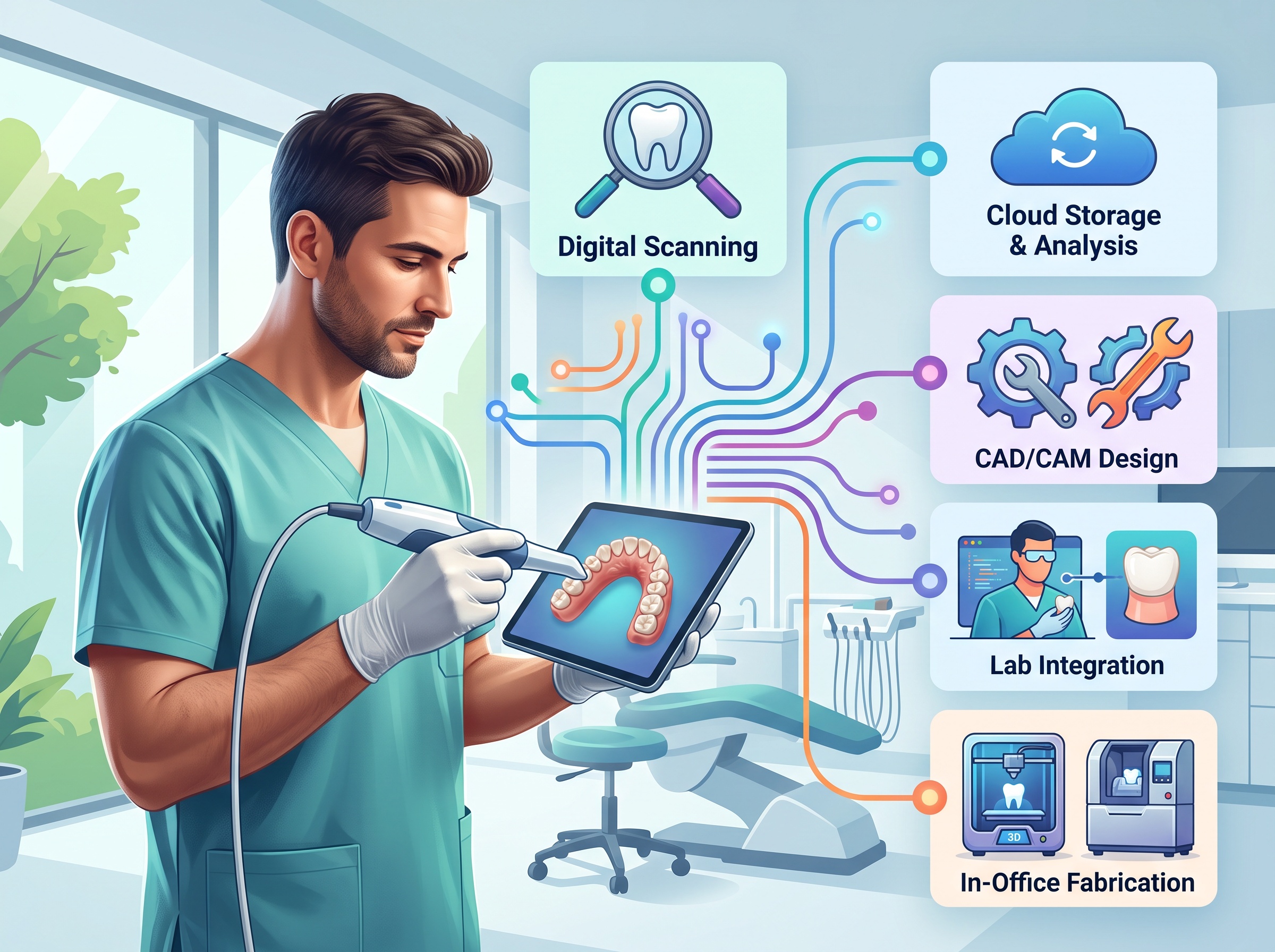
Digital impression systems integrate seamlessly with computer-aided design and manufacturing (CAD/CAM) systems, creating complete digital workflows from impression to final restoration delivery. This integration eliminates multiple data transfers and reduces the potential for errors or distortions.
Many practices are implementing complete digital workflows that include digital impressions, digital treatment planning, and in-office milling capabilities. These comprehensive systems provide unprecedented control over the entire restorative process while maximizing practice efficiency and profitability.
Conclusion
Digital impression systems represent a transformative technology that enhances clinical outcomes, improves patient experience, and streamlines practice workflows. The accuracy, efficiency, and integration capabilities of modern systems make them essential tools for contemporary dental practice. As technology continues to advance, digital impressions will become even more sophisticated and user-friendly, further solidifying their role as the standard of care for dental impression taking.
Practices that invest in digital impression technology position themselves at the forefront of modern dentistry, providing superior patient care while improving practice efficiency and profitability. The transformation from traditional to digital impression workflows represents not just a technological upgrade, but a fundamental improvement in how dental care is delivered and experienced.
Sorry, the comment form is closed at this time.