


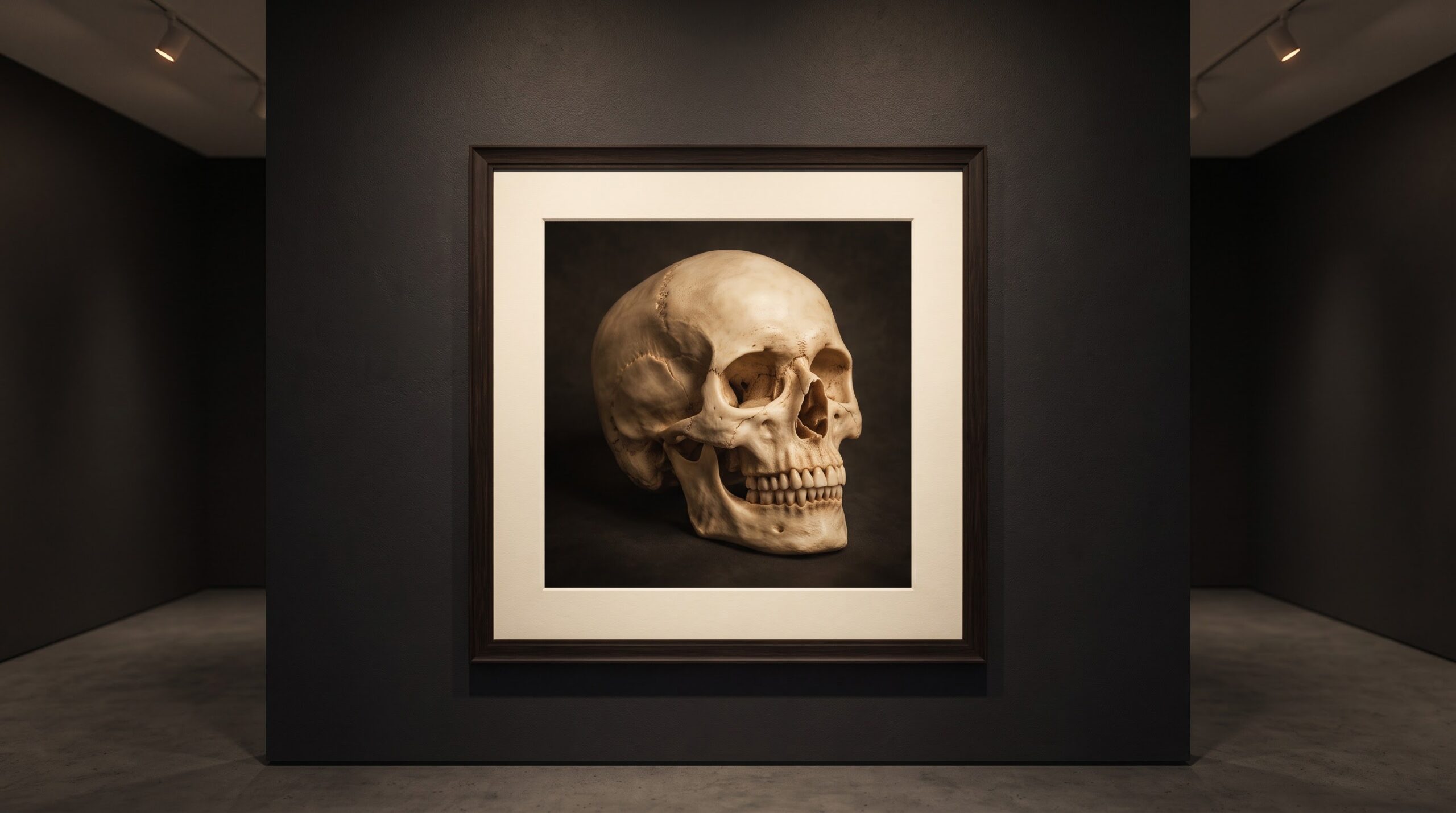
November 25, 2026 Cinematic Rendering of the CBCT: When Volumetric Data Becomes a Photorealistic Portrait of the Skull
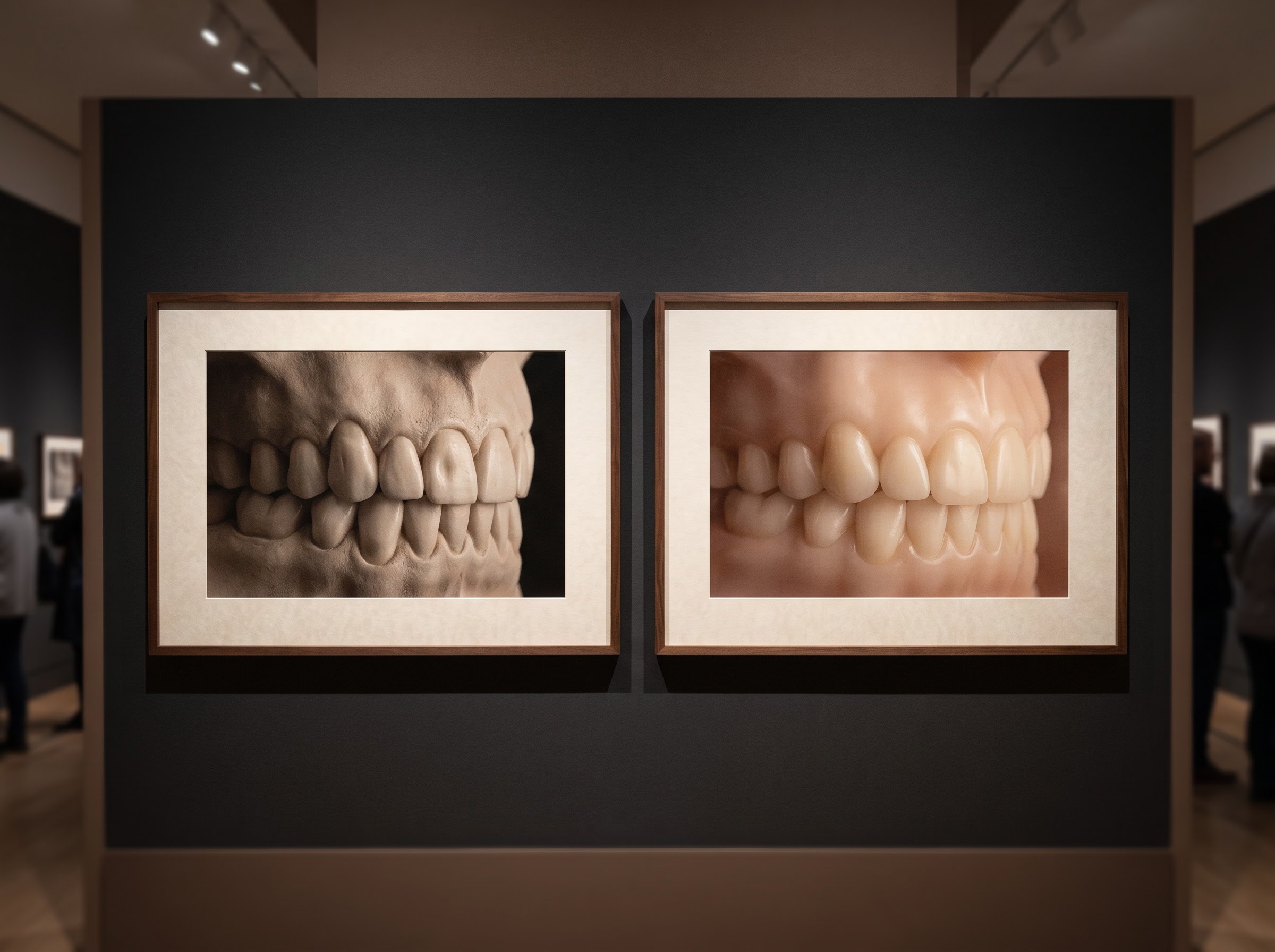
For as long as cone-beam CT has produced three-dimensional reconstructions, those reconstructions have looked like what they are: data. The jaw floats in a black void, the bone shaded an even synthetic grey, lit by a single flat lamp that casts no believable shadow and obeys no physics. It is useful, and it is unmistakably a diagram. Cinematic rendering begins from a simple, almost impertinent question — what if the light in that image behaved the way light behaves in the world? Borrowing the global-illumination mathematics that cinema and video games use to make imaginary things look photographed, it relights the very same voxel volume until the skull on the screen reads less like a schematic and more like a studio portrait of a real one. It is the most beautiful image dental imaging has produced in years. It is also the most quietly persuasive, and the two facts are not unrelated.
What actually changes is the light
It helps to be precise about what cinematic rendering is and is not. It is not a new kind of scan, not a higher resolution, and not an extra measurement. The voxels are exactly the ones the CBCT acquired, and the step that assigns each density a colour and an opacity — the transfer function — is the same family of tool that conventional three-dimensional views already rely on. We looked at that machinery, and at maximum-intensity projection and standard volume rendering, in our study of turning a CBCT into a picture. What cinematic rendering swaps out is the model of the light. Conventional volume rendering uses local shading: each point is lit as though by one direct lamp, with no account of how light bounces off neighbouring surfaces, so the picture comes out clean, bright and faintly artificial. Cinematic rendering uses global illumination — it traces thousands of light paths as they enter the volume, scatter, glance off bone, pool in hollows and fade into shadow. That single change in physics is the whole difference between a diagram and a photograph.
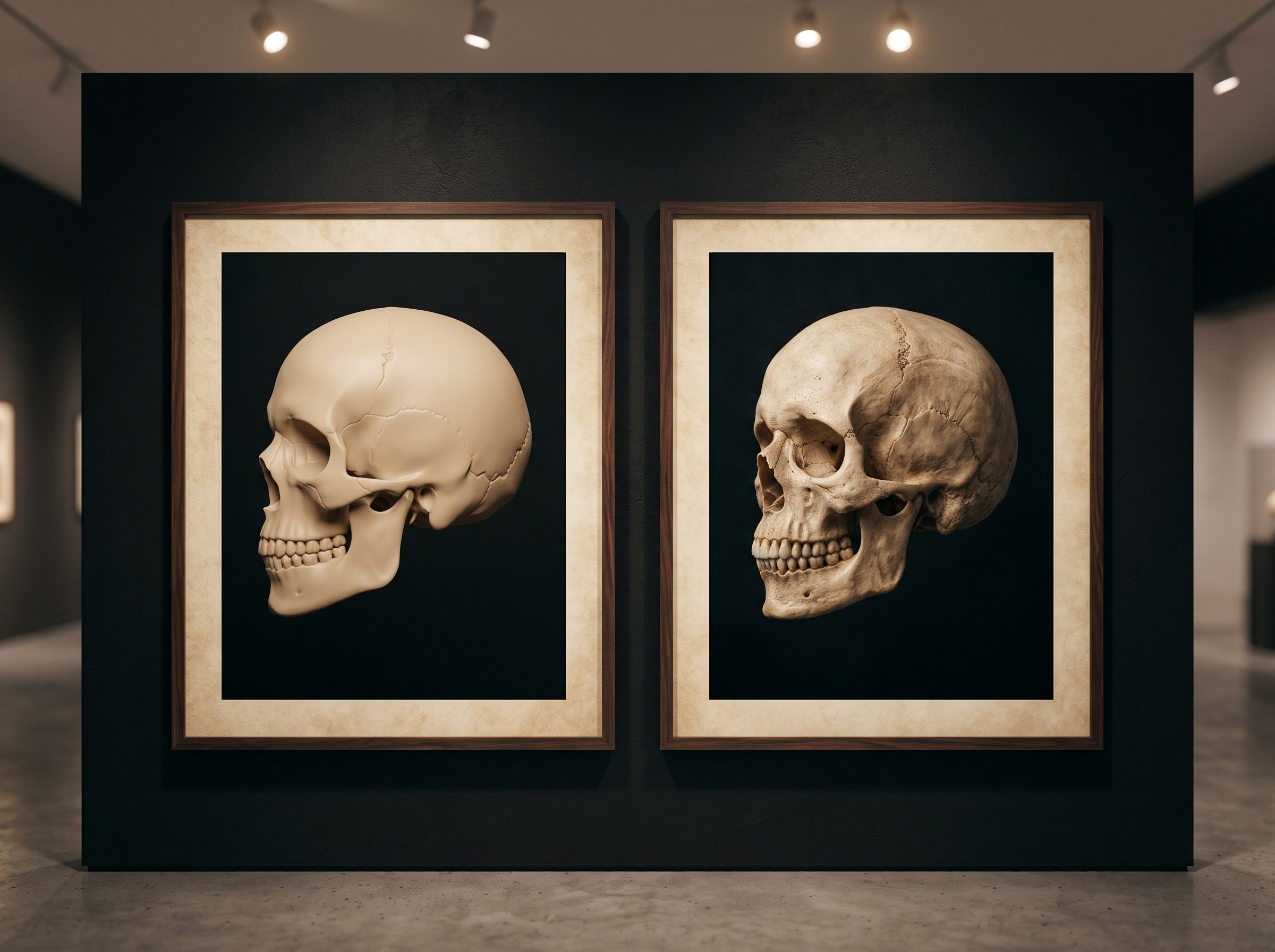
The physics of a simulated studio
Underneath the beauty is an honest piece of computation. The renderer places the anatomy inside a virtual lighting environment — often a high-dynamic-range dome, as if the skull were sitting in a softly lit studio — and then fires enormous numbers of rays through the voxel field. Each ray may pass through semi-transparent tissue, scatter in a new direction, or be absorbed, and the image is the statistical sum of where all that light ends up. Two consequences follow, and both are what the eye reads as realism. The first is soft, directional shadow: light that cannot reach the depth of the sinus or the space between crowded teeth leaves those regions naturally darker, an effect closely related to ambient occlusion, so form and spatial relationship become legible without a single contour line being drawn. The second is a tactile sense of material — the gentle sheen of enamel against the matte of cortical bone — because the simulated light responds differently to each. None of this is painted on. It is the arithmetic of many rays, and it is the reason a cinematic image feels less like a rendering and more like a thing that was lit and photographed.
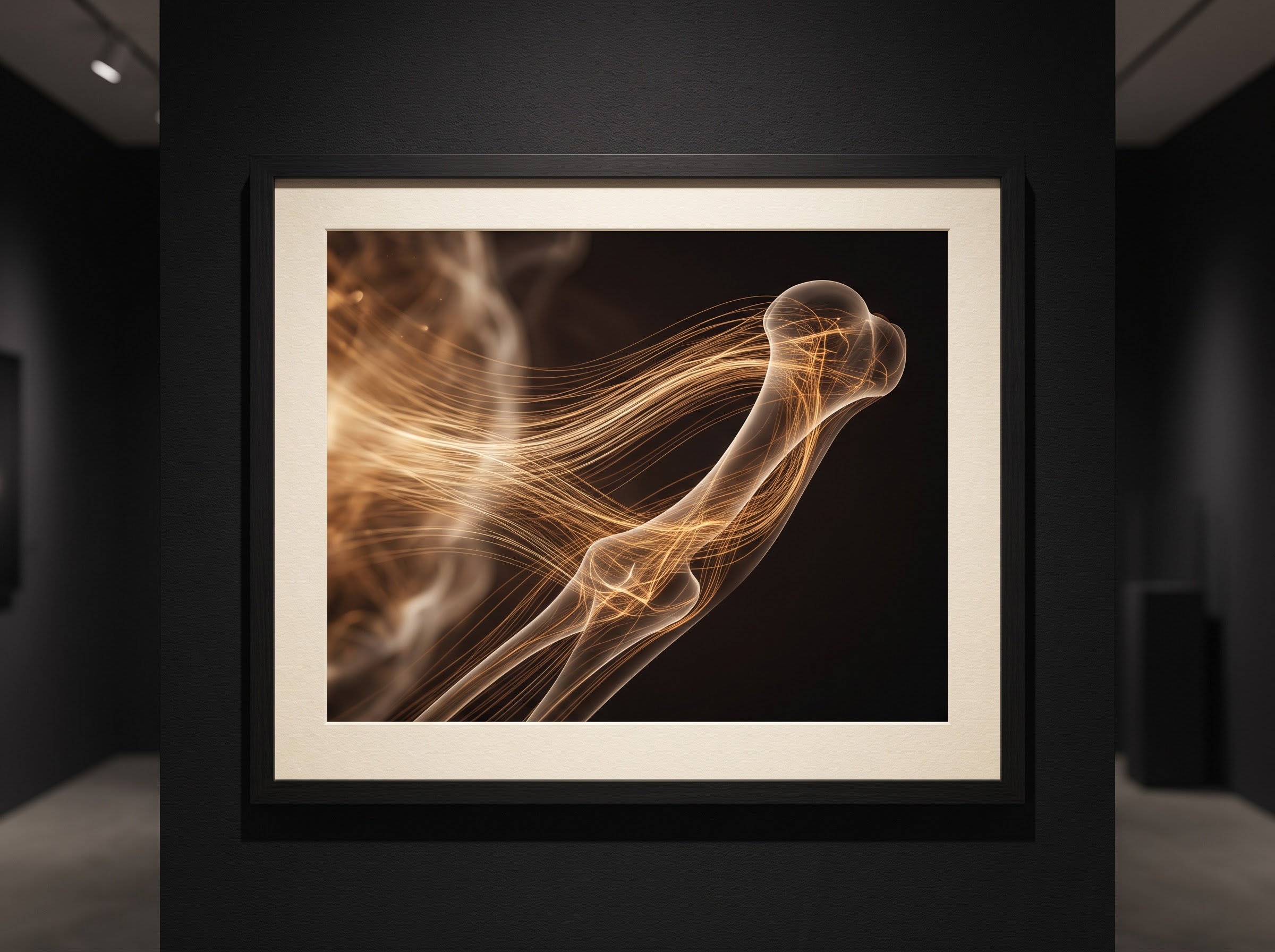
Where it genuinely earns its place
The temptation is to ask whether this helps the diagnosis, and the honest answer is: not directly. Every measurement a clinician needs — the distance to the inferior alveolar canal, the width of the ridge, the density around an implant — still lives in the cross-sectional slices, where it can be quantified, and where tools like window and level let the same exposure be read many ways. Cinematic rendering does not add a number to any of that. What it adds is comprehension. Set a photorealistic reconstruction in front of a patient and, often for the first time, they recognise what they are looking at; the impacted third molar lying against the nerve, the graft site, the asymmetry of a fractured orbit become things a non-specialist can see rather than take on faith. For case presentation, for surgical planning discussions, and for teaching, that legibility is real value — and it travels well now that lower-dose protocols, like the pulsed-exposure approaches closing the 3D radiation gap, are putting good volumetric data within easier reach.
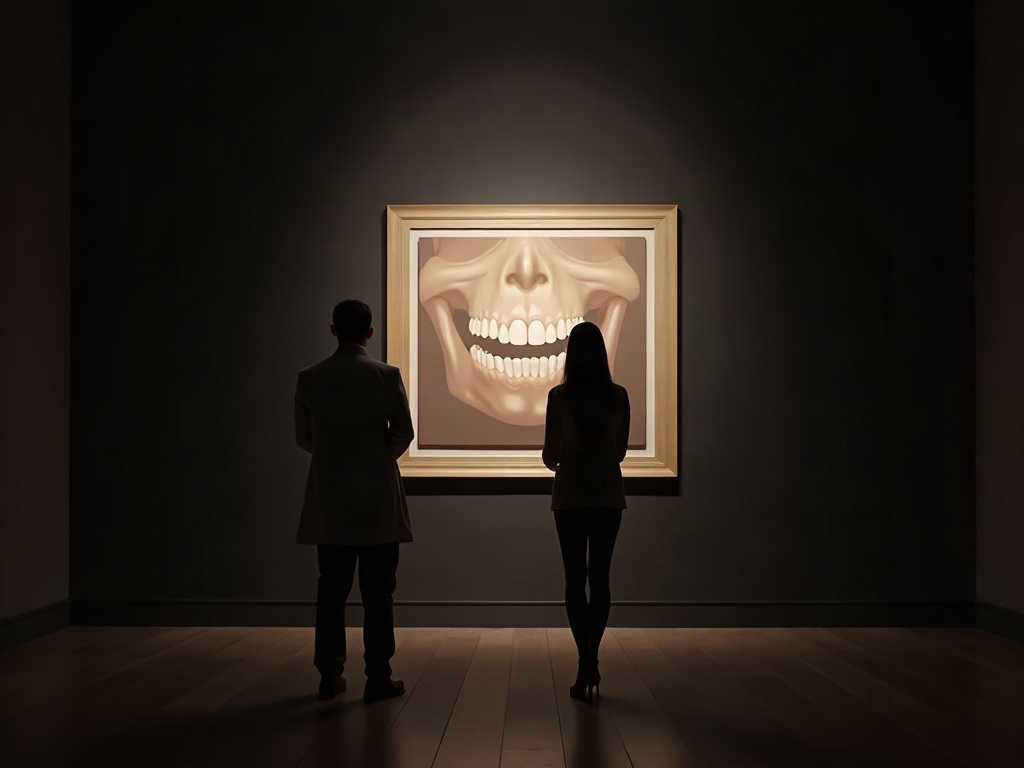
The honesty problem beneath the beauty
And here is the discipline the image demands. A cinematic render is not a neutral window onto the anatomy; it is an interpretation, shaped at every step by choices a human or an algorithm made. The transfer function decides what counts as bone and what fades to nothing. The lighting environment decides which surfaces are flattered and which fall into shadow. The material model decides whether enamel gleams or sits flat. Change any of these and the picture changes with them — a subtle surface defect can be lit into prominence or smoothed into invisibility, and a thin wall of bone can be made to look solid or made to vanish, all without touching the underlying scan. The very realism that makes the image persuasive is what makes an uncritical reading dangerous: the eye extends to a photorealistic skull the trust it reserves for photographs, which are records of things that were really there, when a cinematic render is closer to a painting executed with perfect technique from accurate notes. Used well, it is a magnificent way to show. It was never meant to be the place you measure, and treating it as such is how a beautiful picture misleads.
Future Developments
What has kept cinematic rendering a boutique pleasure is time: tracing enough rays for a clean, noise-free image once meant waiting, which confined it to the showpiece and the lecture slide. That constraint is dissolving. Graphics hardware built for real-time path tracing is bringing interactive cinematic views within reach, so a surgeon may soon rotate a photorealistically lit jaw as fluidly as today’s flat reconstruction, and slip it into a headset to stand, in effect, inside the patient’s anatomy before the first incision. Expect, too, the transfer function and the lighting — the choices that currently make the render an act of interpretation — to be increasingly proposed by models trained to surface clinically relevant structure rather than merely to look handsome, which would narrow, though never close, the gap between beautiful and honest. The deeper trajectory is the one this gallery keeps returning to: the dental image is becoming less a flat document to be deciphered and more a lifelike object to be explored. Cinematic rendering is the clearest sign yet of that shift, and the clearest reminder that the more a picture looks like the truth, the more carefully we are obliged to ask what, exactly, we chose to light.
No Comments